Between Law and Politics: A Call to Reconsider the Suspension of Sudan’s Membership in the African Union
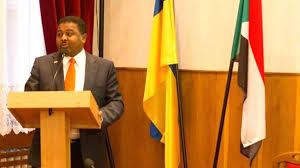
Ambassador: Mubarak Mahjoub Musa
The transitional period following the fall of Omar al-Bashir’s government established a constitutional framework that clearly defined the powers of the Sovereignty Council as the head of state and the civilian prime minister as the head of the executive branch. However, subsequent developments—most notably the rebellion of the deputy chairman of the Sovereignty Council and his declaration of war against the state, along with the joining of two other council members to the rebellion—created a complex political and constitutional reality in the country. This prompted the government, according to its official position, to amend the Constitutional Declaration to ensure the continuity of state institutions amidst war and armed rebellion.
It is important to recall that this same document was the basis upon which the African Union lifted the suspension of Sudan’s membership in 2019, after deeming what had occurred (the coup against al-Bashir’s elected government) an unconstitutional change of power. The suspension was only lifted after the implementation of the civilian-military transitional arrangements stipulated in the document and the appointment of a civilian prime minister accordingly. Thus, the existence of a consensual transitional constitutional framework became a benchmark for restoring continental legitimacy.
There is no doubt that the document—even after its amendment—remains the governing framework in Sudan to this day, and as previously mentioned, it is the same framework that the African Union had already recognized. Under its provisions, Ambassador Dr. Kamil Idris was recently appointed Prime Minister. The United Nations recognized him as head of the executive branch, allowing him to address its bodies and participate in its work as the official representative of the Sudanese state.
Here a fundamental question arises: If the head of the civilian executive branch in Sudan is recognized by the largest international organization, what prevents Sudan from occupying its seat in the regional organization? Why does the suspension persist, and why is the existence of an amended transitional constitutional framework and an internationally recognized civilian Prime Minister deliberately ignored?
Legally, the African Union bases its position on Article 30 of its Constitutive Act, which stipulates the suspension of participation for any government that comes to power through unconstitutional means. It also draws on the 2000 Lomé Declaration and the 2007 Charter on Democracy, Elections and Governance in defining “unconstitutional change,” which includes outright military coups or the overthrow of an elected government without constitutional basis.
However, the practical application of this criterion reveals a divergence in African precedents. In Mali (2020 and 2021), membership was suspended following a military coup that ousted an elected president, and transition timetables were imposed. Despite a second coup occurring during the same transition period, the AU treated the existing authority as a transitional reality that needed to be organized through elections, rather than excluding the state indefinitely.
In Guinea (2021), membership was suspended after the overthrow of President Alpha Condé, but the Peace and Security Council subsequently focused on negotiating a transition period and an electoral timetable, treating the transitional authority as a de facto power.
In Niger, membership was suspended in 2023 following the coup against President Mohamed Bazoum, amidst widespread regional pressure. However, the debate focused on the mechanisms and duration of the transition, not on denying the existence of a functioning executive authority or preventing it from representing the state in other international forums.
The Chadian case was raised in the historic address by Sudanese Foreign Minister, Ambassador Mohi El-Din Salem, before the African Union Peace and Security Council in Addis Ababa on February 12, 2026, as an example of what is perceived as double standards. General Mohamed Idriss Déby seized power with the support of the army after his father’s death, without a complete constitutional process or a clear democratic roadmap at the outset. Despite this, Chad’s membership was not suspended, while Mali’s membership had been suspended weeks earlier in protest against its military coup. Critics argue that such a disparity cannot be separated from considerations of interests, balances of power, and regional and international pressures.
It has been argued that the decision not to suspend Chad’s membership was driven by international concerns about the potential for terrorist or rebel groups to seize control of the country. However, this justification is weakened by the fact that Mali has faced, and continues to face, similar threats, prompting the United Nations to spend approximately $1.2 billion on peacekeeping efforts there.
The divergent stances on military coups are not limited to the African Union. France, for example, strongly opposed the coup in Mali but quickly supported the transitional authority in Chad. It appears that interests, along with regional and international balances and pressures, have become decisive factors in shaping positions.
These precedents demonstrate that the standard of “unconstitutional change” has not always been applied through a rigid interpretation of texts, but has often been subject to considerations of gradualism, recognition of existing transitional authorities, and the pursuit of reintegrating states within agreed-upon political timelines. This raises a pressing question: why does this flexible application continue to be ignored in the Sudanese case?
In the current situation in Sudan, it is important to emphasize that the Constitutional Declaration was not abrogated but rather amended, and that the appointment of a new civilian prime minister was based on the same constitutional framework that the African Union had already recognized in 2019. The United Nations also recognized Ambassador Idris and enabled him to officially represent Sudan. From the perspective of public international law, the recognition of governments is generally based on the criteria of effectiveness and state continuity, not on a detailed political assessment of the circumstances of the internal conflict.
In brief historical terms, the measures of October 25, 2021, which the government at the time described as “corrective steps,” were necessitated by the sharp divisions between the civilian and military partners and the fear of descending into chaos. Under this declaration, the Chairman of the Sovereignty Council, Lieutenant General Abdel Fattah al-Burhan, announced a state of emergency, dissolved the Sovereignty Council and the Council of Ministers, and suspended certain provisions of the Constitutional Declaration.
However, President al-Burhan simultaneously affirmed his commitment to the Constitutional Declaration and the Juba Peace Agreement, and pledged to complete the institutions of the transitional phase, including the formation of a legislative council and the appointment of a technocratic government to replace the quota system. According to this interpretation, the measures were presented as a readjustment of the transitional process, not a break with it—that is, a continuation of the commitment to the general framework of the transitional process in a modified form, with a redefinition of the role of the military component.
Regardless of whether one agrees or disagrees with this interpretation, critics of the suspension decision argue that this position was not adequately tested through the usual African Union mechanisms, as in the other cases mentioned above. In fact, the African Union did not even send a fact-finding mission to Sudan, as is customary in similar situations. This reinforces the impression of selectivity in dealing with the Sudanese crisis.
In fact, a large segment of the Sudanese population today believes that the decision to suspend Sudan’s membership in the African Union following the events of October 25, 2021, was not isolated from the context of the power dynamics and pressures exerted—and still being exerted—by regional and international forces to impose a specific political elite. This elite, widely recognized as isolated and lacking popular support, is a clear example of such influence.
It is important to emphasize here that the credibility of these corrective measures was further strengthened when Prime Minister Abdalla Hamdok returned to his post on November 21, 2021, under a political agreement stipulating the formation of a technocratic government and the completion of the transitional process. He later resigned under the weight of well-known internal and external pressures. Everyone witnessed how these regional and international interactions contributed, and continue to contribute, to complicating the Sudanese landscape, transforming the issue of legitimacy into a point of political contention that transcends purely legal frameworks.
Therefore, the debate today is not limited to the legitimacy of a particular person or government, but rather tests the consistency of the African Union’s application of its standards: Are they based on a unified legal principle, or on a flexible political approach influenced by the surrounding regional and international power dynamics? In the Sudanese context, the question transcends membership in a regional organization, becoming part of a broader discussion about the definition of legitimacy in the context of state fragility and open warfare. Thus, the issue represents a dual test: a test for Sudan of its ability to complete a genuine civilian transition under extremely complex circumstances—a path it has already begun with considerable success by appointing a prime minister who formed a fully civilian government that now exercises its powers on the ground—and, conversely, a test for the African Union of the consistency and flexibility with which it applies its standards in a way that promotes stability rather than exacerbates polarization.