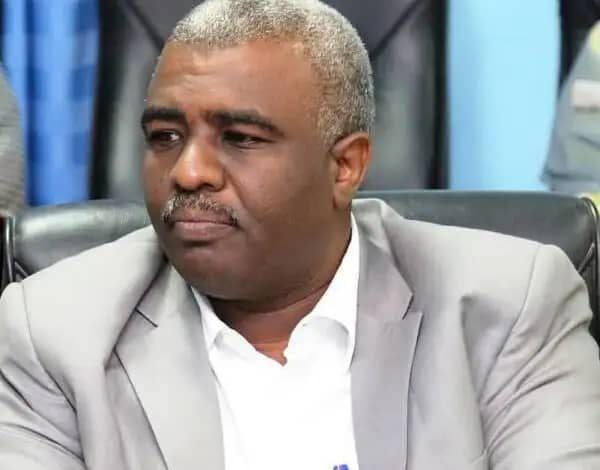
Ibrahim Shaglawi
The visit of Mohamed Hamdan Dagalo “Hemedti” to Entebbe came just one week after the visit of the Vice President of the Sovereignty Council, Malik Agar, at a timing that reflects the overlap of tracks and the congestion of political messages.
The visit, during which Ugandan President Yoweri Museveni received the delegation at the presidential palace, constitutes a political move seeking to compensate for the militia’s setbacks ahead of any decisive steps on the ground, especially in light of the Sudanese army’s advances across all axes of combat and its approaching the closure of the war file in Kordofan, with anticipated progress toward Darfur.
Agar’s repeated visits to Uganda appear to have aimed at keeping Kampala within the sphere of official communication and preventing its drift toward any parallel arrangements. He reportedly obtained a Ugandan pledge not to recognize any parallel government. Yet politics is not managed by pledges alone, but by sustained presence that balances messages with realities; hence the “Tasees” delegation attempted to find a window for diplomatic movement.
In this context, Hemedti’s visit to Entebbe can be read as a preemptive attempt to create a foothold in any potential African negotiating track, following the faltering of his battlefield bets and the mounting legal and media pressures against him. Nevertheless, the content of his recent speech — including admissions regarding the recruitment of Colombian mercenaries to operate drones, failure to pay soldiers’ salaries, shortcomings in protecting civilians, and the shelling of relief — placed him in a critical defensive position before both domestic and international public opinion, and exposed the fragility of his alliance internally and regionally.
These moves coincided with the Security Council session on Thursday, which saw the thwarting of attempts to pass a ceasefire scheme by supporters of the militia, some of whose provisions were intended to be imposed on the Sudanese government. The discussions focused on supporting regional initiatives for a ceasefire, preventing the flow of weapons, and protecting civilians, amid UN warnings of a worsening humanitarian crisis and the expansion of fighting in Darfur, Kordofan, and Blue Nile.
Statements by Sudan’s representative to the Council affirmed that the conflict represents a “systematic war of aggression” threatening the state’s existence, and that the roadmap presented by the government in December 2025 is based on national ownership to achieve peace and reconciliation leading to elections.
The Entebbe visit, which included the leadership of the militia alliance, constituted an attempt to reproduce a political project that had collapsed under the weight of international condemnations, battlefield losses, and the failure to pass its agendas within the Security Council.
The images and the meetings with media figures and supporters of the rebellion were not merely public relations, but a tool to convey a message of apparent cohesion and to calm growing concerns about their ability to remain in the scene, at a time when international maps are redefining the conflict as external aggression and a proxy war fought over resources, where humanitarian pressures intersect with political and military strategic calculations.
At the same time, the Sudanese initiative presented by the Sudanese government late last year played a pivotal role at the Security Council table, as it represents the only viable path to sustainable peace based on state sovereignty and the unity of its institutions. Any attempt to bypass it, whether through militia moves or external pressures, will collide with the changing military and political reality in favor of the Sudanese state.
In this framework, Museveni said in a post on “X” that dialogue and a peaceful political solution are the only paths to stability in Sudan and the region. This comes in light of his earlier assignment by the African Union to arrange a meeting between President Abdel Fattah al-Burhan and Hemedti, making Entebbe a potential platform to test opportunities for de-escalation and the building of sustainable peace, according to the Sudanese vision.
In this regard, the Ugandan president’s initiative emerges as a potential mediation track, as he affirmed his country’s readiness to mediate and urged both parties to cease hostilities and protect civilians. Museveni had earlier met with Ramtane Lamamra, the UN Secretary-General’s Special Envoy for Sudan, to coordinate between African mediation efforts and the Sudanese initiative. This step offers an opportunity to bridge differences, but it requires a genuine response from the Rapid Support Forces militia, which faces the reality of implicit defeat, as acknowledged by Hemedti in his statements following the visit.
Field indicators confirm the superiority of the Sudanese Armed Forces in their ability to achieve decisive outcomes, while the militia suffers from resource shortages, reliance on mercenaries, and fragmentation of forces, reflecting its limited capacity to impose realities on the ground. Between the success of the official discourse at the Security Council and the vitality of parallel movements in East Africa, the next phase will be determined by the Sudanese state’s ability to move from a policy of reaction and submission to pressures toward engineering a proactive diplomatic initiative that closes the gaps and transforms into alternative negotiating tracks.
All these elements, according to Face_of_the_Truth, make Entebbe a stage of critical possibilities, where regional and international pressures intersect with internal military and political momentum, and each party tests its position before real options that may determine Sudan’s future — whether by establishing peace on the basis of the Sudanese initiative or by continuing the conflict according to the vision of military resolution, with greater risks to civilians and regional stability. Politics, as history teaches us, does not leave a vacuum for long, and whoever fills it first writes the next line in the narrative of wars.