From the Village of Mistereih to Europe’s Body: How the West Lights Sudan’s Wars and Walks Away from the Ashes
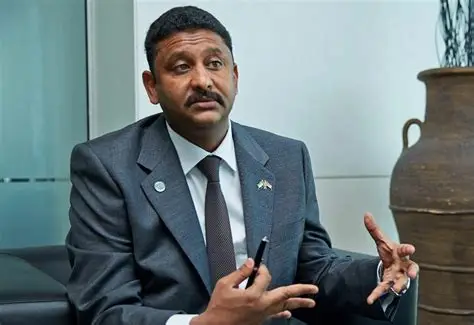
Tarig Zain El Abdein, Expert in regional security and migration issues
The attack on Mistereih is not an isolated incident but part of a broader project to dismantle Darfur’s social fabric and turn the region into an open platform for mercenaries and war economies, threatening Sudan, its neighbours, the continent, and ultimately Europe itself.
First: Mistereih – A Burned Village, Not a “Military Base”
Mistereih is not the headquarters of a Sudanese army division, nor a regular garrison, nor a major town with banks, ministries, and cash vaults. It is a rural settlement (damera) of the Mahamid tribe within the larger Rizeigat confederation, with all the simplicity and social depth such communities represent. This type of targeting has repeatedly struck similar rural localities in Darfur, which have been transformed from civilian population centres into ruins by successive attacks carried out by militias allied with the Rapid Support Forces (RSF). Satellite imagery and field reports confirm the systematic burning and destruction of villages around El Fasher and in West Darfur.
Musa Hilal has never been one of the “pillars of the 1956 state” nor a member of the elite Islamist leadership, as some portray him. He is a traditional tribal leader of one of Darfur’s largest Arab tribes, wielding undeniable social weight in both peace and war. His earlier decision not to directly enter the military confrontation between the army and the RSF was a deliberate choice to preserve Rizeigat cohesion and prevent Darfur from sliding into all‑out fratricidal warfare within and among the same tribal house.
Second: Hilal’s Right to Refuse – and the Myth of Hemedti’s “Democracy”
Like any Sudanese citizen and community leader, Musa Hilal has the right to declare that the militia’s project is illegitimate, to withhold his support, and to refuse turning his people into fuel for a senseless war against the state and its institutions. This is the core of any genuine democratic concept: freedom of political positioning and the right of individuals and communities to refuse alignment behind armed actors operating outside state authority.
By contrast, the “democracy” and “citizenship state” discourse promoted by Hemedti and his entourage collapses in the face of documented reports detailing ethnically targeted atrocities in Darfur, including the killing of civilians, systematic looting, and the burning of entire towns such as Misterei and other localities in West Darfur. These acts have been described as crimes against humanity, ethnic cleansing, and potentially genocide against non‑Arab groups such as the Masalit and others.
In this context, the assault on Mistereih – a village symbolically tied to a tribe and a leader who opted for neutrality – becomes a blood‑stained political message: neutrality is forbidden, rejection of the militia project is unacceptable, and whoever clings to such a stance will be punished with fire and displacement.
Third: Mistereih and Tina – A Gateway to Regional Explosion
The attack on Mistereih coincides with fierce battles over Tina (Al‑Tina) in Dar Zaghawa on the Sudan‑Chad border, where RSF units and forces aligned with the Sudanese army are fighting for control of this strategic crossing point. Tina is not merely a border post; it is a lifeline for Zaghawa communities straddling Sudan and Chad and a critical node on smuggling routes for weapons, gold, fuel, and human beings across the Sahel belt.
This simultaneity – the targeting of the Mahamid stronghold in Mistereih and the Zaghawa heartland in Tina – effectively pushes two of Darfur’s largest tribal pillars toward militarised polarisation along Sudan’s borders with Libya, Chad, and Niger. This dynamic opens the door to:
- A major overlap of cross‑border tribal armed activity, given the wide dispersion of Rizeigat, Zaghawa, and other groups across state frontiers.
- The erosion of the line separating “internal conflict” in Sudan from “regional war”, transforming Darfur into a central arena within a much larger Sahel conflict.
Fourth: The Influx of Mercenaries – From South Sudan to the Russian Belt
Sudan’s war has already attracted thousands of fighters from neighbouring states, whether through direct financial recruitment or via smuggling networks and the broader “mercenary market” of African wars. Research and field reporting show that a significant portion of RSF combatants are drawn from desert Arab communities extending from Niger, Chad, and Mali through the Central African Republic to Libya, many of whom had previously fought as mercenaries in Libya or Yemen before being recycled into Sudan’s conflict.
UN and regional sources also refer to the involvement of armed “adventurers” from Mali, Niger, and Chad in the Sudanese war, enticed by promises of cash and gold, while the strength of some of these cross‑border formations is estimated at several thousand fighters spread between Libya, Chad, Niger, and Sudan. All this is happening on a continent already saturated with armed groups: Darfuri movements, Sahelian jihadist organisations in Mali, Burkina Faso, and Niger, Libyan militias, and insurgent and extremist outfits in the Central African Republic, the Democratic Republic of Congo, and Mozambique.
As tensions rise between Ethiopia and Eritrea and instability deepens across the Horn of Africa, the vast zone stretching from the Red Sea to the Atlantic increasingly becomes an open corridor for mercenaries, smugglers, and terrorist entities – including the return or redeployment of experienced fighters from other fronts linked to the Russian “Wagner belt” and similar networks, as well as from parts of Latin America. This takes place within a globalised marketplace of war that recognises neither borders nor state sovereignty.
Fifth: The Erosion of National Armies – And the Fire’s Return Toward Europe
This entanglement threatens to dismantle the national armies of the region step by step:
- The Sudanese Armed Forces are being bled dry in gruelling urban warfare and a long war of attrition against a large and well‑armed militia that now controls most of Darfur and is expanding into Kordofan.
- The Chadian army is under acute internal pressure in the wake of the Tina incidents, caught between supporting allies in Sudan, maintaining border control, and preventing the conflict from spilling into its own Zaghawa heartland.[10]
- The armies of Niger, Mali, and Burkina Faso are already exhausted by insurgencies, coups, and international sanctions, leaving them with limited capacity to secure their frontiers with Libya, Chad, and Algeria and to contain the operations of jihadist groups and traffickers.
As these armies weaken, “security vacuums” expand, exploited by militias and criminal networks. The Sahel and Sahara are turning into a massive corridor for irregular migration and the trafficking of human beings, weapons, and narcotics toward the Mediterranean. Before EU‑supported crackdowns, the Nigerien hub of Agadez was witnessing up to 330,000 migrants per year attempting the irregular journey north, with thousands per week in peak season, and despite subsequent declines, the structural drivers of these flows – violence, economic collapse, climate change, and poor governance – remain firmly in place
Europe is trying to “keep the flames away” through security deals with North African states, funding coastal forces, and focusing on managing migration flows rather than seriously investing in extinguishing the fires at their roots in Sudan and the Sahel. Allowing Sudan’s war to escalate while limiting responses to statements of condemnation after massacres such as those in El Geneina and around El Fasher reveals that the international community still treats this conflict primarily as a distant humanitarian tragedy, not as a direct and mounting threat to Mediterranean and European security.
As the scorched‑earth zone expands from Darfur to Chad, Niger, and Mali; as national armies unravel; and as mercenaries become the best‑organised and best‑armed actors on the ground, the logical outcome is that Africa’s fires will cross the Mediterranean – not only in the form of boats carrying refugees, but also as networks of organised violence, armed extremism, and a transcontinental crime economy. When that happens, the flames will not distinguish between North and South, and the sea once imagined by Europe as a protective barrier will become a bridge over which the very chaos its silence helped create will travel.
The attack on Mistereih today is thus far more than an assault on a single village. It is an early warning that the project of dismantling Darfur and Sudan is advancing steadily, and that ignoring this conflagration will, sooner or later, allow it to devour the continent’s peripheries before reaching its heart. May God have mercy on the martyrs of Mistereih, Tina, and all of Darfur, heal the wounded, and indeed, “those who have wronged will soon know to what final place they shall return.”