
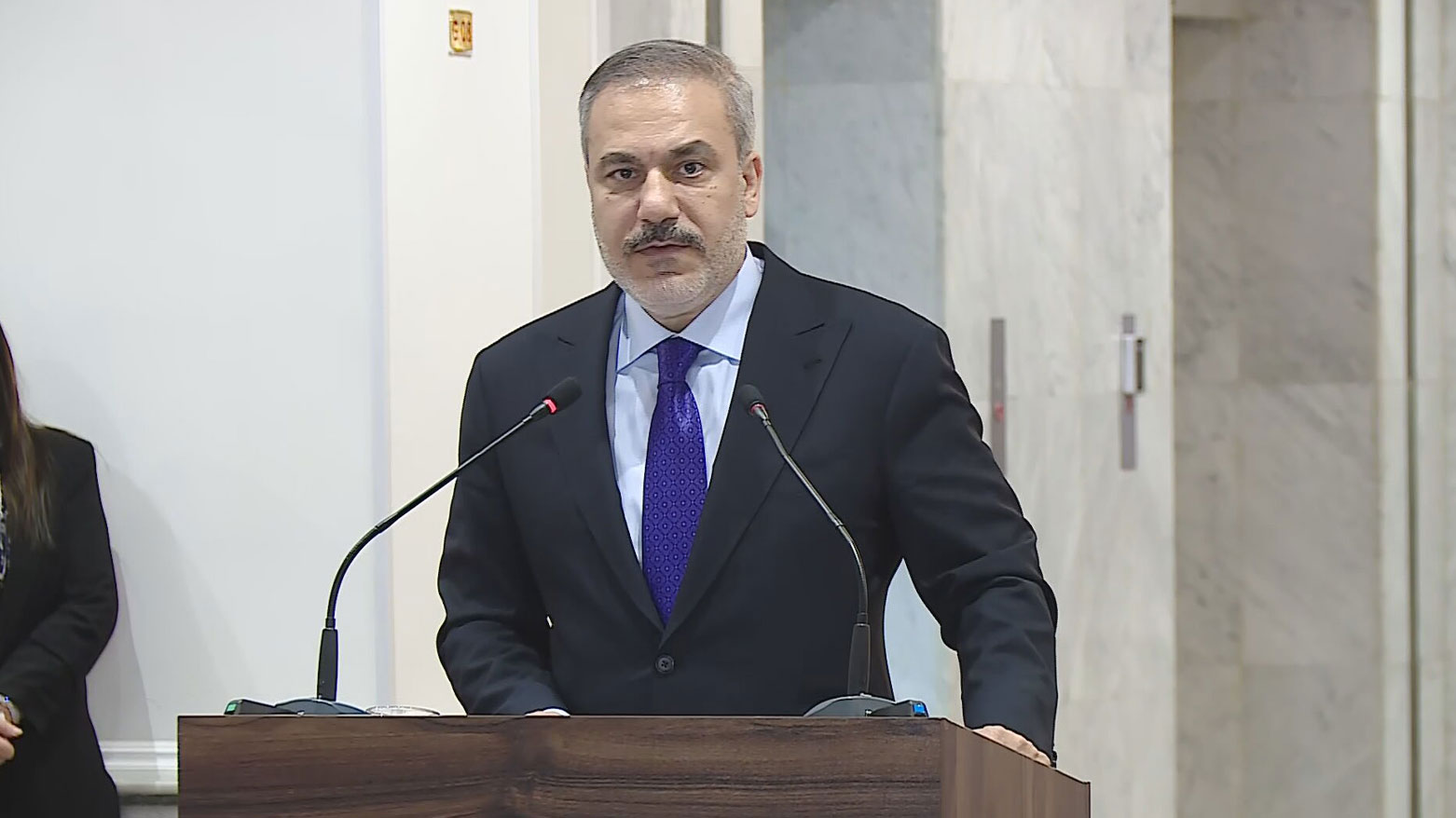
In a Resounding Shift: Fidan Hints at Turkey Joining the Nuclear Arms Race
In a high-stakes geopolitical declaration, Turkish Foreign Minister Hakan Fidan signaled that Turkey may enter the nuclear arms race in the near future. During a televised interview with CNN Türk on Monday evening, Fidan addressed the global “nuclear injustice,” describing the possession of nuclear weapons as a “high-level strategic issue that must be viewed within a broader perspective.”
The “Nuclear Injustice” Argument
Fidan critiqued the Non-Proliferation Treaty (NPT) framework, noting that while it allows the five permanent members of the UN Security Council (P5) to maintain their arsenals, the promised transition to peaceful nuclear energy and global disarmament has failed to materialize. “None of these commitments have been fulfilled,” Fidan remarked. “Consequently, there is a state of nuclear injustice.”
Regional Balance and Strategic Response
Responding to questions regarding Iran’s nuclear program, Fidan emphasized Turkey’s desire to maintain regional stability. However, he warned that any “dramatic change” in the power balance could trigger a domino effect.
“We may find ourselves compelled to join this race, whether we want to or not,” Fidan stated, adding that while such a scenario might not benefit the region, it could become a strategic necessity.
Establishing “Conditional Legitimacy”
Analysts view Fidan’s remarks as the laying of a “conditional legitimacy” framework. By framing future steps as a response to regional challenges—specifically if Iran, Israel, or other actors officially confirm nuclear status—Turkey is proactively justifying its potential shift. With its formidable military, advanced industrial base, and geopolitical ambitions, Ankara appears increasingly unwilling to remain a non-nuclear power.
The “Turkic Nuclear Guarantor” and NATO Dynamics
The implications of Fidan’s statements extend beyond Turkey’s borders:
* The Turkic World: Turkey is positioning itself to potentially serve as a “nuclear guarantor” for the broader Turkic world should the region descend into a nuclear arms race.
* The NATO Factor: As a pivotal NATO member, Turkey remains strategically aligned with the West, yet increasingly insists on its own terms. For Washington, the challenge lies in ensuring that a potential Turkish nuclear path does not drift outside its sphere of influence.
The Bottom Line: If Turkey officially enters the nuclear arena, it would represent a seismic shift in regional and international power dynamics, fundamentally altering the security architecture of the Middle East and the Mediterranean.