Inspired by the UN Report… Militia Crimes in the Scales of Justice
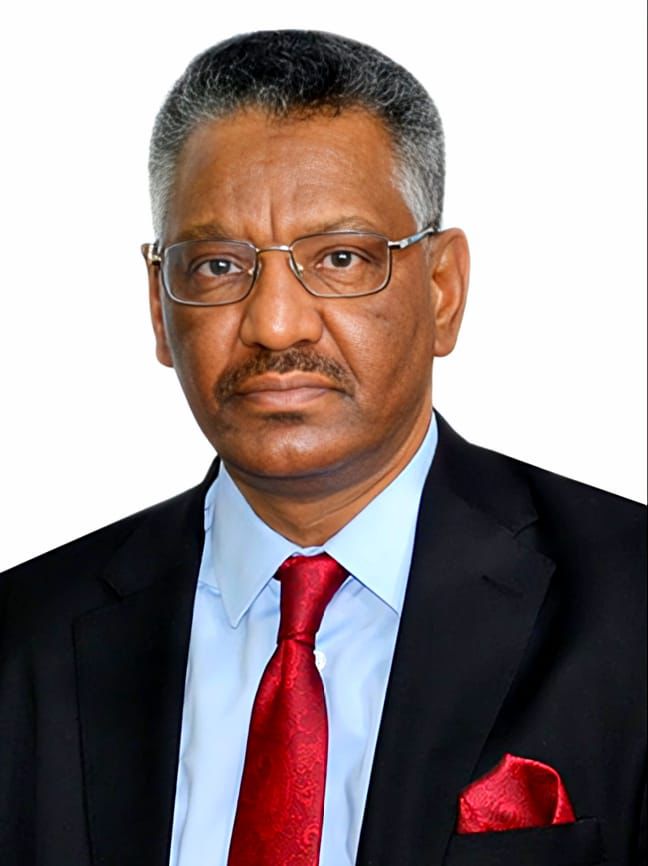
By: Anas Al-Tayeb Al-Jailani
(1)
Released on February 13, 2026, the Human Rights Commission report, spanning twenty-nine pages, is titled “They were shooting us like animals.” The title is quoted from the testimony of one of the female survivors whose statements were heard. The report, prepared by the Office of the High Commissioner for Human Rights (OHCHR) based on field visits and the interrogation of 140 witnesses, including victims and survivors, carried shocking and documented information regarding the crimes of the Rapid Support Forces (RSF) militia. The death toll in El Fasher alone, as indicated by the report, reached six thousand, while those fleeing the hell of the siege were pursued on their escape routes, resulting in the killing of approximately one thousand six hundred citizens or more.
The report recalled the repetitive nature of the brutal crimes committed by the “Arab militia,” as the report named them, documenting their crimes in the cities of El Geneina and Ardamata and the crimes committed in the Zamzam camp, providing sufficient legal evidence of crimes amounting to crimes against humanity. The report highlighted the Al-Rashid dormitory incident, in which the militia deliberately carried out an ethnic cleansing of nearly five hundred citizens on charges of collaborating with the Sudanese Armed Forces and the Joint Forces; however, the liquidation was driven by racial and ethnic motives against the Zaghawa tribe community. The report also noted that waves of regional violence are intentionally designed against the Zaghawa and other non-Arab communities, utilizing various forms of sexual violence as a weapon against innocent and defenseless civilians.
(2)
The statement from the Office of the High Commissioner for Human Rights confirms substantial grounds to believe that the Rapid Support Forces militia has committed a wide range of internationally prohibited crimes. These include willful killing, rape and sexual violence as a weapon of war, deliberate starvation of the population, mass ethnic cleansing, extrajudicial executions, hostage-taking and liquidation, theft, looting, and targeting citizens based on ethnic origin and color. The report pointed out that these acts constitute full-fledged war crimes and crimes against humanity, and the perpetrators and militia leaders must be held accountable and not allowed to escape punishment. The report called on the international community and influential countries to act to prevent the recurrence of such events in the future and to place human rights standards at the heart of any settlement to resolve the conflict.
(3)
Statements by the High Commissioner for Human Rights, Volker Türk, held the Rapid Support Forces militia and its affiliated Arab tribes responsible for the attack on El Fasher. He noted that the policy of persistent impunity would fuel a cycle of violence and called for credible and impartial investigations to determine criminal responsibility, including the accountability of senior RSF leaders. Volker Türk further explained that his recent visit to Sudan and his listening to the testimonies of survivors revealed to him the horror of the gross violations committed by the militia. The High Commissioner had previously commented on the OHCHR report issued on December 18, 2025, regarding large-scale systematic killings and sexual violence crimes at the Zamzam camp between April 11 and 13, 2025, referring to what he called a “consistent pattern of gross violations of international humanitarian law and flagrant abuses of international human rights law.”
(4)
Furthermore, a report by the Independent International Fact-Finding Mission for Sudan was released today, Thursday, February 19, 2026, in Geneva, titled “Sudan: Hallmarks of Genocide in El Fasher.” This UN committee, chaired by Mohamed Chande Othman, was formed under the resolutions of the 38th session of the Human Rights Council on November 14, 2025, and will submit its report to the upcoming 81st session of the UN General Assembly. The most significant finding of the mission, which interviewed 320 victims and witnesses, is that genocidal intent is the only conclusion that can be drawn from the systematic actions of the Rapid Support Forces. The UN mission also proved that the evidence demonstrates at least three acts constituting genocide: killing members of a protected ethnic group, causing them serious bodily and mental harm, and deliberately creating living conditions intended to bring about their physical destruction, in whole or in part. Mission Chair Chande stated: “The scale and coordination of the operation, and its public endorsement by senior RSF leaders, show that the crimes committed in and around El Fasher were not random excesses but part of an organized and planned operation bearing the hallmarks of genocide.” In my estimation, the most important indicator contained in the report is the naming of what happened in El Fasher as having the “hallmark of genocide,” as previous UN reports were more reserved in using the term genocide in their published findings.
(5)
In the face of this damning and documented evidence by the international community through its human rights organizations and UN committees—in addition to the repeated statements by the Ministry of Foreign Affairs, Sudanese diplomatic missions abroad, and press conferences covering the events in El Fasher, which amount to the crime of genocide according to international characterization—the militia leaders must be held accountable and not allowed to escape punishment. The time has come to designate and brand them as a terrorist militia. What is terrorism if these crimes, occurring in the sight and hearing of the world, are not evidence of their brutality? What is terrorism if mass murder, ethnic cleansing, genocide, and mass rapes in Darfur are not considered terrorism? Indeed, what has been documented by the international press and international reports far exceeds the savagery of groups like ISIS and is no less than the human massacres that occurred in the former Yugoslavia and Rwanda. I believe there are now sufficient judicial grounds for international legal bodies to prosecute the militia, as mentioned in judicial and human rights reports. On November 3, the Office of the Prosecutor of the International Criminal Court announced steps to collect evidence on RSF militia crimes in El Fasher based on mass killings and rapes. There is also an investigative committee formed by the Arab Lawyers Union, and the aforementioned Human Rights Commission report, in addition to today’s report from the UN Fact-Finding Mission. This is further supported by investigative journalism from the global press, such as the American New York Times and the British Independent and Daily Telegraph, as well as satellite imagery collected by Yale University, which revealed the depth of the humanitarian tragedy and images of mass graves in El Fasher.
The reality visible to all is that the international community, and the Security Council in particular, is still turning its back on the suffering of the people of Sudan. It has not acted in an appropriate and responsible manner to classify the militia as a terrorist group or to indict its top leader as a war criminal. The international community must fulfill its duties, as tolerance toward these crimes by outlaw groups will increase the rates of illegal migration. Moreover, the world and the region will not be immune to the negative repercussions, which undoubtedly affect international peace and security.