
Nuclear Power Secretly Expands in China’s Mountains: What Satellites Reveal
Brown Land
Deep in the mountains of Sichuan Province in southwestern China lie ancient secret facilities built during the era of Mao Zedong 60 years ago. At that time, during the height of the Cold War, China feared American strikes and hid its nuclear laboratories and factories far from its borders in what was known as the “Third Front” project.
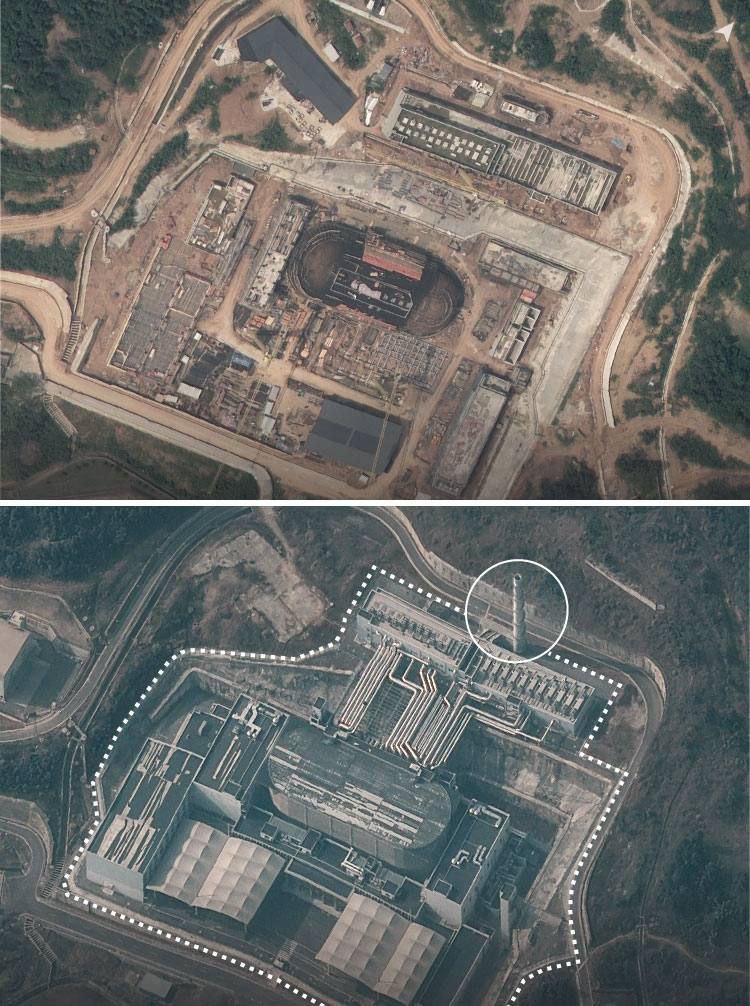
Today, in 2026, The New York Times published an investigation supported by recent satellite imagery. These images show China actively expanding and modernizing these old facilities in two valleys named Xitong and Pingtong.
What exactly is happening?
In Xitong, new shelters, fortifications, and a massive complex containing hundreds of pipes have appeared. Experts believe they may be testing explosives at this site—specifically special chemical charges used for nuclear detonation (where these charges compress the material inside the warhead). The Pingtong site features a double fence, a renovated main building, and a towering ventilation shaft (approximately 110 meters high). New heat-removal systems have also been installed. According to experts (including American analysts), plutonium cores—the cores of nuclear warheads filled with plutonium that cause a chain reaction and explosion—are produced at this site.
The pace of work has accelerated since approximately 2019, reaching its peak in recent years. This is part of a broader picture, as China expands its nuclear arsenal faster than ever before. The Pentagon estimates that China possesses more than 600 nuclear warheads, and this number could reach approximately 1,000 by 2030 if the current pace is maintained (the stockpile rose from about 410 warheads in 2023 to more than 500 in 2024, then exceeded 600 in 2025, according to reports published by the Stockholm International Peace Research Institute (SIPRI) and the U.S. Department of Defense).
As for the American agency “CNN,” it announced today, Saturday, February 21, citing its sources, that U.S. Intelligence believes China is developing a new generation of nuclear weapons. In this context, the agency added that U.S. Intelligence believes China has conducted at least one secret explosive test in recent years, noting that China is working to fully transform its nuclear arsenal to be the most sophisticated in the world.
The majority of modern Chinese nuclear warheads are designed with MIRV (Multiple Independently targetable Reentry Vehicles) technology, meaning they are capable of carrying several small warheads on a single missile, which increases the ability to hit multiple targets.
The Celestial Empire has also moved from a policy of “minimum deterrence” to building an integrated nuclear triad that includes land-based ballistic missiles, nuclear submarines, and strategic bombers. This triad consists of the following elements:
1) Land-Based Power:
• Led by the People’s Liberation Army (PLA) Rocket Force.
• Includes modern missiles such as the DF-41, capable of carrying multiple nuclear warheads (MIRVs) and reaching targets in the United States.
2) Naval Power:
• China possesses Type 094 (Jin-class) nuclear submarines carrying JL-2 missiles with a range of up to 7,200 km.
• It is working on developing Type 096 submarines and JL-3 missiles with longer ranges to enhance the ability to strike distant targets from the oceans.
3) Air Power:
• Strategic bombers such as the H-6N, capable of carrying air-launched ballistic missiles.
• China is working on developing a new stealth bomber (the H-20 project) to enhance its ability to penetrate air defenses.
These steps are seen as part of a strategy to bolster China’s strategic position amid escalating tensions with the United States and other global powers, especially in light of the expiration of the “START” agreement between Moscow and Washington. This expansion reflects Beijing’s desire to balance American and Russian nuclear superiority and raises concerns among neighboring countries such as India and Japan, especially with the proximity of some facilities to the Indian border.
Furthermore, the current trends of the Chinese state in the nuclear field increase the likelihood of a new nuclear arms race emerging in the Asian continent. Beijing officially declares its policy of minimum nuclear deterrence, stating that nuclear weapons are intended for defense only to prevent any party from threatening the country. At the same time, the global situation is changing; the last major treaty to limit the proliferation of nuclear missiles between the United States and Russia has expired, and tensions and provocations around Taiwan and elsewhere are escalating. Beijing seeks to enhance its security and independence to avoid U.S. pressure and protect its sovereign interests.