Report | Interpol Travel Restrictions on Abdul Rahim Dagalo and a Broader International Crackdown on Militia Leadership
Report | Interpol Travel Restrictions on Abdul Rahim Dagalo and a Broader International Crackdown on Militia Leadership
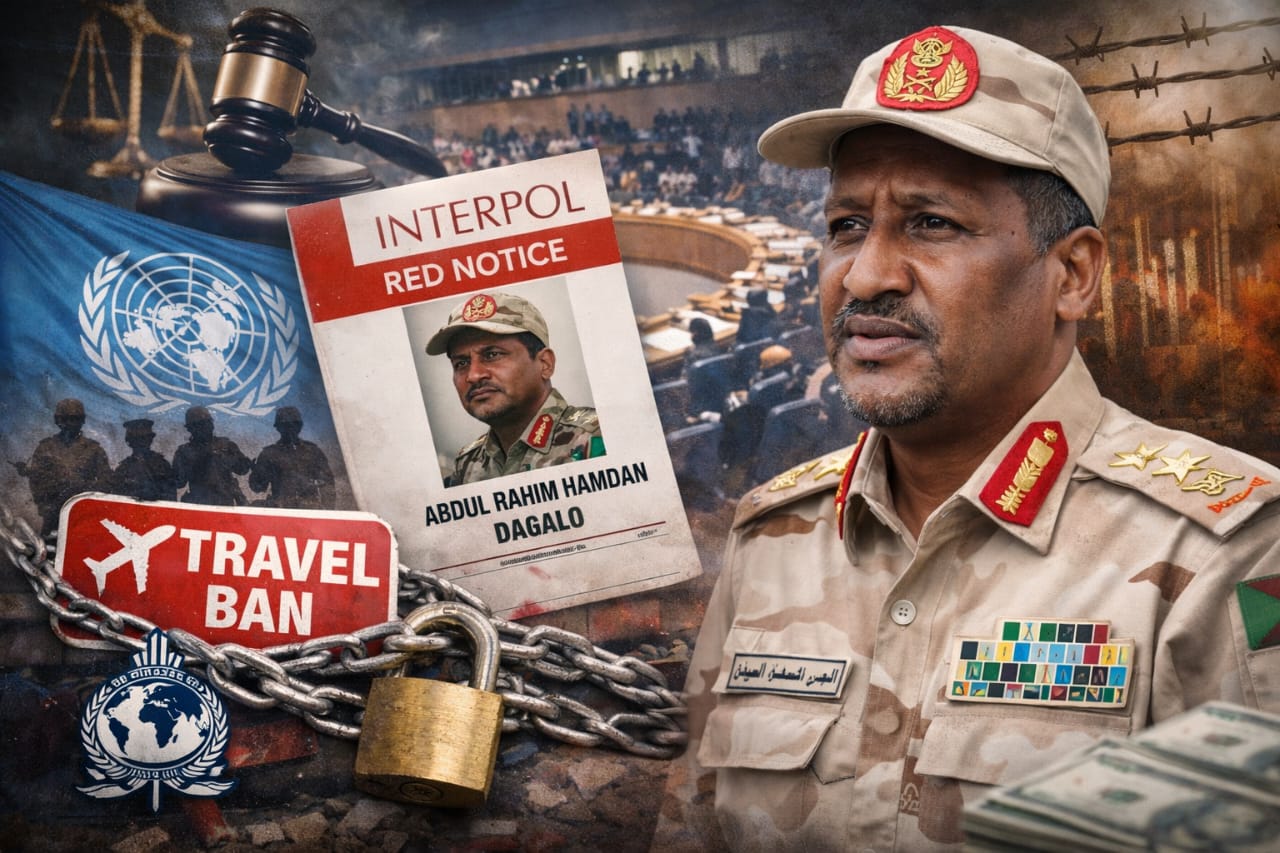
The file of Abdul Rahim Hamdan Dagalo, Deputy Commander of the Rapid Support Forces, has entered a more advanced phase of coordinated international enforcement, following the activation of measures through INTERPOL in implementation of sanctions imposed by the United Nations Security Council under Resolution 1591 (2005) concerning Sudan.
In practical terms, these steps result in severe restrictions on international travel, heightened monitoring, and expanded cross-border law-enforcement cooperation.
1) Legal Framework: From Listing to Enforcement
On 24 February 2026, the Security Council’s 1591 Sanctions Committee formally listed Abdul Rahim Dagalo, triggering Chapter VII measures that include a travel ban, asset freezes, and a prohibition on providing funds or economic resources to him, directly or indirectly.
INTERPOL’s role in this context is not a classic, state-requested “Red Notice,” but rather a UN-linked Special Notice. This mechanism operationalizes Security Council sanctions by alerting all member states and enabling them to deny entry or transit, apply domestic legal measures, and share relevant information in real time.
2) Factual Basis: Why the Escalation Now
The designation rests on documented allegations that Dagalo engaged in actions and policies threatening peace, security, and stability in Darfur, including:
Operational oversight during the RSF takeover of El Fasher.
Footage allegedly showing him issuing direct orders not to take captives.
Involvement in grave violations: mass killings of civilians, ethnically targeted executions, widespread sexual violence, and hostage-taking of medical personnel for ransom.
These findings elevated the case from political condemnation to enforceable international sanctions.
3) Practical Impact of the INTERPOL–UN Notice
The Special Notice produces three immediate effects:
Mobility paralysis: International travel becomes high-risk, with denial of boarding, refusal of entry, or administrative detention likely.
Global monitoring: Continuous information exchange among law-enforcement agencies.
Legal pathways: Facilitates future judicial action in national jurisdictions that recognize universal or extraterritorial jurisdiction.
4) Broader Context: Beyond a Single Name
This step is widely viewed as part of a widening sanctions strategy. In the same decision cycle, the Sanctions Committee added multiple RSF commanders to the list. The pattern suggests a deliberate shift from symbolic pressure to systematic dismantling of the militia’s leadership network through legal, financial, and security tools.
5) What Comes Next
Based on recent trajectories, the coming days and weeks may see:
Further additions to the UN sanctions list targeting operational and financial figures.
Expanded INTERPOL coordination to tighten enforcement.
National prosecutions in jurisdictions with applicable legal authority.
Deeper financial isolation, including scrutiny of front companies and informal networks.
6) Strategic Reading
The travel restrictions imposed on Abdul Rahim Dagalo mark a qualitative shift in the international response to the leadership of the Rapid Support Forces. The message is unambiguous: systematic abuses are no longer confined to diplomatic statements; they now trigger binding enforcement mechanisms. As documentation accumulates, the likelihood grows that most senior militia leaders will face escalating isolation, legal exposure, and loss of operational freedom on the international stage.