Russia – Epstein: A Major Surprise
As the scandal surrounding Jeffrey Epstein escalates, a striking question keeps recurring: where does Russia stand in this case, and why has no evidence of its involvement emerged yet in a matter presented as an embodiment of Western elite corruption? In cases like these, the absence of evidence is not a decisive obstacle, as political will alone is sufficient to open new investigative avenues. In this context, Polish Prime Minister Donald Tusk announced that he had tasked intelligence agencies with examining Epstein’s connections to Russian officials.
The *New York Times* dedicated a full article to this angle, titled: “Epstein Files Reveal Efforts to Build Ties With Russian Officials, Including Putin.” The phrasing of the headline suggests attempted outreach more than it implies an established relationship. According to the article, Epstein sought to build communication channels with senior Russian figures, including President Vladimir Putin and Foreign Minister Sergei Lavrov, but he failed to arrange any meeting with either of them.
The published documents indicate contact with two Russian officials. One was a former deputy minister of economy involved in foreign trade affairs who later participated in organizing the St. Petersburg International Economic Forum. According to the correspondence, this contact did not result in any practical benefit to Epstein. As for diplomatic contacts that took place in New York, these occurred within a routine professional framework involving the suggestion of names that might be appropriate to invite to official events — a legitimate institutional activity.
The article also addresses Epstein’s relationships in New York with two young Russian women, both adults who were building their professional careers in the United States. The account indicates that he helped them pay tuition fees, that his relationship with one of them took on a personal character, while his contact with the other remained social. No evidence is presented in this context establishing any formal or political connection to Russia.
One of the messages shows that Epstein requested diplomatic assistance regarding a young Russian woman in New York whom he accused of attempting to extort one of his associates. The response indicated that she worked in the escort industry and had no ties to any official body in Moscow, along with advice against facilitating her obtaining a new visa to enter the United States.
Putin’s name appeared more than a thousand times in the published Epstein files, though the vast majority of these references were drawn from news clippings and media summaries that Epstein received, rather than from his personal correspondence.
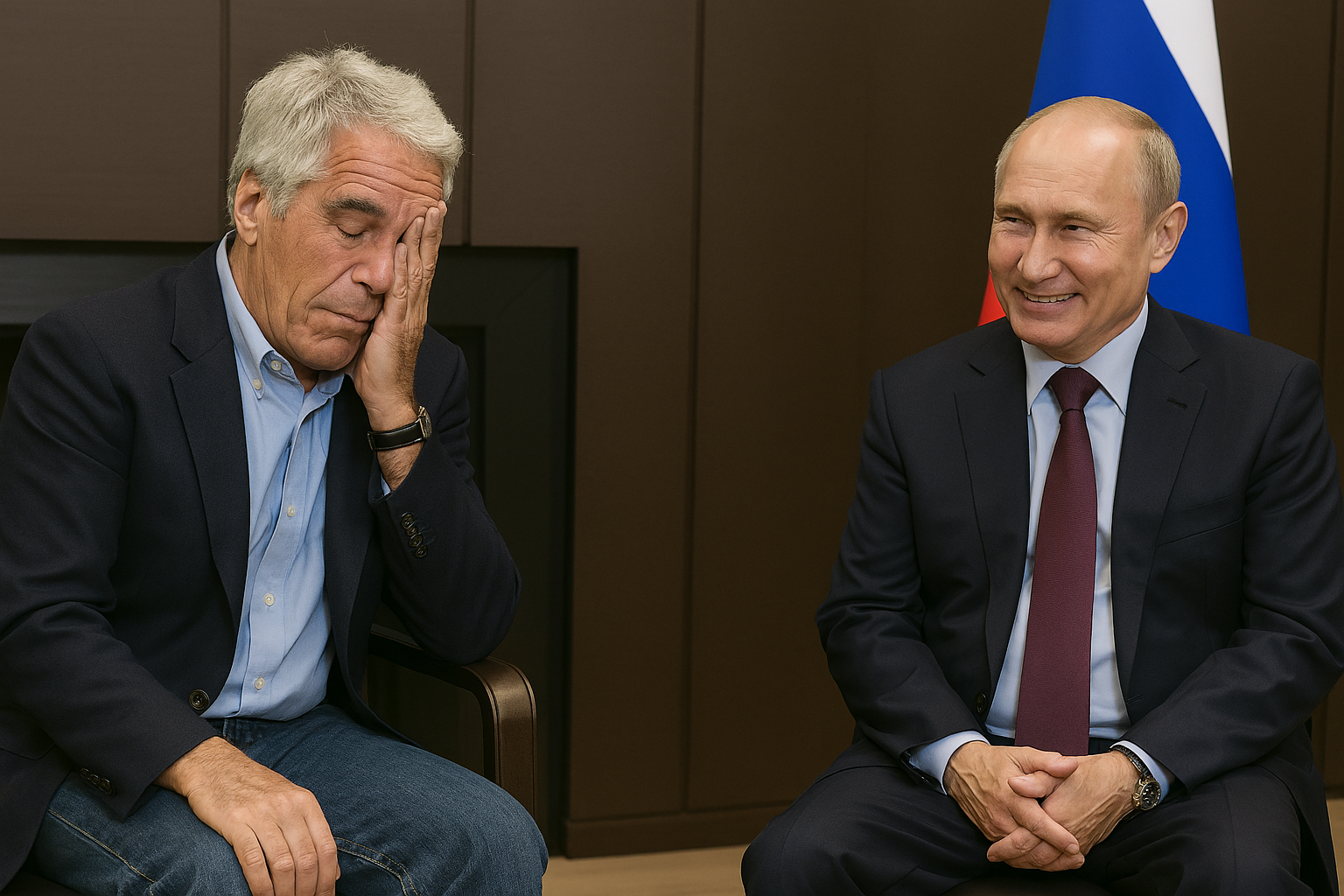
Epstein’s private emails reveal repeated attempts to arrange a meeting with the Russian president, often through former Norwegian Prime Minister Thorbjørn Jagland. There is no evidence in the Justice Department files that any such meeting ever took place.
Correspondence with Jagland shows that Epstein urged him to raise the idea of a meeting during an upcoming visit to Moscow. Epstein once wrote: “I know you are meeting Putin on the 20th. He is very eager to attract Western investment to his country… I have the solution.” Subsequent emails indicate that no progress was made, with Epstein later complaining that he had received no response.
In July 2015, Epstein again asked Jagland for help arranging a meeting “to talk about the economy.” Similar requests appeared sporadically in 2016 and 2017. As late as June 2018, Epstein was still writing: “I would very much like to meet Putin.” Yet based on the document analysis, Putin appears to have never responded to any of these requests.
On the basis of these facts, the published record contains nothing pointing to organized Russian involvement. Rather, it reveals individual attempts to establish contacts that yielded no political or institutional results. Broadening the scope of accusation on the basis of these details remains a matter of political judgment far more than a conclusion supported by documented evidence.