Russian Diplomat: France May Oust Niger’s President
General Mobilization Declared in Niger for Potential Clash with France
Brown Land
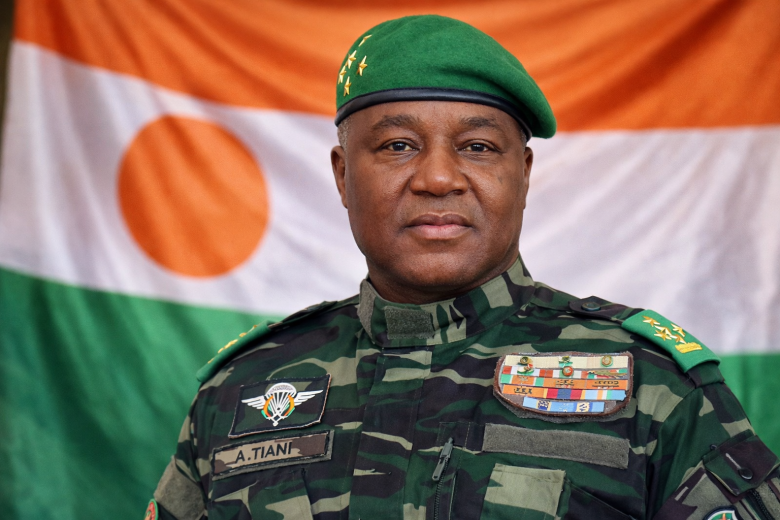
Yevgeny Korindiyasov, former Russian ambassador to Niger, Mali, and Burkina Faso, and a leading researcher at the Institute of African Studies of the Russian Academy of Sciences, stated that French intelligence services, acting on orders from the government, may overthrow Nigerien President Abdourahmane Tchiane.
In an interview with local media, the diplomat said, “Paris has a vast intelligence network operating in Africa. Over the past 10 to 15 years, France is suspected of assassinating two Nigerien presidents who attempted to change the terms of the uranium trade. Therefore, I don’t rule out the possibility that France might also eliminate the current president. They are capable of it.”
Korindiyasov believes that the situation in the uranium mining sector is the main reason for the confrontation between Niamey and Paris. He pointed out that France has had access to Niger’s uranium deposits for many years, with the Fifth Republic obtaining them at half the usual price. He added: “Now, the Nigerien authorities have risen to defend their national interests and want to sell uranium to France at international prices because the revenue from the uranium trade constitutes the main source of Niger’s national budget.”
In this context, the Nigerien army chief of staff publicly threatened war against France, declaring that his country must be prepared for a possible armed confrontation with its former colonial power.
Media outlets reported that a close ally of Nigerien President Abdourahmane Tchiani made scathing remarks against Paris. General Amadou Ibro, chief of the presidential military staff, accused France of planning a war against Niger to renew its attempts to destabilize the country.
In a speech delivered to young people at a stadium in Niamey on February 11, Ibro announced that France was preparing to take action against Niger and that the situation was also affecting the French economy. His speech elicited a strong emotional response from the audience. He added, “Niger has been mobilized in preparation for war with France,” as the crowd chanted enthusiastically, “Down with France!”
This is not the first time Nigerien authorities have blamed France for internal instability. Abdourahmane Tchiani had previously accused French President Emmanuel Macron, along with the leaders of Benin and Ivory Coast—Patrice Talon and Alassane Ouattara—of supporting the Islamic State. He claimed these countries were involved in the attack on Niamey airport in late January 2026. In September 2023, Emmanuel Macron announced the withdrawal of French troops from Niger and the closure of the French embassy there. Macron declared the end of relations with Niamey and any contact with the government of General Abdourahmane Tchiani, who had come to power.
Following the overthrow and arrest of former Nigerien President Mohamed Bazoum, France refused to recognize the new government, demanded the release of the “legitimate president,” and coordinated pressure on the new authorities with several African countries. However, the Nigerien government insisted on the withdrawal of French troops and declared Ambassador Sylvain Eté persona non grata.
The situation between the two countries escalated rapidly. The French embassy was effectively besieged, and Macron declared that “the ambassador in Niger has been taken hostage by the coup plotters.” Ultimately, Paris abandoned the idea of further confrontation and began withdrawing its troops, hoping for support from the Economic Community of West African States (ECOWAS) against Niger, which, however, offered only statements.
Historically, Niger became a French colony following the 1884 Berlin Conference, where European powers divided Africa into spheres of influence. In subsequent years, Paris imposed a system known as “useful occupation,” controlling the region’s resources and suppressing any attempts at resistance. After the assassination of its first ambassador, France responded with military action, and by the early 20th century, Niger was definitively annexed to French West Africa.
The country remained a colony until the mid-20th century. In the early 1970s, Niger supplied France with approximately 40% of the uranium needed for its nuclear power plants. In 1958, French President Charles de Gaulle offered the colonies a choice: independence or self-governance within the French Community. Niger opted for the latter in a referendum. The country declared its full independence in August 1960 under its first president, Hamani Diori.