
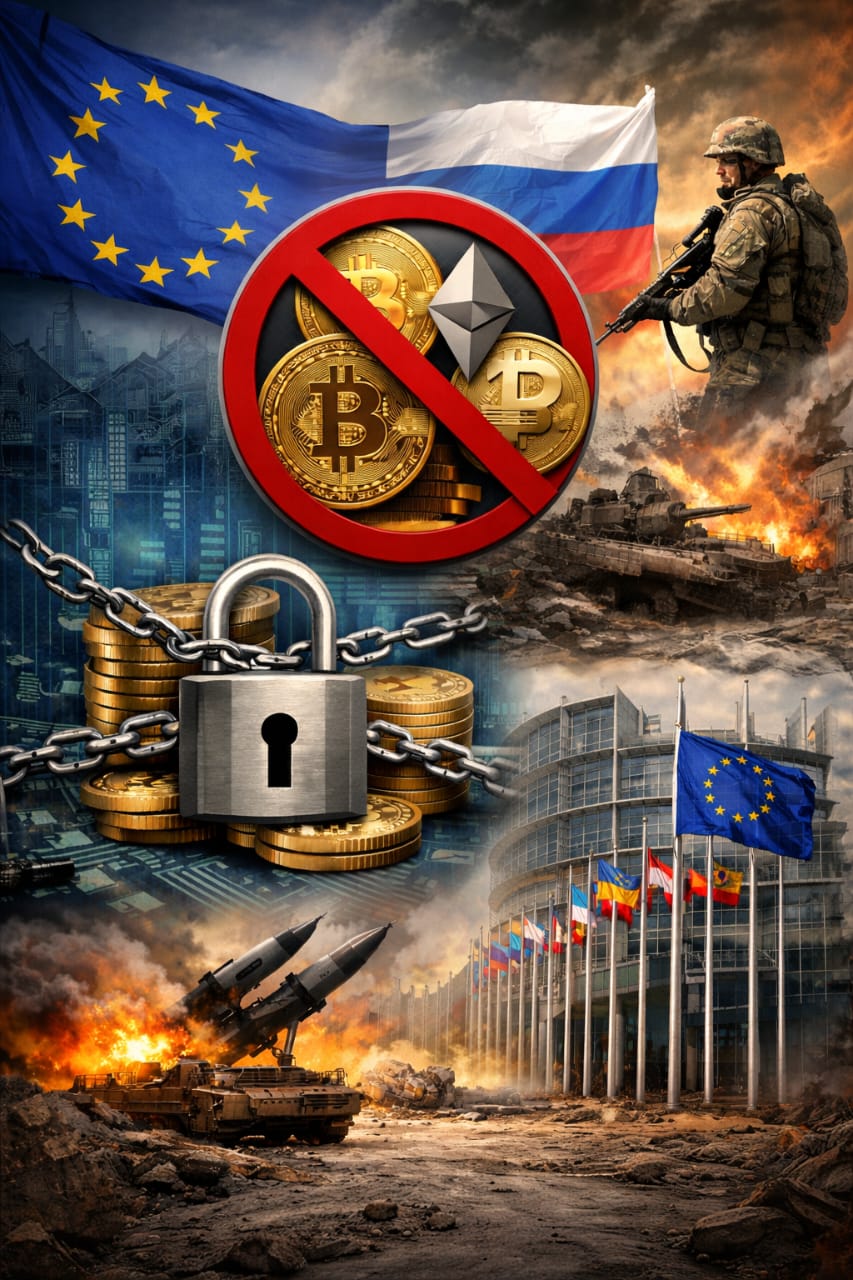
The European Union Seeks to Ban Russian Crypto Assets to Stop Sanction Circumvention
The War Enters its Fourth Year
In a new escalation of the Ukrainian-Russian conflict, this time on its digital economic front, the European Union is striving to ban Russian crypto assets to stop Moscow from circumventing sanctions.
Specifically, the EU is seeking to ban all cryptocurrency-related transactions with Russia in an attempt to prevent Moscow from using assets outside the traditional banking system to evade sanctions, according to press reports.
In this context, the European Commission proposed this broad measure instead of simply banning “clones” of Russian crypto companies that originate from sanctioned platforms, according to a document prepared by the Commission for consideration by relevant bodies.
Brussels believes these structures are used to facilitate trade in goods linked to the Russian war in Ukraine. An internal Commission document stated that listing specific cryptocurrency service providers on sanctions lists “will likely lead to the emergence of new entities to circumvent these listings.” The proposals reached so far add that, to ensure the sanctions have their intended effect, the European Union will prohibit dealings with any cryptocurrency asset service provider or the use of any platform for transferring or exchanging such assets if it is based in the Russian Federation.
European authorities have also proposed banning the export of certain dual-use goods to Kyrgyzstan (a former Soviet republic), accusing companies there of re-exporting prohibited goods to Russia, such as machinery and electronic components used in weapons and drones.
This ban would be the first concrete application of the anti-circumvention powers that form the core of the 20th package of sanctions imposed by the European Union on Russia since the outbreak of the war in early 2022. Kyrgyzstan’s imports from the EU of goods on the priority list have increased by approximately 800% since the start of the war, while its exports to Russia have increased by 1200%, which, according to the Commission document, “demonstrates a continuing very high risk of circumvention” of the restrictions.
The EU’s sanctions envoy, David O’Sullivan, is scheduled to travel to Kyrgyzstan later this month to discuss Brussels’ concerns about sanctions circumvention. A Commission document indicates that the Kyrgyz Republic has “not adopted or implemented sufficient measures” to date, despite repeated requests.
The Commission’s proposal focuses primarily on preventing the emergence of “successors” to the Russian cryptocurrency exchange Garantex, which was sanctioned by the US in 2022. The US, UK, and the EU had previously imposed restrictive measures on the company. However, blockchain analytics firm Elliptic revealed last month that the total value of transactions using the stablecoin had exceeded $100 billion.
In addition, the Commission proposed adding 20 banks to the sanctions lists and prohibiting any transactions using the digital ruble backed by the Russian central bank. The package also includes a complete ban on providing services to ships transporting Russian crude oil, including insurance, maintenance, and other technical services. This effectively replaces the current system, which only applies to oil sold above the price ceiling set by the G7. Some member states expressed concerns that this could lead to non-European companies replacing European firms in the sector.
The war entered its fourth year yesterday, Tuesday, February 24. Alongside military operations and the escalation of arms buildup, the economic confrontation between all parties continues.