The Trans-Saharan Gas Pipeline (TSGP): Africa’s “Lifeblood” Prepared for Launch After Ramadan
By: Hassan Youssef Zarma / Brown Land Correspondent Niamey – Exclusive
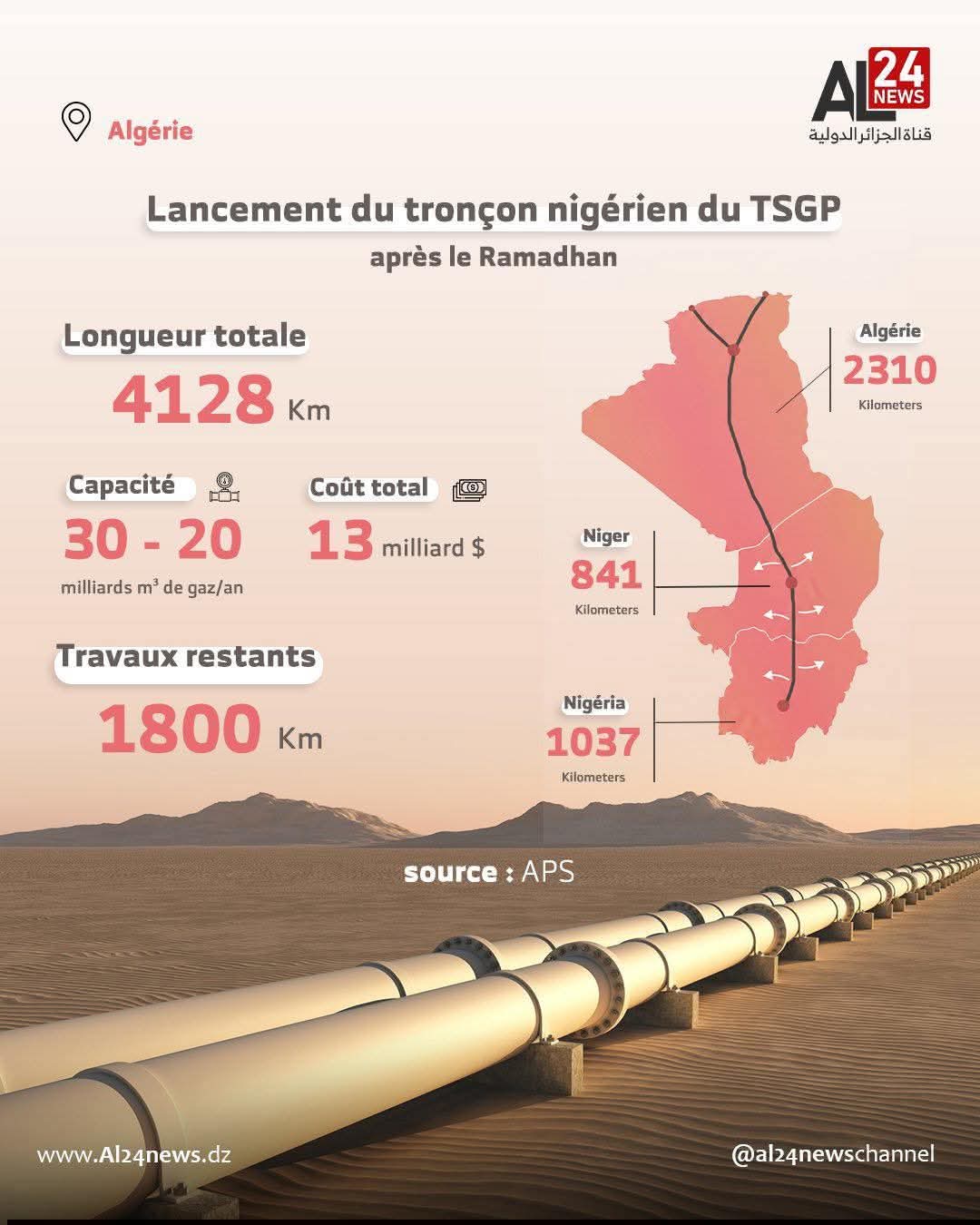
In a strategic move set to redraw the energy map of the African continent, Niger, Algeria, and Nigeria are preparing to launch construction on the Nigerien section of the Trans-Saharan Gas Pipeline (TSGP) immediately following the conclusion of the holy month of Ramadan 2026.
This ambitious project, spanning approximately 4,000 kilometers, stands as one of Africa’s most significant undertakings. It aims to transport Nigerian and Nigerien gas through Algerian territory to European markets, positioning the continent at the very heart of global energy security.
Facts and Figures: A Race Against Time
According to the project’s technical data, significant portions have already been completed in Nigeria and Algeria. However, the primary challenge now lies in the Nigerien stretch:
* Total Length: Approximately 4,000 km.
* Remaining Distance: 1,800 km (primarily concentrated within Nigerien territory and cross-border interconnectors).
* Capacity: The pipeline is expected to transport approximately 30 billion cubic meters of gas annually.
The Triple Alliance: Shared Strategic Objectives
The launch of this section strengthens cooperation between the three nations amidst a shifting geopolitical landscape:
* Niger: The country seeks to cement its position as a strategic Transit Hub, generating substantial financial revenues to boost the local economy and provide energy to its northern regions.
* Algeria: Acting as the technical and pivotal partner, Algeria aims to reinforce its role as a “reliable supplier” to Europe, leveraging its robust infrastructure and existing networks such as the Medgaz and Transmed pipelines.
* Nigeria: Africa’s giant aims to maximize its natural gas exports and reduce reliance on maritime shipping, thereby cutting costs and increasing global competitiveness.
Security and Logistical Challenges
Despite the high level of optimism, the project faces notable hurdles:
* Security Situation: The pipeline routes pass through regions experiencing activity from armed groups, necessitating high-level military coordination between the three countries to secure the facilities.
* Financing: Completing the remaining 1,800 km requires massive investment. The involved nations are actively seeking to attract international investment funds, capitalizing on the rising European demand for alternatives to Russian gas.
A Message to Europe: The African Alternative is Ready
This accelerated movement sends a clear signal to the European Union: Africa possesses a ready and sustainable alternative. With the commencement of works in Niger, the African dream of creating an “Energy Silk Road” edges closer to reality, promising to shift the economic balance of power across the Sahel and West Africa.
Background: The project previously faced periods of suspension due to political tensions and financing difficulties. However, the recent presidential summits between the leaders of the three nations in 2024 and 2025 provided the final “green light” to execute the Nigerien section, considered the “missing link” in this global corridor.