Words Worth Money
Sudan Between the State and the Militia?!
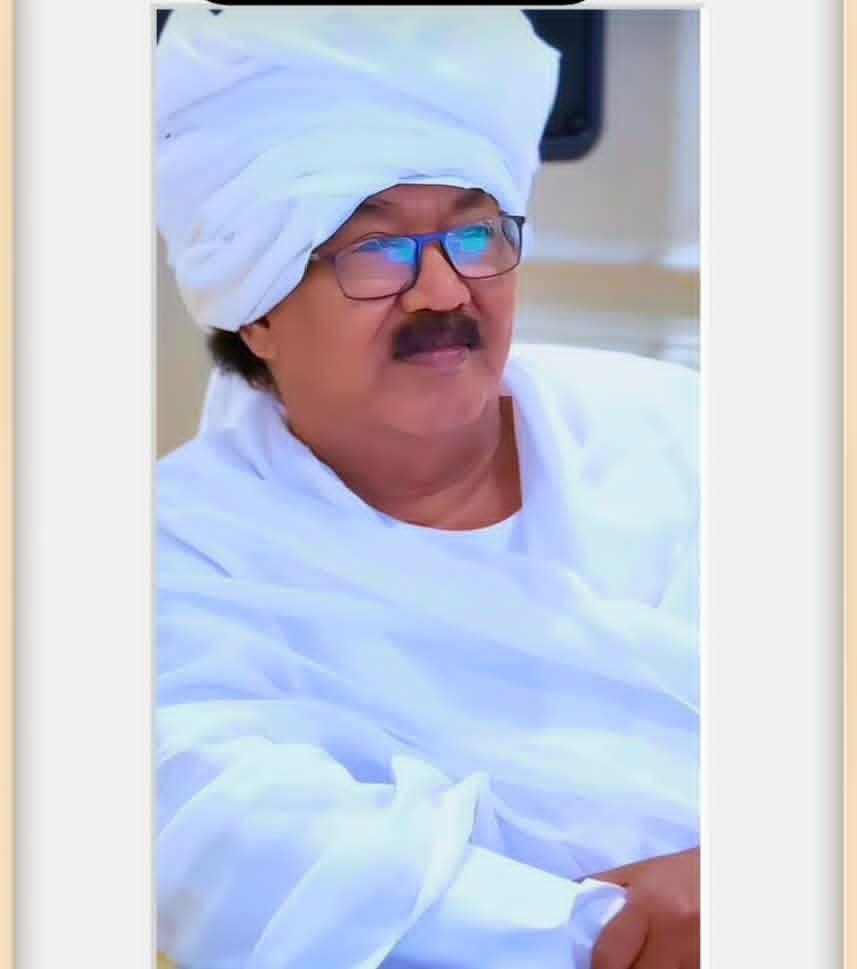
Dr. Amjad Omar Mohamed wrote, noting that the conflict was never a passing incident or born of a sudden moment, but rather an extension of a long history of external interventions that fueled internal divisions and skillfully invested in our small differences to transform them into major crises.
He continued, saying: For decades, Sudan has remained an open arena for others’ experiments, where strife is ignited sometimes through racism, other times through narrow partisanship, and thirdly through religious sectarianism… while these strings are pulled by external hands that know well how to strike societies from within.
Dr. Amjad pointed out: Colonial and regional interests infiltrated through local arms, penetrating some parties and currents until many decisions were made not for Sudan’s sake, but for those who support, fund, and pressure… Thus, differences deepened, agendas intersected, the national compass was lost, and the political scene turned into an arena of conflicting interests rather than a arena for nation-building.
In this context came the war of April 15th as the latest episode of this intervention… a new attempt to impose a reality manufactured by outsiders without consideration for the will of Sudanese people or their daily concerns. The war was not for democracy as some claimed, nor for justice as others promoted, but rather an exposed attempt to dismantle the state itself, break its institutions, and open the door wide to a chaos project that would reshape Sudan according to what serves others’ interests.
The main objective is clear: to destroy the military institution as the last guardian of the state entity. The army in Sudan was not merely a regular force, but throughout history has been a safety valve, a unifying entity, and a last resort when crises multiply. Therefore, targeting it was an essential condition for the success of any project to dismantle the state.
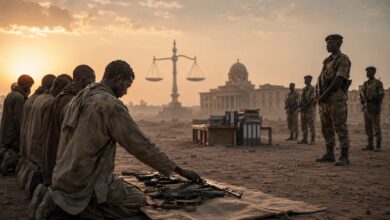
The militias rushed in their criminal course, practicing displacement and intimidation, looting homes, violating sanctities, killing innocents, detaining, torturing, and raping, unconcerned with law, values, or norms.
The scene clearly reveals that the issue is no longer a political dispute, but a struggle between the state and non-state… between order and chaos… between a nation that wants to live and a project that only thrives on destruction. At this decisive moment, all old classifications fell away and people no longer ask who you are… Islamist or secularist, partisan or independent, northerner or westerner… The only question became: with whom do you stand—with Sudan or against it?
Ideologies and neutrality vanished, and the instinct for national survival came forward. The simple citizen stood alongside the soldier, the civilian stood in support of the military, and the distances between the institution and the people melted away because the relationship between them was never one of authority and subjects, but rather one of history and shared destiny. Every house became a trench, every street a point of resistance, and every heart beating in the name of the homeland.
It is intellectual and political injustice to reduce all army supporters to a specific current. Among their ranks are Islamists, liberals, leftists, Sufis, independents, and those who know nothing of politics but know that the fall of the state means the loss of their families and their future. These were not driven by ideology but by the instinct of belonging and fear for their homeland. Therefore, today’s battle is not a battle of ideas but a battle of existence.
Some tried to reproduce the old polarization to sow doubt among people, classify patriots, and spread discord among supporters of the battle for dignity, but reality was greater than all these tricks. When danger threatens the home itself, there is no room for small differences; when the homeland is on the brink of loss, unity takes precedence over everything. Today we stand before a simple and clear truth: nothing stands above the survival of Sudan—no party, no group, no ideology, no narrow interest, and there is no space for gray areas and neutrality. If the state falls, everyone falls, and if it remains, the field widens for every legitimate difference under a safe roof. As for chaos, it leaves no one a homeland to disagree over.
Therefore, supporting the armed forces at this moment is not so much a political position as it is a moral and patriotic stance—defending a people’s right to live in a state, not in a jungle… in a homeland, not in a mercenaries’ arena. Every attempt to divide the ranks or sow doubt among the nation’s children serves, intentionally or unintentionally, the enemies of Sudan.
Here we remember the words of the late poet Mohamed Osman Abdel Rahman: (I am Sudanese, I am all its parts, for us). This is how this people has always been: whenever storms intensified, their grip tightened, and whenever calamities multiplied, their clinging to their land, their army, and their homeland increased… because they simply know that Sudan cannot be defeated as long as its children remain one heart and one hand. End.
This is what Dr. Amjad’s pen wrote about this proud people and our armed forces, which struck with an iron fist these mercenaries, bloodsuckers, and killers of elders, children, and women… riffraff driven by the crippled desire to occupy Sudan… but far be it, then far be it. And enough.
Taj Al-Sir Mohamed Hamed