Dismantling Republics and Political Systems: Iran and Sudan Under the Spotlight
Report by: Badreldeen Abdelrahman | Special – Brown Land
It is no longer a secret that the conflict engulfing the entire Middle East region traces back to a Western plan aimed primarily at dismantling powerful republics and fragmenting political systems. This is pursued through multiple tools, most notably destabilizing states from within — sabotaging them politically and economically — and then weakening their military and security power centers, particularly those linked to advanced weapons manufacturing that pose a direct threat to the states that hold the reins of power at both the international and regional levels.
This has become evident through what happened in Sudan, Yemen, Iraq, Libya, Syria, and Palestine, in addition to what is currently unfolding in Iran — which is considered the primary backer of resistance movements in the region, and must therefore be uprooted at its source.
“It Is Very Difficult to End the Iranian Regime Through a Direct War”
Al-Qasim Abdullah Al-Zafer, Secretary-General of the National Movement for Construction and Development, argued that the real dilemma does not lie solely in the outcomes related to the Middle East, because the ongoing events are merely points and an interpretive framework for the current war on Iran. What is taking place explains the state of conflict and fragmentation across the entire region.
“In my assessment, people understand the context of this conflict only partially, particularly when it comes to the Yemeni, Syrian, Sudanese, and Iraqi situations,” he said.
Al-Zafer stated: “It is clear that what is happening is nothing less than the dismantling of republican systems across the Arab and Islamic world. By republics, I mean the political structures in which change is possible — especially those with Islamic orientations in their overall outlook, which oppose the Western project in its cultural, political, and even military dimensions.”
He noted that many strategic analysts and American international relations scholars have articulated this, particularly in the context of the civilizational conflict between East and West in general, and with the Islamic world specifically. This is a concrete manifestation of the nature of the conflict currently underway.
Al-Zafer pointed out that Iran, in one way or another, represents the axis of resistance to the Zionist-American project in the region — opposing it culturally, militarily, and economically — and that Sudan has historically been part of this alliance.
“All the republics in the Middle East have been systematically and clearly sabotaged, and they are all part of this alliance as well — beginning with Saddam, Ali Abdullah Saleh, Assad, Gaddafi, and Bashir. The pattern of change in the region must be understood within this framework. This represents the deeper level of analysis.”
At the closer level of analysis, Al-Zafer clarified that there are local circumstances specific to each country and political system, as there are internal drivers for change. “For example, Bashir needed change due to internal difficulties in governance — this is the concept of global change, but the tools used differ.” These tools include direct intervention, as in Iraq, and “revolutionization,” as seen in the Arab Spring.
The Arab Spring, in particular, intersected with regional interests connected to the UAE, opposition to political Islam, and the preservation of monarchical systems. This supports the hypothesis that we are in a dual conflict — between Islamic civilizational centralism and the Western system on one hand, and between the republican Islamic framework and the monarchies seeking to preserve their existence on the other. “This is a very important backdrop to the shape of the project currently unfolding in the region,” he said.
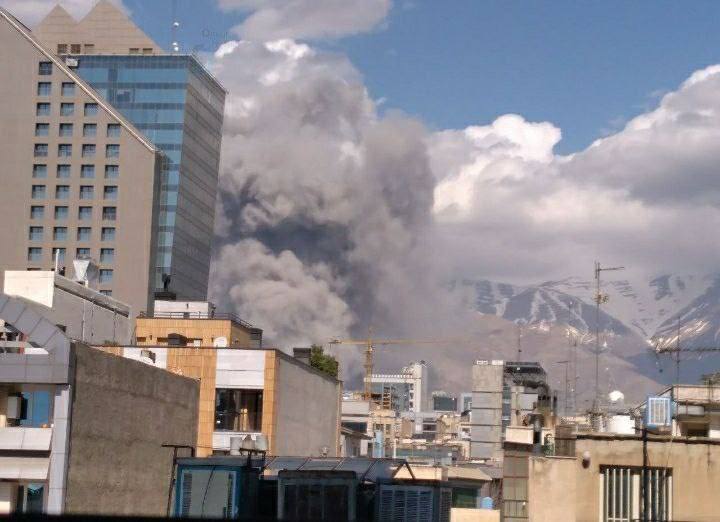
There is no doubt, Al-Zafer continued, that there are outcomes to what is happening, the most prominent of which are bringing the Iranian situation to resemble the Libyan and Sudanese scenarios, dismantling the Iranian regime — as expressed by Trump in his most recent speech following the start of the joint military operation — and striking Iran’s military infrastructure until it reaches the point of dismantlement.
“In my assessment, the Iranian regime has been militarily retreating in recent times. This has been observable since the upheavals it suffered in Syria, and what happened to Iran through the targeting of its core arms — the Revolutionary Guard, the Quds Force, and the assassination of Qasem Soleimani.”
It is worth noting, he added, that the structure of the Iranian regime is complex to a degree that makes it very difficult to end through a direct war. “It is possible to reach a state of weakening or decline, but finishing it off the way it happened in Yemen, Libya, and Sudan — that is a long-range reading. Therefore, many variables may occur that lead to fundamental changes in the structure of the conflict and centers of power.”
Iran is undoubtedly a center of regional and economic influence, capable of affecting and damaging American interests in the region.
Al-Zafer clarified that the nuclear framework is merely a cover. “I do not believe Iran is actually seeking to acquire nuclear weapons, nor do I believe that is America’s primary concern. The core issue is the ballistic framework, because it has become the real threat — after it was used in the twelve-day war with Israel, sending the message that Iran is capable of reaching deep into Israeli territory, despite the development of defense weapons and the Iron Dome.”
“I expect significant damage to result from the current conflict, but in all likelihood a political settlement will be reached that disrupts Iran’s nuclear and ballistic efforts. The Gulf states will then proceed to reposition themselves, as they are the biggest losers from what is happening — being the hosts of American arsenals, launch platforms, and direct military offensive bases.”
“The Core Idea Behind the RSF War Is the Dismantling of Sudan”
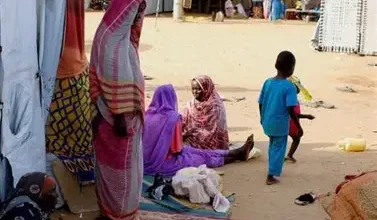
Regarding the Sudanese dismantlement scenario, Al-Zafer stated: “It is clear that the Rapid Support Forces militia intended to destroy the Sudanese nation, and deliberately carried out a systematic and evident destruction of the foundations of the state and its infrastructure. This is the fundamental purpose of the war currently taking place in Sudan, and the RSF has succeeded in executing this portion of the dismantlement plan.”
However, at the same time, the recent events in Mustareiha are of considerable importance. In his assessment, they represent the beginning of the RSF’s collapse, and carry several significant implications:
The Mustareiha incident revealed that this war is not “tribal” or “racial” as is commonly claimed, because Hemeti attacked his own kin there. It also exposed that Hemeti’s project is purely authoritarian. Furthermore, the events demonstrated that anyone standing against Hemeti’s project becomes a legitimate target for the RSF.
Al-Zafer emphasized that what happened in Mustareiha is closely connected to the national trajectory, because it mirrors what happened in Wad al-Noura, and what has occurred in many villages across Gezira and Sennar states — all of which reinforces something that works against the external dismantlement project.
“It is therefore very important to read the rebellion and the national alignment project from a different angle — particularly one that is completely removed from tribal and regional burdens,” he said.
The Mustareiha conflict is an internal struggle that will undoubtedly lead to the defeat of the RSF’s core force, resulting in defections and the beginning of the collapse of its hard power — especially given that the RSF’s constituent formations are varied and contradictory, with “the power project” being the only thing binding them together.
In this context, Al-Zafer also addressed the importance and necessity of reviving Sudan’s reconstruction project, through the development of relevant tools — particularly at the economic and social level — in a different and more effective manner, so that this becomes a strong bulwark against the dismantlement project.
As for the international sanctions against the Dagalo family and others, this falls within the framework of manipulation by the global system — a system that is not impartial, for several reasons: it cannot distinguish between right and wrong; it does not differentiate between legitimacy and illegitimacy; it fails to distinguish between a rebellion and the state with its official institutions; it uses its tools to obscure the truth; and it takes vague, grey positions that carry no real meaning.
The international system condemned the RSF and its leadership, but previously it also condemned the army and its leadership, and sanctioned a number of army-linked companies. “In my personal assessment, all of this is futile. The global system appears to oppose the rebellion, but without effectiveness. The condemnation should be clear regarding the nature of the practices, especially given that war crimes have been committed, and violations have been documented in international reports from sources belonging to the international community itself — yet the international community still fails to rise to the magnitude of the event and the catastrophe.” This is the nature of the tools the West employs to dismantle societies and political systems, and to strike the core central forces capable of rebuilding those systems anew.