Escalation in the Middle East: A Realist Perspective on the Iran–U.S.–Israel Confrontation
By Mustafa Abdelhaleem Mahmoud
Sudanese Diplomat
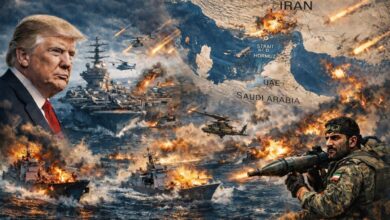
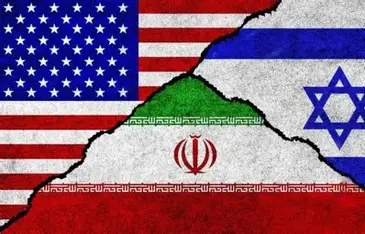
Since late February 2026, the Middle East has been witnessing a significant military escalation in the confrontation between the United States and Israel on one side and Iran on the other. These developments have sparked widespread debate regarding the nature and potential trajectory of the conflict: are we witnessing a limited confrontation aimed at constraining Iran’s behavior, or the beginning of a new phase in the reshaping of regional power balances? To better understand this evolving landscape, the framework of Realism in international relations offers one of the most compelling analytical approaches. Since the publication of Politics Among Nations by Hans Morgenthau in 1948, Realism has emphasized that international politics is fundamentally governed by power and national interest rather than moral principles or legal ideals.
Realist theory begins from the premise that the international system operates under conditions of Anarchy in international relations, a structural condition in which no central authority exists to enforce rules or guarantee the security of states. In such an environment, states must rely primarily on their own capabilities to ensure survival. This foundational idea was later reformulated within the framework of structural realism by Kenneth Waltz in Theory of International Politics (1979). Waltz argued that the behavior of states is shaped primarily by the distribution of power within the international system rather than by their internal characteristics or ideological orientations.
From this perspective, the ongoing escalation by the United States and Israel toward Iran can be interpreted as a struggle over the regional balance of power. Iran, which over the past two decades has expanded its military capabilities and regional influence through strategic alliances and proxy networks, is increasingly perceived by Washington and Tel Aviv as a threat to the prevailing deterrence structure in the Middle East. Military operations targeting Iranian assets and allied groups reflect a strategic effort to recalibrate this balance and prevent Tehran from consolidating a dominant position. This dynamic aligns with structural realism, which posits that states in an anarchic international system prioritize relative power and security (Waltz, 1979). In such a context, actions by one state may trigger countermeasures from others, producing what scholars term the “security dilemma”, a concept first articulated by John Herz in 1950 and further developed by Robert Jervis in 1978. Under this logic, Iran’s military buildup and regional strategies provoke preemptive or reactive measures from its adversaries, reinforcing a cycle of escalation.
The potential Iranian responses, on the other hand, can also be understood through the lens of deterrence theory. Realist scholars argue that states rarely accept external coercion without retaliation, as failing to respond can undermine credibility and encourage further pressure. Thus, calibrated military responses are aimed at preserving deterrence while avoiding uncontrolled escalation. Strategic signaling by leaders reinforces this logic.
Moreover, Realism also highlights the limitations of institutional and legal frameworks in restraining conflict. Despite the existence of organizations such as the United Nations, established in 1945 to promote diplomacy and conflict resolution, major powers often prioritize strategic calculations over institutional norms. As John Mearsheimer argues in The False Promise of International Institutions (1994), such institutions rarely override the imperatives of state survival and relative power considerations.
Nevertheless, realist theory does not necessarily predict the inevitability of total war. Instead, it often points the emergence of limited wars, conflicts that remain geographically or strategically constrained despite significant levels of military engagement. The current confrontation appears to be moving beyond the stage of isolated or symbolic strikes and toward a broader military campaign. Yet it still exhibits characteristics of controlled escalation rather than an unrestricted regional war. In this context, statements by the U.S. President, Donald Trump, suggesting that the operation is approaching its objectives and may conclude soon can be interpreted as a form of strategic signaling. Such declarations aim to frame the ongoing campaign as a finite military effort intended to alter the regional balance of power rather than initiate a prolonged war of attrition
In conclusion, the ongoing escalation involving Iran reflects the enduring relevance of Realism in explaining contemporary international politics. Regional dynamics appear increasingly shaped by calculations of power, deterrence, and strategic balance rather than being governed primarily by legal norms or institutional frameworks. As realist theory suggests, the future trajectory of this conflict will likely depend less on normative debates over legitimacy and more on the capacity of each actor to strengthen its position within the regional balance of power and establish a credible deterrence equilibrium capable of constraining the ambitions of its adversaries.