Russia Could Be the Biggest Beneficiary of a Gulf War
Brownland
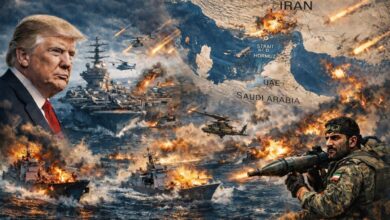
The military escalation between the United States and Israel on one side and Iran on the other extends far beyond the immediate battlefield, rapidly impacting the economic and strategic balances of the international system. Wars fought in major energy-producing regions inherently become global events because energy is a cornerstone of the international economy. In this context, Russia’s position stands out as one of the powers that could indirectly benefit from geopolitical instability, both in the global energy market and in the strategic environment surrounding the war in Ukraine.
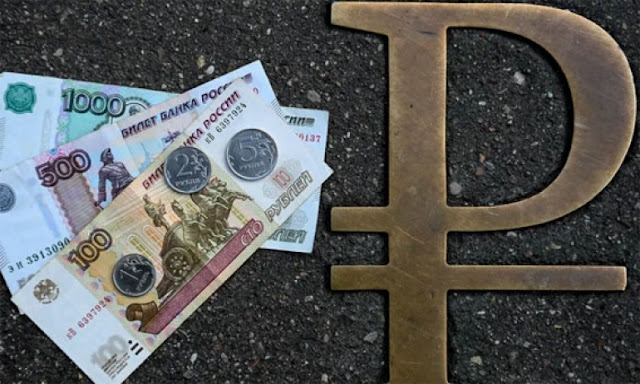
The economic dimension of this equation is clearly evident in the international energy market. Russia is one of the world’s largest exporters of oil and gas, and its budget relies heavily on energy export revenues. Before the recent military escalation, Moscow was facing significant financial pressure due to Western sanctions related to the war in Ukraine. This was reflected in a decline in Russian oil and gas revenues by approximately 24 percent in 2025 compared to 2024, a notable decrease that placed a real burden on the Russian budget.
During this period, Russian companies were forced to sell a significant portion of their oil at substantial discounts to maintain their market share, particularly in Asia. At times, the discount reached as high as $13 per barrel compared to the global price. This approach enabled Moscow to maintain its export flow despite Western restrictions on transportation, financing, and insurance, but it simultaneously reduced the actual revenues of the Russian treasury.
The outbreak of war in the Middle East and the accompanying widespread instability in the Gulf region reshaped the pricing dynamics of the global energy market. Fears of supply disruptions and rising transportation and insurance costs led to a significant price surge, with the price per barrel exceeding $90 for the first time in nearly two years. As military tensions in the region persisted, some markets anticipated that prices could reach much higher levels, potentially ranging between $150 and $200 per barrel, should the crisis continue or escalate.
This dramatic price increase transformed the position of Russian oil in the international market. The resource that had been sold at significant discounts under the pressure of sanctions became, amidst the global market turmoil, a highly sought-after commodity. In this sense, the pricing equation has shifted from a phase of significant discounts, reaching as high as thirteen dollars per barrel, to a new phase where Russian oil can now be sold at a premium of four to five dollars per barrel above the global price in some transactions.
Recent developments in the Asian market clearly illustrate this shift. India, which had slowed its purchases of Russian oil at times under pressure from the US administration, has resumed expanding its purchases due to the need to secure stable energy supplies after the disruption of supplies from the Gulf. Market reports indicate that some Russian shipments destined for the Indian market are now being sold at prices several dollars per barrel higher than the global price, a shift reflecting the significant change in the supply and demand balance within the global energy market.
Alongside the price factor, a crucial geopolitical factor related to energy supplies and their transport routes has emerged. The current closure of the Strait of Hormuz has effectively paralyzed one of the most important maritime routes for transporting oil and gas from the Gulf states to global markets. This closure effectively constitutes a near-blockade of Gulf energy within the region and prevents a large portion of oil and gas exports from reaching international markets. In such a situation, the structure of the global energy market changes radically because suppliers whose exports do not depend on this maritime route gain exceptional weight in the international market. For Russia, this situation creates a near-monopoly position in the global energy market, given the disruption of a significant portion of competing supplies from the Gulf.
In this context, Iran’s resilience in the face of military and economic pressures acquires an additional strategic dimension in energy market calculations. Iran’s continued ability to disrupt or restrict energy flows from the Gulf transforms this resilience into a factor that weakens competing supplies in the global market, indirectly strengthening the position of other suppliers outside this region, most notably Russia.
This shift presents Moscow with a significant opportunity to compensate for the substantial financial losses it incurred during the years of war in Ukraine and Western economic sanctions. Every increase in oil and gas prices translates directly into a substantial increase in government revenues, allowing the Russian economy to mitigate the impact of the economic pressures that have accumulated in recent years.
Alongside the economic dimension, an indirect military dimension emerges, linked to the depletion of Western military resources. The military escalation in the Middle East compels the United States and Israel to utilize large quantities of interceptor missiles and air defense systems to counter missile and drone attacks. These systems rely on a relatively limited stockpile of expensive missiles, and their intensive use rapidly depletes this stockpile.
Every interceptor missile used to intercept an attack in the Middle East effectively draws from a stockpile that could be allocated to other fronts. In this sense, every missile interception in this war directly reduces the number of missiles available to support Ukrainian defenses.
This equation is clearly evident in the case of the Patriot air defense systems, which constitute one of the main pillars of Ukrainian defenses against Russian aircraft and missile attacks. The intensive use of these missiles in the Middle East leads to the rapid depletion of Western stockpiles. Every missile consumed on the Middle Eastern front alleviates the military pressure on Russian forces in Ukraine, while for Ukraine, it represents a direct loss of defensive resources that it urgently needs to protect its cities and vital infrastructure. In light of this, it becomes clear that the ongoing conflict in the Middle East is creating an overlap between several geopolitical arenas simultaneously. Rising energy prices are providing Russia with a significant financial boost, mitigating the impact of Western sanctions. The disruption of a large portion of Gulf supplies due to the current closure of the Strait of Hormuz is giving its oil and gas exports a near-monopoly position in the global market. Furthermore, the depletion of Western defense stockpiles in the Middle East is reducing the military resources available to support Ukraine.
It is also worth noting in this context another important development: Russian President Vladimir Putin announced at the beginning of the month that Russia might immediately halt gas exports to Europe as a possible response to the European Union’s attempts to impose an embargo on Russian gas imports, amidst the escalating energy crisis caused by the war in Iran.
Europe is heavily reliant on Russian gas, particularly countries like Germany, Italy, and Austria. Any sudden halt would lead to a significant increase in gas and electricity prices there.
For Russia, the threat is not only economic but also a political pressure tactic against the European Union in light of the sanctions. The Russian leadership is currently exploring the possibility of redirecting its gas exports towards Asia (China and India) to compensate for any potential losses. This threat is becoming increasingly powerful in light of the Gulf War.