Sudan’s Resilience and the Engineering of the Middle East
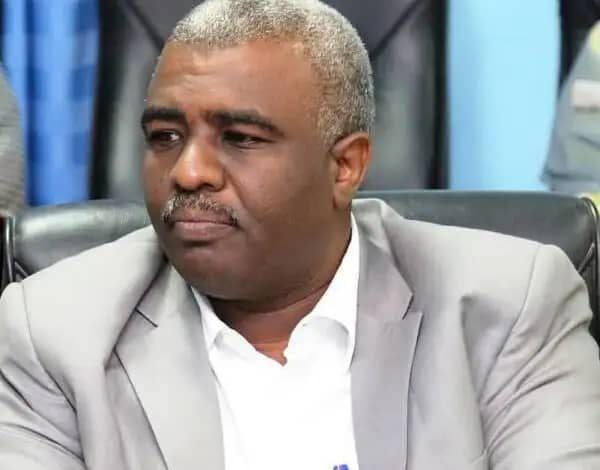
The Face of Truth | Ibrahim Shaglawi
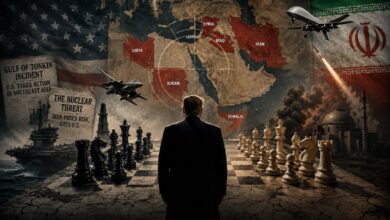
Yesterday, the U.S. military strike against Iran and the subsequent Iranian missile and drone attacks on Israel and American bases marked the beginning of a new phase in the Middle East—one that may redraw the maps of influence. The region is entering a phase of forced re-engineering, where the resilience of states and their ability to protect their interests are being tested, while major powers rearrange their cards according to strategic priorities, amid the risk that escalation could slide into a comprehensive confrontation.
Through its resilience and military response capability, Iran represents a cornerstone in the regional balance of power. It prevents the strategic vacuum from being left open to unilateral American-Israeli dominance. Any collapse of Iran would leave Israel with the upper hand, reshaping the region according to well-known interests and shrinking the space for Arab and regional presence. In this context, maintaining a balance of power becomes essential—not only for Iran’s sake, but to prevent the region’s entire equilibrium from tipping in favor of ambitious actors at the expense of others.
At the heart of these regional shifts, Sudan acquires special significance. Since the attempted hijacking of the state by the Rapid Support Forces militia on April 15, 2023, the Sudanese Armed Forces have succeeded in turning the balance in favor of the state, restoring the center of gravity in Khartoum, Al-Jazira, and large parts of Kordofan, and returning Cabinet activity to the capital. These gains reflect Sudan’s ability to stabilize the state and protect its resources and institutions, making it an active element within the region’s emerging balance.
Evidence pointing to the fragmentation of the Rapid Support Forces reinforces this shift. It signals that the force which once threatened the state has begun to lose its momentum and maneuvering capacity. This erosion opens an important window for Khartoum to regain the initiative and enhances its ability to withstand regional pressures or external intervention attempts.
Accordingly, an important question is again raised regarding the position of movements with Islamic reference in the region. With every attempt to redistribute influence, social and political forces emerge seeking to protect the independence of national decision-making and prevent any single axis from determining the region’s fate. However, the effectiveness of any political current—Islamist or otherwise—remains contingent on its ability to operate within a stable institutional state, rather than through polarization or conflict, thereby enabling the peoples of the region to preserve their national sovereignty, as the experiences of the Arab Spring have demonstrated.
This reality imposes an urgent responsibility on Sudan’s friendly states: to provide support to Khartoum in completing the closure of the war file, enabling it to fully restore control over the country. Sudan’s success in consolidating the state and thwarting attempts to seize power through the Rapid Support Forces militia is not merely a domestic achievement; it represents a model for resisting projects of regional control and influence.
Support from friendly states should not be limited to humanitarian or diplomatic assistance. It must also include political and security guarantees that enable Sudan to regain its strength and influential role in the Red Sea and the Horn of Africa, in a way that protects the interests of its peoples and enhances the stability of the Middle East as a whole.
Linking Sudan’s resilience with Iran’s resilience clarifies the meaning of the “engineering of the Middle East”: states that consolidate their internal center and successfully manage their institutions and political components become more capable of protecting their interests and strategic positions, while weak states turn into arenas for proxy conflict.
By thwarting the project to hijack the state and restoring the initiative, Sudan demonstrates how local actors can carry tangible weight in reshaping the military and political balance of power, consolidating the state and imposing the rules of internal political contract.
Sudan’s success in regaining control over state institutions, dismantling the Rapid Support Forces, and achieving balance among various political forces enables it to convert military gains into lasting political stability—protecting the people and resources and rebuilding the social contract that partially collapsed in recent years.
At the same time, it prevents leaving any vacuum for external powers or armed militias to exploit in order to reproduce conflict or impose a settlement outside the framework of the state and sovereignty.
Nevertheless, the political reading remains cautious about declaring a final resolution. The continued status of Darfur as an open theater of operations means the war has not yet closed its final chapter, and that what has been achieved so far represents a qualitative transition from the stage of existential threat to the state to the stage of regaining the initiative—a significant phase, but not the finish line.
Within the potential context of the “engineering of the Middle East,” this Sudanese shift acquires additional significance. States that succeed in consolidating their internal center during moments of regional turbulence are better positioned to protect their resources and geostrategic location when maps of influence begin to take shape anew. Sudan—after thwarting the control scenario—possesses a realistic opportunity to move from the category of an open arena for ambitions to that of a state that is reorganizing its cards.
According to Face of Truth, Sudan stands at a crossroads: either it consolidates its institutions and transforms its military gains into lasting political stability, or it leaves internal gaps that return it to the square of fragility. Internal state resilience is the primary guarantee of any regional role. In an era of redrawn maps, sovereignty is not protected by slogans but by the solidity of institutions, unity of decision, and the state’s ability to manage its resources, borders, and political components. If Sudan succeeds in completing the path of state consolidation, it will be able to protect its position in the Red Sea and the Horn of Africa, regardless of the trajectory of the conflict between Washington and Tehran. If it falters, it will once again find itself within maps of influence drawn in its absence.