
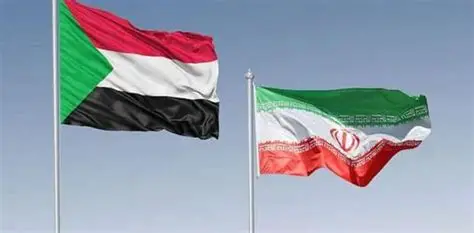
Tehran and Khartoum: Future Scenarios
By: Samia Ibrahim – Brownland
Historically, Sudanese-Iranian relations have experienced sharp fluctuations, ranging from strategic alliances to complete severance. After a seven-year hiatus, the two nations restored diplomatic ties in 2023. Under the current conflict, this rapprochement has evolved toward strengthening Iran’s military and economic influence in Sudan, driven by intersecting interests and geopolitical goals.
Strategic Alliance and the “Inqaz” Era
During the era of former President Omar al-Bashir’s “Inqaz” regime, experts note that Khartoum and Tehran maintained a strategic alliance. Iran utilized Sudan as a hub for its influence in Africa, particularly throughout the 1990s and beyond.
In 2016, Sudan severed ties with Iran in solidarity with Saudi Arabia following the attack on its embassy in Tehran. However, since 2023, Iran has begun reclaiming its influence by supporting the Sudanese Army. Specialists suggest that Tehran aims to secure a foothold on the Red Sea and counter regional rivals. Conversely, Khartoum seeks political and military backing during its current crisis.
The Iranian-Israeli Conflict and Regional Alliances
Journalist and political analyst Ahmed Omar Khojali told Brownland that the Sudan-Iran relationship has long resembled an alliance within a broader global front against U.S. hegemony. He highlighted that shared stances on Palestine and ideological backgrounds further solidified these ties. Khojali added that Iran, an economically resilient state, seeks to expand its sphere of influence, noting that any weakening of the Iranian regime would directly harm Sudan’s interests and the anti-imperialist alliance.
Opportunities Amidst “The Fourth Gulf War”
Political analyst Osman Mirghani noted that the “Fourth Gulf War” comes as Sudan’s own conflict enters its fourth year without a clear resolution. Mirghani believes Sudan can invest in this situation by:
- Building new partnerships that support Sudan’s recovery.
- Promoting a public discourse that leverages the global attention on the Gulf War to highlight the suffering of the Sudanese people.
Economic Impact and the Oil Crisis
Economically, relations surged in 2024–2025, focusing on military support, reconstruction projects, and trade. However, economist Adel Abdel Aziz warned that the current “Israel-Iran” war will severely impact Sudan’s economy. He predicts that the closure of the Strait of Hormuz could drive oil prices up to $150 per barrel.
As an oil importer, Sudan would face a foreign currency crisis, leading to hyperinflation and the devaluation of the Sudanese Pound. Abdel Aziz suggested potential remedies, such as:
- A Bilateral Agreement with Saudi Arabia: Utilizing Sudanese ports (Port Sudan and Al-Khair) to store Saudi crude oil, as Yanbu on the Red Sea would become Saudi Arabia’s primary export outlet.
- Strategic Cooperation with China: Expanding direct trade, especially if regional hubs like Dubai’s Jebel Ali and its refineries become inaccessible for Sudanese gold exports.
- Integration with Egypt: Completing economic integration cycles to stabilize the market.