The Decline of American Influence: A Shift in Global Dynamics
By: Dr. Omar A. Mannan
Executive Summary
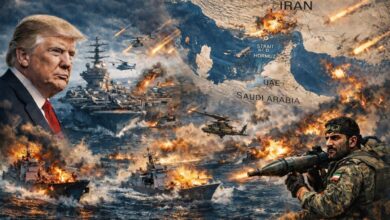
The United States is navigating a significant decline in its global influence, a shift that has become increasingly evident during recent conflicts involving Israel and Iran.
Historically, the U.S. relied on three strategic pillars—international coalitions, United Nations endorsement, and clear financial backing—to project into mega war . In the current geopolitical landscape, these pillars have largely eroded.
The Erosion of Strategic Pillars
The U.S. has entered current regional hostilities without its traditional multilateral support systems, signaling a departure from 20th-century strategy.
Institutional Waning: The absence of a United Nations endorsement highlights a diminishing American grip on the international institutions that once validated U.S. policy.
Economic Strain: Without a “coalition of the willing” to share the financial burden, the U.S. is shouldering the full cost of the conflict, placing significant long-term strain on the domestic economy.
Domestic Friction: Rising internal opposition—even among military leadership—questions the sustainability of interventions. Legislative attempts to curb executive action underscore a deep-seated political divide regarding foreign entanglements.
Global Assertion of Sovereignty
A profound shift is occurring as nations that were once reliable allies now assert their sovereignty with unprecedented resolve.
1. Regional Pushback in the Gulf
Gulf states, once heavily influenced by Washington’s diplomatic pressure, have publicly opposed recent U.S. actions. Many have refused to provide military support or permit the use of their bases for operations, prioritizing regional stability over U.S. strategic demands.
2. European Resistance
Traditional European allies are showing significant opposition:
Spain: Prime Minister Pedro Sánchez has adopted a firm “No to war” stance, explicitly refusing the use of Spanish military bases for operations and emphasizing that Spain will not be complicit in actions that contradict its national values.
United Kingdom: Prime Minister Keir Starmer has expressed reservations, stating that the UK does not support “regime change from the skies” and questioning the legal basis of the conflict.
The European Union: France and Germany have echoed these concerns, with European Council President Antonio Costa expressing solidarity with Madrid, suggesting a unified European front favoring diplomacy over intervention.
Conclusion: A Multipolar Reality
These developments represent a crisis of legitimacy for American authority. The decline of U.S. dominance is creating a transition toward a multipolar world, where nations prioritize their own economic and security interests over long-standing alignments.
As the global landscape shifts, the United States must adapt to a new era where its influence is no longer absolute.