The Fragility of the “Safe Harbor”: How Politics and War Breaks the Emirati Model
By: Dr. Omar A. Mannan
For decades, the United Arab Emirates—specifically Dubai—has existed as a geopolitical miracle. In a region frequently defined by kinetic conflict, the Emirates successfully marketed a narrative of absolute predictability. It was not merely a state, but a “Safe Harbor”: a tax-light, hyper-connected sanctuary for global capital.
However, the structural paradox of this model is now reaching a breaking point. The very attributes that fueled the UAE’s meteoric rise—its openness and global integration—have become its primary strategic liabilities.
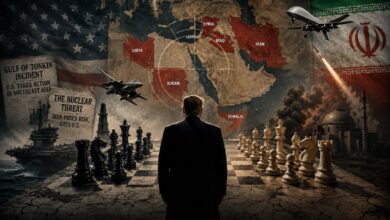
As the specter of a direct U.S.–Iran war escalation looms, the UAE faces an existential “de-platforming.” For a nation built on the “Stability Premium,” a combination of interventionist politics and regional war is the final straw that breaks the camel’s back.
The Architecture of Intangible Wealth
Unlike its neighbors, whose fiscal survival rests on the subterranean resilience of oil and gas, the UAE’s prosperity is built on Global Trust. By decoupling its economy from hydrocarbons, the Emirates effectively coupled its survival to Global Sentiment.
Capital is notoriously “cowardly.” It does not simply seek low taxes; it seeks insulation from geopolitical shocks.
The UAE’s GDP is uniquely tied to the physical presence of over nine million expatriates and the confidence of multinational corporations. In this ecosystem, perception is as vital as oil. When the perception of safety evaporates, both the human and financial capital simply migrate.
The Politics of Intervention: Fracturing the Foundation
Under the leadership of Mohamed bin Zayed Al Nahyan, the UAE pivoted from a traditionally cautious neutral Gulf posture to a “muscular” regional strategy. This political shift has systematically dismantled the country’s image as a neutral commercial crossroads:
- The Qatar Crisis (2017): This signaled to the world that even the GCC’s internal cohesion was a thin veneer. It proved that political friction could overnight paralyze trade routes and airspace—the literal arteries of the Emirati economy.
- The Yemen Precedent: The 2022 Houthi missile and drone strikes on Abu Dhabi were symbolically catastrophic. For the first time, the “Safe Harbor” was punctured. Investors do not measure risk by casualty counts; they measure it by precedent.
- The Sudan “Black Swan”: Perhaps the most damaging blow has come from the plains of Sudan. Exposure by credible international media and UN expert panels has labeled the UAE as a key financier and arms supplier in a conflict described as the world’s most dire humanitarian crisis.
- This “bad label” has stripped away the UAE’s “neutral broker” mask. Furthermore, the fear of retaliatory blowback from the vast Sudanese diaspora on Emirati soil creates an internal security anxiety that contradicts the “peace and stability” promise.
Geography as Destiny: The Iran Factor
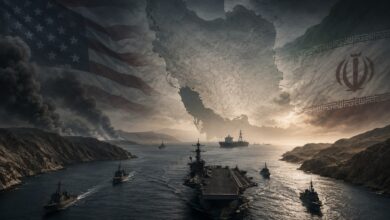
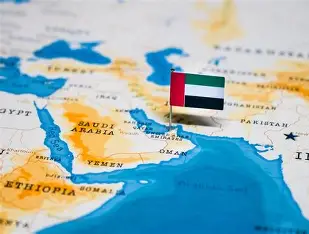
The UAE sits directly across from Iran along the narrow waters of the Strait of Hormuz. In an open U.S.–Iran war, the Emirates becomes the physical “front line.”
While Saudi Arabia possesses a massive landmass and Red Sea ports to bypass maritime chokepoints, the UAE is geographically “locked.” Its critical infrastructure—desalination plants, power grids, and the world’s busiest transit hubs—is concentrated in a narrow, high-density coastal ribbon.
A “rain of missiles” in this theater does not need to achieve total physical destruction to be successful. It only needs to trigger a trust gap and Insurance Spiral.
When “War Risk” premiums make shipping and aviation economically unviable, the UAE’s role as a global middleman effectively ceases to exist.
The Liquidity of People
The UAE’s greatest vulnerability is the mobility of its population. Unlike a citizen-heavy state where the population stays to rebuild, the UAE’s professional class is a “floating” demographic. At the first sign of sustained kinetic conflict, the human capital that runs the banks, hospitals, and tech sectors will trigger a mass exodus.
If the people leave, the real estate market—the backbone of domestic wealth—collapses instantly.
Conclusion:
Wars are not only fought on battlefields only ,they are fought in sovereign credit ratings and investor sentiment.
The UAE’s neutral safe haven concept have been initially fractured by the policy and actions of its leaders.”
The current U.S.–Iran conflict may represents the final weight that breaks the camels back.
It exposes the reality that in the 21st century, a nation built on confidence can be dismantled as much by a shift in perception as by a rain of missiles. For the Emirates, the ultimate risk is not just the loss of infrastructure, but the death of the myth that made its prosperity possible.