The Historical Roots and Foundational Structure of the U.S.–Israeli–Iranian Conflict
By: Dr. Maimouna Said Adam Aburaqab
The Conflict in the Balance of Realism, Deterrence, and Regional Security
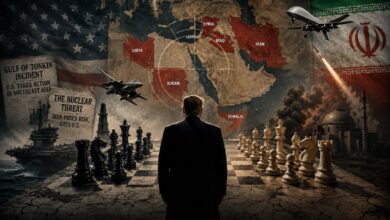
The U.S.–Israeli–Iranian conflict serves as a classic case study for political realism in international relations. From the perspective of Classical Realism (Hans Morgenthau), international politics is governed by a perpetual struggle for power within an anarchic environment. Thus, the tension between Tehran, Washington, and Tel Aviv is not merely ideological but a contest of wills over the redistribution of regional influence.
Structural Realism (Kenneth Waltz) suggests that the international system’s structure—not regime types—determines behavior. Since 1979, Iran’s rise as a regional power disrupted the traditional balance of power favored by the U.S.–Israeli–Gulf axis, creating a dynamic of mutual deterrence. This deterrence is multidimensional: ballistic, cyber, and asymmetric. Furthermore, Barry Buzan’s “Regional Security Complex Theory” explains that the security of these actors is so deeply intertwined that one cannot be understood in isolation from the others.
Structural Transformation Post-1979 Revolution
The 1979 Iranian Revolution was the pivotal turning point. Previously, Pahlavi Iran was a pillar of U.S. strategy and a silent partner in Israel’s “Periphery Doctrine.” The revolution flipped this balance, transforming Iran from a strategic ally into an ideological adversary advocating for “resistance against global arrogance.” Consequently, Israel’s strategic perception of Iran shifted from a distant state to an existential threat, leading to a transition from “cautious monitoring” to a “preemptive doctrine” involving cyberattacks and targeted operations.
Major Stages of Escalation:
- Containment Phase (1980s–90s): Washington’s “Dual Containment” policy aimed to isolate both Iran and Iraq, which inadvertently pushed Iran to develop unconventional tools of influence.
- Maximum Sanctions Phase: Following the nuclear program crisis and the subsequent U.S. withdrawal from the JCPOA in 2018, the “Maximum Pressure” campaign sought to exhaust Iran’s economy. However, this failed to trigger a regime collapse and instead accelerated certain aspects of Iran’s strategic positioning.
- The Shadow War Phase: A low-intensity, multi-tool conflict involving assassinations, maritime targeting, and cyber warfare. This stage is a delicate game of “brinkmanship,” where strikes are calculated to stay below the threshold of all-out war.
Analytical Conclusion: Structural or Situational?
The conflict is fundamentally structural. It is tied to the redistribution of power in the Middle East: Iran’s quest for recognition as a major regional power versus Israel’s insistence on maintaining qualitative superiority and U.S. efforts to prevent a rival hegemon. It is a clash of visions over who defines the regional order—the U.S.–Israeli umbrella or a new balance of power where Iran is a primary pole.