The Oil War: An Existential Equation
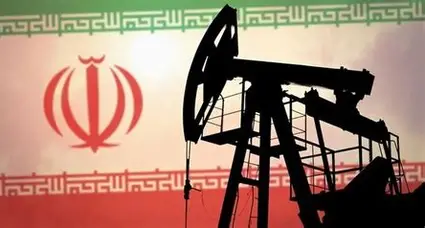
• At what appears to be a pivotal moment in the ongoing conflict, the United States and Israel have taken a perilous decision to bomb Iranian oil facilities. This development is not merely an economic blow within the context of war; it is a step carrying far deeper implications, as it strikes a sector that has for decades remained a key element of balance in any confrontation with Iran. For Tehran, oil is not just a financial resource, but a central pillar of the state’s structure and its ability to fund both the economy and the war simultaneously. Therefore, targeting it differs radically from targeting conventional military facilities because it strikes at the core of the state’s economic power.
• This decision raises a fundamental question about the strategic logic that drove Washington to play a card that could have remained a leverage tool in the path of potential negotiations or political bargaining. Typically, major powers tend to hold onto their most influential pressure points to use them at the moment they need to impose political conditions on an adversary. Burning this card at an early stage of the conflict practically means abandoning one of the most important elements of negotiation and opening the door to a confrontation where the chances for settlement gradually diminish.
• From this perspective, the strike on Iranian oil facilities can be understood as a turning point in the nature of the conflict. When major economic strikes target a nation’s core infrastructure, they push its political and military leadership to redefine the battle. It is no longer about managing losses or attempting to contain escalation; it transforms into a struggle for regime survival and resilience. When a conflict reaches this stage, traditional calculations of deterrence change, as the party that feels it has lost its most prized possession becomes less bound by the usual rules of engagement.
• Thus far, there are no indications that the strikes have forced Iran to retreat or accept its adversaries’ terms. On the contrary, Tehran continues to respond via missile volleys and retaliatory attacks in multiple directions. This behavior reflects a well-known fact in the history of warfare: harsh strikes do not always break an opponent’s will; they may instead drive them toward further escalation when they become convinced that retreating will not alter their fate.
• This impasse places decision-makers in Washington and Tel Aviv before a clear dilemma. Conventional military force, despite its intensity, has not achieved the stated political goal of forcing a rapid Iranian submission. Over time, the conflict is turning into an open war of attrition—a scenario that typically leaves major powers with two difficult choices: either accepting a prolonged war with its attendant economic, military, and political costs, or seeking even more dangerous means of escalation.
• In this context, discussions are emerging within some analytical circles regarding a possibility that remained outside public debate until recently: resorting to unconventional means to settle the conflict. This possibility does not necessarily mean an imminent decision to use nuclear weapons, but it reflects the nature of the crisis facing the warring powers when conventional military tools fail to achieve the war’s political objectives.
• The concern is not limited to Washington alone. Inside Israel, fears are mounting that the conflict could transform into an open confrontation beyond traditional control. The longer the war persists without a resolution, the higher the likelihood of retaliatory strikes targeting strategic facilities or major urban centers, which could alter the deterrence equation that has existed for years.
• What increases the danger of this scene is that targeting Iranian oil has closed one of the few paths that allowed a return to the negotiating table. Oil represented the language of interests that sometimes allowed for the reopening of channels for de-escalation. When this card is struck, the margin for political maneuver shrinks in favor of the logic of military confrontation.
• The region stands today at an extremely sensitive moment. As the space for political solutions narrows, the risk of sliding toward more extreme options increases. In such moments, wars often transform from a conflict over interests into an open confrontation where the logic of survival prevails over any other consideration.
Brown Land