The US Warning to Russia: Possible Secrets
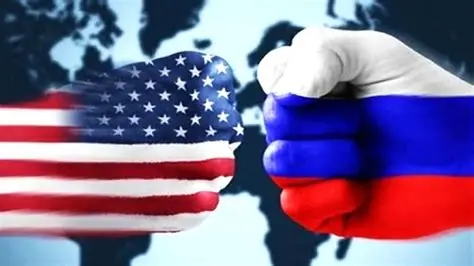
US Special Envoy to the Middle East, Steve Wittkopf, is already one of the key figures managing sensitive communication channels within the Trump administration. Media reports have indicated that Washington has conveyed warnings to Moscow through diplomatic channels regarding any direct military or intelligence support for Iran. Although Trump denied this, stating he had no information about such cooperation between Moscow and Tehran, Wittkopf, according to media leaks, did indeed deliver the relevant message to the Russian side. The US Secretary of State stated that Washington is taking this information into account in its military planning.
In this context, the following points should be noted:
1) This type of communication is not uncommon in international relations. During the war in Ukraine, Moscow and Washington exchanged warnings about the limits of indirect military support. However, there is still no documented public evidence confirming that the US issued such a formal warning publicly, nor has Russia acknowledged receiving such a message.
2) The Possibility of Russian-Iranian Intelligence Cooperation
Technically, this possibility remains partially plausible for several reasons. Russia possesses space-based and radar reconnaissance systems capable of monitoring vast areas of the Middle East, while Iran has developed an extensive network of drones and precision missiles in recent years. Data exchange between the two sides could include three main types of information: medium- or high-resolution satellite imagery, radar tracking data on aircraft or ships, and electronic signals analysis (SIGINT).
However, providing real-time targeting data in a direct war against the United States would be a highly risky move, as it would effectively place Moscow in the position of a participant in the conflict. Major powers typically avoid this level of direct involvement due to the risks of strategic escalation.
3) The Accuracy of Recent Iranian Strikes
Even without direct Russian support, several factors can explain the improved accuracy of Iranian strikes, including: the development of Iran’s missile program over the past decade, the use of reconnaissance drones prior to strikes, the existence of regional surveillance networks of Iran’s allies, and the vulnerability of some bases to missile saturation.
Therefore, attributing all operational precision to Russian support remains more of a political hypothesis than a definitive conclusion. However, denying Russian support for Iran of this kind is also inaccurate given the strong relations between the two countries.
4) Washington’s Ability to Pressure Moscow
The United States possesses multiple tools of pressure, including financial sanctions, technological restrictions, diplomatic pressure, and expanded military support for Ukraine. However, the effectiveness of these tools remains limited in this case for two main reasons.
The first reason is that the Russian-Iranian relationship has deepened considerably since the outbreak of the war in Ukraine and is now based on an increasing exchange of military and economic interests. This culminated in the signing of the Comprehensive Partnership Agreement (signed in Moscow on January 17, 2025). This 20-year, renewable treaty aims to strengthen political, economic, and military cooperation between the two countries, especially in light of Western sanctions. The agreement comprises 47 articles covering defense, intelligence, energy, trade, and culture, and constitutes a long-term strategic framework for bilateral relations. The second reason is that Moscow views any American involvement in the Middle East as a way to relieve pressure on its European front.
5) The Most Realistic Scenario
The most likely scenario is indirect or somewhat limited intelligence cooperation, such as exchanging assessments or non-real-time satellite imagery, or transferring technical expertise, with Russia clearly keen to avoid appearing as a direct party to the conflict. This type of cooperation allows Moscow to support Tehran without crossing the red line that could lead to a direct confrontation with the United States.
It is also worth recalling that Russia has previously provided Iran with various air defense systems and other advanced military technologies, placing them on Iranian soil at the disposal of the country’s top leadership. Some of these technologies remain undisclosed.
Brown Land