Reshaping Sudan’s War Equation: Internal Dynamism and External Hesitancy
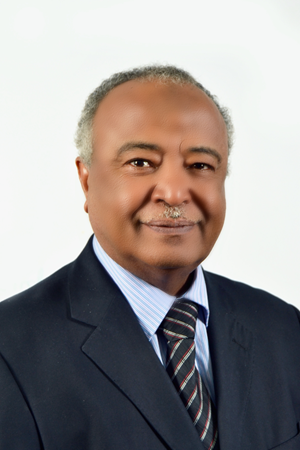
Professor Mekki Medani El Shibly
Executive Director, Cognisance Centre for Strategic Studies (CCSS)
Sudan’s war is increasingly being discussed through an external lens: What will the “Quartet” do? Can international institutions impose a ceasefire? Will the UN Security Council act?
These are valid questions. But they obscure a more fundamental one: What is happening inside Sudan itself, and who will sustain peace if it comes?
Recent moves by General Abdel Fattah al-Burhan suggest that Sudan may be entering a new phase in the war’s trajectory. These include restructuring military command, tightening control over allied armed groups, and absorbing defectors from the Rapid Support Forces (RSF). They are accompanied by renewed regional diplomacy, including visits to Saudi Arabia and Oman, and a shifting regional discourse emphasising Sudan’s territorial unity.
There is no clear public evidence that these developments are the direct implementation of a coordinated international plan. Yet their timing and direction point to something important: a convergence between internal recalibration and external pressure. This convergence may be creating a narrow, but real, window of opportunity to end the war.
Centralising Force in a Fragmented Battlefield
One of the most significant aspects of Burhan’s recent actions is the attempt to centralise military authority. By bringing allied armed groups under tighter command, the Sudanese Armed Forces appear to be moving away from a loose coalition model toward a more hierarchical structure.
This shift reflects a hard lesson learned from Sudan’s recent past: multiple armed actors, even within the same camp, can evolve into competing centres of power.
The RSF itself emerged from such a dynamic. Preventing the re-emergence of parallel forces is therefore not only a tactical necessity, but a strategic imperative.
Managing Allies, Weakening Adversaries
Alongside disciplining allies, Burhan has also sought to exploit fractures within the RSF. The reception of defectors signals a dual strategy: weaken the opponent from within while reinforcing the army’s image as the central national institution.
This approach marks a transition from managing flexible alliances to constructing a more consolidated military order. Whether this consolidation can be sustained, however, remains uncertain, particularly given Sudan’s history of fragmented authority.
Regional Diplomacy: Between Riyadh and Muscat
Burhan’s recent regional engagements also merit attention. His visit to Saudi Arabia, one of the key actors in the so-called “Quartet”, signals an attempt to re-energise diplomatic channels linked to previous initiatives such as the Jeddah process. It may also reflect ongoing, if undeclared, coordination around a possible roadmap for negotiation.
His subsequent visit to Oman fits a different pattern: quiet diplomacy. Oman has long played the role of a discreet mediator, facilitating dialogue away from the spotlight. Together, these visits suggest a layered regional approach, combining political weight with diplomatic flexibility.
Meanwhile, Egyptian President Abdel Fattah el-Sisi has recently declared that the partition of Sudan is a “red line” for Egyptian national security. This statement marks a shift from crisis management to the articulation of a strategic ceiling: preserving Sudan’s territorial integrity.
Such a position aligns with broader regional concerns about state fragmentation, border instability, and the geopolitical ripple effects of a divided Sudan.
The Limits of External Action: “Collective Hesitation” and “Reverse Veto”
Despite these developments, the international track remains constrained. The UN Security Council could, in theory, act under Chapter VII to impose binding measures. In practice, however, geopolitical divisions, and the persistent risk of veto, have repeatedly blocked decisive action.
This reveals a deeper problem: not a lack of tools, but a lack of consensus on how to use them.
The result is what might be called a form of “collective hesitation” from active superpowers, and “reverse veto” from minor powers, where actors refrain from acting decisively for fear of upsetting delicate balances.
The Missing Piece: Sudan’s Civilian Forces
Yet the most critical gap in current approaches lies elsewhere.
Even if external actors succeed in imposing a ceasefire, a fundamental question remains unanswered: Who governs Sudan the day after the war?
Here, the weakness of Sudan’s civilian forces becomes decisive. The promise of the December Revolution, freedom, peace, and justice, has yet to translate into a cohesive political bloc capable of negotiating, governing, and sustaining a transition.
Fragmentation among civilian actors has not only weakened their bargaining power; it has also created a vacuum that military and external actors have filled.
Separating the Tracks, Securing the Future
One of the key lessons from previous failed initiatives is the danger of conflating different tracks: military negotiations, political transition, and civilian inclusion. Attempting to pursue all three simultaneously has often led to paralysis. A more viable approach would be sequential:
- First, secure a ceasefire through a focused military track;
- In parallel, rebuild a unified civilian front grounded in the principles of the December Revolution;
- Only then launch a credible political transition.
Without such sequencing, any agreement risks collapsing under the weight of unresolved contradictions.
From Managing War to Building Peace
Sudan today stands at a critical juncture. What we are witnessing is not yet a coherent strategy, but a convergence of trends, internal consolidation, regional engagement, and international pressure.
Whether this convergence becomes a pathway to peace depends on two factors:
- The willingness of external actors to move beyond hesitation and use their leverage effectively;
- The ability of Sudan’s civilian forces to reorganise themselves into a credible political actor.
Peace may be imposed from the outside. But it can only be sustained from within.
Until that internal foundation is rebuilt, Sudan risks remaining not a space where peace is enforced, but one where war is merely managed.
melshibly@hotmail.com