Restoring the Palace: The Battle for Sovereignty and Redrawing the Scene
The Face of Truth | Ibrahim Shglawi
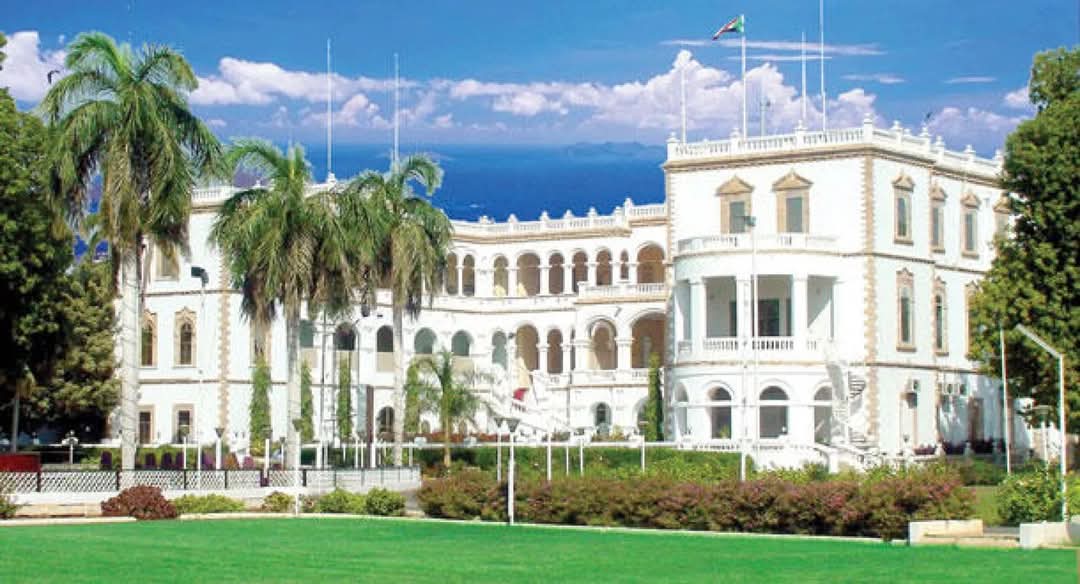
On the morning of Friday, March 21, 2025, Sudan entered a new phase in its contemporary history with the announcement by the Sudanese Armed Forces of the liberation of the Republican Palace from the grip of the Rapid Support Forces (RSF). This military event was not just a successful field operation, but a pivotal moment carrying deep strategic and political dimensions that would reshape the balance of power in Sudan and outline the future of the Sudanese state after two years of existential war.
Since the launch of military operations on April 15, 2023, following the failed coup attempt led by the RSF and its local and regional supporters, the Sudanese Armed Forces devised a carefully planned strategy focused on exhausting the enemy’s capabilities and isolating them operationally. This tactic reached its peak with the “Great Crossing” operation in September 2024, during which control was solidified over the capital’s main axes, starting from the Halfaya Bridge, the White Nile Bridge, through the Rescue Bridge, and later securing the Kober and Blue Nile Bridges.
The Sudanese army relied on a tactic of encirclement from four main axes, with armored and infantry units moving from the Ma’akil and Karari regions to the north, and from the White Nile towards Jebel Awlia to the south, while forces coming from Soba and Al-Eilafon sealed off the eastern front. This tight encirclement turned the RSF into an isolated pocket within the capital, stripping them of the ability to resupply and maneuver.
On the morning of Thursday, March 20, the RSF attempted to break the security and military cordon around the Republican Palace, pushing their forces through the Meridian Axis – Stak Factory on Al-Qasr Street, aiming to open a corridor for retreat and repositioning. However, the army was closely monitoring their movements and closed in on them at zero distance in one of the fiercest battles in the capital.
The army relied on a well-coordinated plan using drones and long-range artillery, alongside the thrust of assault units, benefiting from the integration of its forces coming from the armored units with the General Command. This led to the neutralization of 32 combat vehicles fully equipped with their crews and forces, causing the RSF’s defenses to collapse completely.
On the same day, as the army advanced on the axis, drone strikes again targeted and neutralized the RSF leader holed up inside the palace, Major General Mohammed Ahmed Jali, delivering a fatal blow that ended their ability to manage the battle and paved the way for the liberation of the palace. This marked the beginning of the complete collapse of the RSF in the capital, and the army’s control extended around the palace axis to include the Kuwaiti Tower, the Federal Government Building, the Ministry of Foreign Affairs, Nile Street, and the Mak Nimer Bridge.
By Friday evening, the Sudanese army began precise operations at “zero distance,” benefiting from its air and artillery superiority, supported by elite special forces units and reinforcements from the Al-Baraa Brigade. Meanwhile, all supply routes were tightly closed, and communication networks were severed. The RSF seemed trapped in a steel vise, with no escape but collapse.
With the liberation of the Republican Palace, the talk shifted from a limited tactical victory to the beginning of the complete dismantling of the remaining RSF structures in the capital, and the army asserting control over the state’s sovereign and vital institutions.
Politically, the liberation of the Republican Palace represents more than a geographic restoration. The palace, with its symbolic sovereignty, was the first target for the RSF to legitimize its coup attempt and impose a new reality with regional and international support. The army’s breaking of this scenario reflects the resilience of the Sudanese national state in the face of attempts at domination, sending a clear message: no compromises at the expense of Sudanese sovereignty.
The restoration of the Republican Palace lays the foundation for a new phase, where the state shifts from a defensive posture to imposing stability and security, paving the way for a smooth transition toward a national state project led by the Sudanese army with awareness, wisdom, and sagacity that closes the door to any potential political blackmail by the political forces that brought the country into conflict with their divisions and adventures, which have inflicted immense suffering on the Sudanese people and thrown them into the fire. These forces must reconsider their actions and await elections in 39 months as per the 2025 Constitutional Document, to see what they will offer the Sudanese people. Until then, the country awaits the formation of a government of independent national competencies, according to the roadmap that was agreed upon and accepted by the Sudanese people, the international community, and regional and international organizations.
The army’s control of the palace has opened the door wide for the completion of the liberation of ministries and sovereign institutions, and the full securing of the capital. The rapid military movements, which included areas like Sharoni, Nile Towers, Zanadi Al-Osra, and Katrina Street, reflect a clear trend to eliminate the last pockets of the RSF, especially in southern Khartoum and eastern Nile. The reality on the ground today clearly shows that the page of chaos is being turned, and the army is moving forward to complete its mission until the state institutions are fully prepared, which requires everyone, especially the ministries and civil servants, to prepare for their return to their positions after the Eid al-Fitr holiday, to resume work in liberated Khartoum.
The events of the restoration of the Republican Palace, as we see from the #Face_of_Truth, will be recorded in Sudanese memory as a battle for national sovereignty par excellence, where the Sudanese army proved that it is not just a military institution, but a safeguard for the Sudanese state in the face of attempts to hijack it. While this victory was achieved through meticulous military planning and precise field tactics, its political implications extend beyond the capital, establishing a new phase defined by the slogan: Sudan for Sudanese, without militias or foreign guardianship.
Wishing you all good health and well-being.
Friday, March 21, 2025
Shglawi55@gmail.com