
Between Soft Influence and Hard Power
Abdulaziz Al-Zubair Pasha
First Lieutenant General Yasser Al-Atta, member of the Transitional Sovereignty Council and Assistant to the Commander-in-Chief of the Sudanese Armed Forces, has identified three primary geopolitical forces driving this existential conflict.
First Factor: Hybrid Influence Operations
What is often labeled as soft power is, in reality, a network of covert influence operations—a tactical deployment of external actors attempting to embed themselves within Sudan’s political landscape through engineered political settlements. These maneuvers, masked as reconciliation efforts, are steeped in calculated opportunism, serving the remnants of the insurgency and their international patrons. Local collaborators function as conduits, amplifying a disinformation ecosystem designed to destabilize national sovereignty.
Second Factor: Geo-economic Leverage in Resource Security
Global financial and corporate entities are actively maneuvering to establish control over food production systems and hydrological security frameworks. This strategic positioning aims to manipulate both consumer and resource-exporting economies, rendering them dependent on extraterritorial supply chains dictated by global capital flows. Sudan’s agricultural and freshwater assets are central nodes in this evolving resource-security complex.
Third Factor: Geostrategic Security Architecture and the Red Sea Nexus
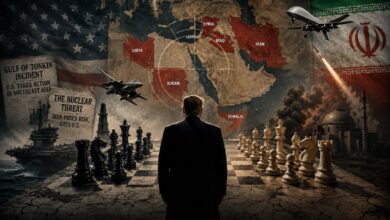
Israel’s national security doctrine incorporates Sudan as a pivotal geopolitical variable. The country’s geographic coordinates—bridging the Sahel, Nile Basin, and Red Sea—have positioned it at the intersection of historical colonial containment strategies. Unlike conventional territorial occupations, Sudan has been subject to a distinct form of geopolitical engineering, where tools such as fragmentation policies, proxy destabilization, and asymmetric sovereignty constructs have been systematically deployed to erode its state cohesion.
Following the initial destabilization of the insurgency, Israel has expanded its geostrategic footprint, utilizing regional proxies to reinforce its operational reach. The Red Sea corridor has emerged as a primary theater, facilitating maritime chokepoint securitization and geo-economic containment to limit African transregional integration. This architecture also functions as an indirect pressure mechanism against Egypt, constraining its influence along Sudan’s eastern frontier.
These maneuvers are not solely about the displacement of Gaza’s population; they form part of a larger security-energy-food nexus, ensuring Israel’s long-term strategic resilience. Concurrently, Western-backed security doctrines—particularly the British-aligned Red Sea security paradigm—are being embedded into the regional geopolitical matrix, aiming to impose external governance models over Sudanese and Egyptian maritime sovereignty.
It is now evident that the UAE and other state actors supporting the insurgency are not independent agents, but tactical instruments within this broader Zionist-geostrategic realignment.
However, despite the sustained pressure of these soft-influence mechanisms, Sudan’s institutional resilience—fortified by strategic intelligence and proactive security countermeasures—remains intact. Over a decade ago, Sudan’s intelligence apparatus conducted scenario-mapping that accurately forecasted the present crisis, preparing the groundwork for national resistance strategies.
At this juncture, it is imperative to activate statutory frameworks, expand institutional counter-influence operations, and reassert sovereign governance mechanisms to neutralize remaining insurgent networks. National cohesion is the fundamental counterweight to this externally driven destabilization architecture.
Sudan, reinforced by its enduring institutions, will remain a sovereign geostrategic entity, impervious to opportunistic destabilization vectors.
Its armed forces will continue to serve as a force multiplier in regional security stabilization, countering all asymmetric threats to national sovereignty.
Allah is Great. Glory and resilience to Sudan and its formidable armed forces.
No sanctuary shall remain for collaborators and subversive actors—historical irrelevance awaits them.
Sudan, first and always.
✍️