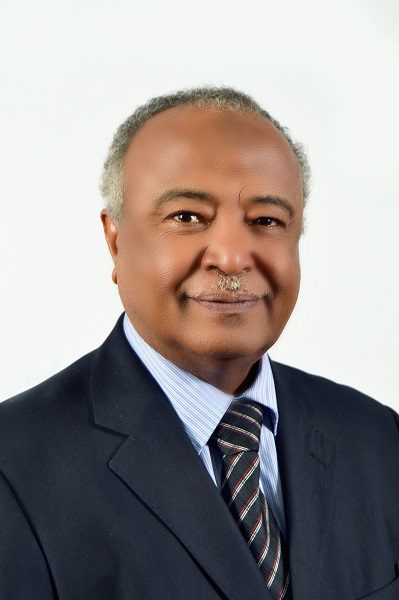
The Economics of a Negotiated Solution in SudanProf. Mekki El Shibly
Executive Director – Mamoun Behairy Center, Khartoum
Unlike the grim economic outcomes of a military solution to end Sudan’s war, a negotiated settlement holds substantial economic advantages. Negotiations pave the way for a productive, transparent, and equitable economy, whereas military solutions breed a rentier, monopolistic economy marked by violence and opacity. Geographically, a negotiated settlement leads to a decentralised system based on affirmative action for marginalised regions, while military victory consolidates a centralised regime that serves elite interests through enforcing disintegration. In terms of stability, a negotiated path results in durable, institution-based peace, while a military outcome perpetuates fragility, violence, and eventual failure. Internationally, reconstruction aid is conditioned by reform under a negotiated solution, whereas military victory attracts limited, opportunistic, and heavily tied external support.
As Sudan’s devastating war enters its third year, the absence of an integrated economic vision has become a key factor prolonging the conflict, with both warring parties vying for control over resources without presenting a comprehensive national economic project. Against this backdrop, civilian forces now have a critical opportunity to offer a negotiated alternative capable of rebuilding Sudan’s war-torn economy on the foundations of justice, development, and peace.
This alternative negotiating vision rests on core principles:
• Orienting the economy to serve the Sudanese people rather than financing militarization.
• Severing the ties between the economy and military/security apparatuses.
• Ensuring equitable wealth distribution that addresses developmental disparities among regions.
• Integrating the shadow economy into a transparent and organised framework.
• Establishing strategic partnerships with the international community grounded in reform, sovereignty, and legitimate shared interests.
The proposed post-war economic restructuring includes:
• Dismantling military and security companies and bringing them under the Ministry of Finance.
• Establishing a National Commission for Natural Resources and Gold.
• Launching a five-year reconstruction plan focused on education, health, and infrastructure.
• Reforming the taxation and financial systems through progressive, production-oriented policies while safeguarding the independence of the Central Bank and enhancing financial transparency.
• Creating regional development funds to empower marginalised areas.
Further, economic revitalisation requires bolstering the private sector and investments through secure legal environments and incentives in agriculture and industry, forming partnerships with the Sudanese diaspora, and facilitating investment procedures for small and medium-sized enterprises. Governance and accountability must be ensured through a strong National Anti-Corruption Commission, empowering civil society oversight, and digitising government revenues and expenditures.
Given Sudan’s long history of economic isolation and international sanctions since 1997 under the defunct regime, any reconstruction vision must be accompanied by a serious repositioning at the regional and global levels. This entails strategic re-engagement with international and regional institutions (such as the World Bank, IMF, Paris Club, African Development Bank, and Arab financing institutions), forging development partnerships with neighbouring countries, and presenting a unified vision for peace and development to mobilise broad international and regional support for Sudan’s reconstruction.
The implementation mechanisms of the economic negotiating vision to end the war include:
• Forming a highly competent civilian transitional government for no less than five years;
• Organising a broad-based National Economic Conference.
• Activating community committees to monitor the implementation of reconstruction and development plans.
• Mobilising Sudanese expertise at home and abroad to rebuild the devastated economy.
Crucially, this economic vision is not merely a technical plan—it is a national project for peace, justice, and reconciliation, aiming toward a sustainable political settlement. A peace-driven economy is the true pathway to a just, modern Sudan open to its people and the world.
Despite the warring parties’ fears of the potential fallout from a negotiated settlement, such a solution carries opportunities for all actors.
For the army and its allies, although it would mean losing control over parallel economies (such as gold trading) and traditional political dominance, a negotiated path offers critical gains: preserving the military institution as a guarantor of national security, integrating army-affiliated companies into the formal economy with civilian oversight, securing international support for security sector reform, and repositioning in non-combat roles—especially in reconstruction and infrastructure.
For the Rapid Support Forces (RSF) and their allies, despite losing control over smuggling routes and resource-rich areas, diminishing popular and political legitimacy, and the difficulty of integration into state structures due to their irregular nature, a negotiated solution provides opportunities:
• Transformation into a political entity or integration as a subordinate force within the national army under clear disarmament and amnesty arrangements.
• Participation in the settlement.
• Recycling their influence into legitimate tribal or economic alliances.
For civilian forces, despite the difficulty of enforcing economic reforms without a security consensus and the challenges of transitional arrangements involving military elements, the negotiated solution offers crucial openings:
• Formation of a civilian government with internal and external legitimacy.
• Implementation of a comprehensive economic programme based on justice and development.
• Securing substantial international support for reconstruction.
• Broadening political participation to include marginalised regions and communities affected by the war through a new social contract between the state and the people.
Nonetheless, the success of this negotiated alternative faces a critical challenge: the absence of a solid security framework to protect it from armed actors. No civilian economic project can be implemented without security arrangements that ensure stability and protect institutions from sabotage or collapse. Thus, it is essential to secure the vision through realistic civil-military instruments, moving beyond the zero-sum logic embraced by some civilians. Economic security is as crucial as border security. The civilian economic vision for Sudan must be anchored in pragmatic security arrangements that involve military actors, not through confrontation, but through smart negotiation, institutional guarantees, and transitional alliances. Civilian pathways will only succeed if they can neutralise or win over military forces to the cause of building a credible civilian state.
Protecting this vision requires a realistic understanding of the post-war military landscape. The army is divided between senior leadership benefiting from economic networks and reform-minded mid-level officers and younger ranks eager for change and collaboration with civilians. On the other hand, the RSF relies on a parallel economy that would be difficult to merge into the formal military without significant disarmament. RSF too is internally stratified, with one family leadership enjoying gold revenues while lower ranks survive on looting and illicit levies. Meanwhile, civilian forces, though lacking an armed wing, possess tools of popular pressure, political legitimacy, and international support.
Several options emerge to secure the economic vision and negotiated solution:
• Winning over segments of the army by building implicit alliances with reformist leaders through institutional guarantees, including integrating military companies into the formal economy, creating fair retirement and transition plans for officers, and involving the army in reconstruction monitoring.
• Pursuing military neutrality by dismantling the alliance between military leadership and ideological militias through international pressure and exposing the human and material costs of war, advocating for UN or regional security oversight during the transition.
• Strengthening civilian protection tools by reforming and activating the police as a civilian security institution, establishing internationally supported civilian economic oversight units, and leveraging UN and African Union expertise to secure urban centers and vital facilities.
• Utilising international incentives, such as conditional support for the military in exchange for peaceful transition commitments, and creating an international reconstruction fund tied to a clear security roadmap and UN guarantees of non-prosecution for non-criminal military elements.
• Forming a Civil-Military Liaison Committee under regional sponsorship to launch a security-economic dialogue on the military’s role in protecting reconstruction efforts and establishing a National Council for Economic and Security Transition with symbolic military participation, fostering smart civil-military harmonisation.
Despite all these safeguards, the success of the negotiated solution and the civilian economic vision ultimately depends on the flow of international economic assistance, which would include direct financial support, debt relief, technical assistance, and political backing to unlock investment and economic recovery.
The experience of Sudan’s transitional government before the October 2021 coup demonstrated that the international community is both willing and able to support Sudan’s economy, provided that a credible political settlement led by a civilian government is in place—one capable of executing a transparent, reform-oriented economic vision that fosters genuine growth and social justice.
Such international support would encompass:
📌 Direct funding and humanitarian/development assistance, including emergency aid (food, water, health, education) through UN agencies like WFP, UNICEF, UNDP, and international NGOs. Budget support from institutions like the World Bank and the IMF would also become possible once a civilian government is established.
📌 Debt restructuring and forgiveness, building on Sudan’s pre-October coup progress under the Highly Indebted Poor Countries (HIPC) Initiative. Sudan had reached the “Decision Point” in June 2021 and was on track to reach the “Completion Point” by mid-2024, which would have enabled the forgiveness of over $50 billion in debt. However, the October 2021 coup froze this progress, pending a return to civilian governance and the resumption of required reforms.
📌 Technical assistance and capacity-building, aimed at strengthening civilian economic institutions (such as the Ministry of Finance, Central Bank, and Tax Authority), developing transparent resource management systems (for gold, agriculture, ports), and training civilian cadres in macroeconomic management, debt negotiation, investment promotion, and financial governance.
📌 Promotion of conditional foreign direct investment, lifting restrictions and sanctions on Sudan after the formation of a civilian government, thus opening investment opportunities in agriculture, renewable energy, mining, and services, and paving the way for the return of major oil companies.
📌 Political and diplomatic support linked to economic recovery, including international guarantees to safeguard the transitional period, the establishment of a joint oversight mechanism (such as a revitalised “Friends of Sudan” group), and facilitation of Sudan’s reintegration into regional and global markets.