Shadow War .. Embarrasses the Arab League
Face of Truth | Ibrahim Shglawi
Sudan woke up yesterday to an unprecedented escalation when the city of Port Sudan was attacked by drones targeting the Othman Digna air base and civilian facilities. Observers described the attack as the most dangerous since the city became the temporary capital of the state. The official statement issued by the Sudanese government through the Minister of Information and official government spokesperson, Khaled Al-Eisair, carried an unprecedented tone of clarity and confrontation. It stated:
“Port Sudan was subjected this morning to a treacherous attack launched by the criminal Rapid Support Forces militia, with the support of its backers. Seven suicide drones were used in the attack, providing cover for a strategic aircraft that targeted the Othman Digna air base, causing material damage without loss of life. This assault confirms, without any doubt, that this war is not merely a rebellion by the Rapid Support militia, but a full-fledged aggression orchestrated and supported by the United Arab Emirates… managed from control rooms in Abu Dhabi, posing a threat to national security and a danger to regional and international security.”
This statement, with its political and legal implications, puts Sudanese-Emirati relations at a crossroads and clearly affirms that Sudan no longer considers the internal conflict as confined to a local geography, but rather sees it as part of a regional conflict targeting the state’s sovereignty and national decision-making.
Supporting these accusations are credible reports implicating the UAE in backing the Rapid Support Forces. A report by the UN Panel of Experts in April 2025 revealed that Bulgarian mortar shells reached these forces, even though the shipment was originally intended for the UAE (Reuters). In October 2024, Sudan presented evidence to the Security Council showing that Abu Dhabi provided the militia with military equipment and medical support (Sudan Tribune). Satellite images also documented repeated landings of Emirati cargo planes in Chad in a suspected arms transfer context (Reuters). Additionally, Human Rights Watch confirmed on September 14, 2024, that the Rapid Support Forces used Serbian ammunition and missiles sourced from the UAE, and called for a comprehensive arms export ban to Sudan.
Despite this accumulation of evidence and statements, Sudan has not yet requested an emergency session of the Arab League Council—an urgent step considering the clarity of the aggression. Part of this hesitation seems to stem from internal factions within Sudan still betting on maintaining diplomatic relations with the UAE, perhaps anticipating reactions from brotherly countries, despite the realities on the ground.
Regionally, the Saudi Ministry of Foreign Affairs issued a statement strongly condemning the targeting of vital facilities in Port Sudan and Kassala. Although the statement did not name the perpetrator, it emphasized the need to respect Sudan’s sovereignty, halt fighting immediately, and affirmed the Kingdom’s support for a political solution that preserves state unity. The Qatari Ministry of Foreign Affairs also issued a statement, describing the targeting as contrary to international law and norms and a threat to regional security. Similarly, statements were issued by the Foreign Ministries of Egypt, Kuwait, the Islamic Republic of Iran, the African Union, and the Gulf Cooperation Council.
These positions must be leveraged to build a unified Arab stance in support of Sudan’s move, especially amid increasing regional and international concern about the war’s repercussions.
From a security standpoint, the attack on Port Sudan underscores the urgent need to restructure the air defense system, dismantle sleeper cell networks, and activate emergency laws to secure the interior, particularly as Port Sudan currently serves as the lung through which Sudan breathes with the outside world. Continuing with the current reactive security policies entrenches weakness and leaves the matter at the mercy of developments.
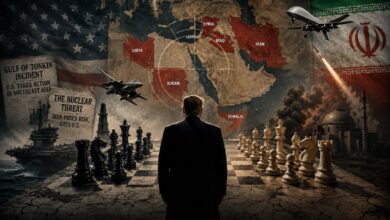
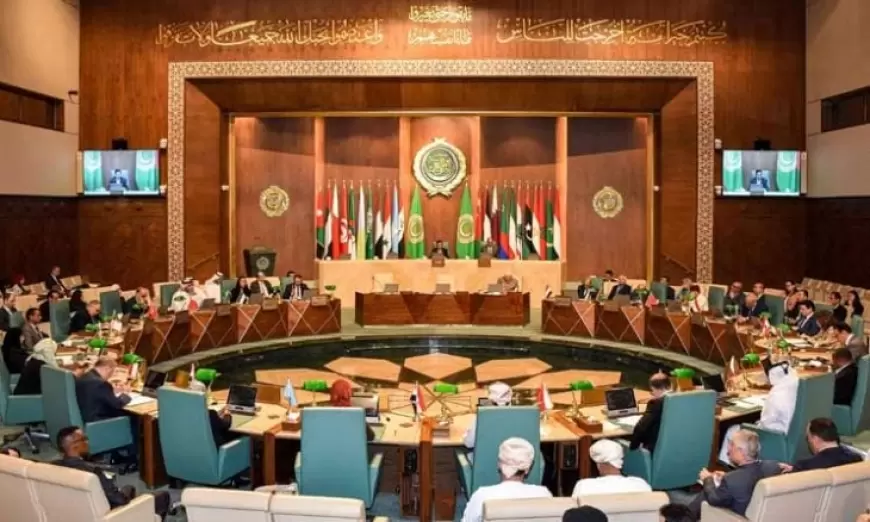
It must be acknowledged that the war has shifted from a mere internal conflict to an open regional confrontation aimed at dismantling the state and imposing a political reality that serves foreign agendas. This escalation puts us in the midst of what is known as a “proxy shadow war,” where regional actors use the Rapid Support militia to conduct military operations on their behalf—complicating the military landscape and prolonging the war. These are attempts to force a political settlement that spares local and regional backers from legal accountability for fueling the war and its accompanying widespread violations, while also enabling international intervention. Any delay in calling things by their names gives the aggressors more time to reposition and deepen their penetration into Sudan. Likewise, the Arab League must act immediately so as not to be labeled passive.
The current moment does not permit hesitation. The war has become a comprehensive battle for the Sudanese state and can no longer be reduced to an “internal rebellion.” All political and diplomatic response tools must be activated, including addressing regional and international organizations, and building mutual defense alliances with friendly nations that possess the will and capacity to counterbalance regional interference.
From what we see from the #Face_of_Truth, Sudan is facing a proxy war managed from distant capitals using local tools, targeting the country’s unity, resources, and future. It is time for the state to act with all its instruments to defend its sovereignty and not leave the paths of war and diplomacy to chance, courtesy, or losing calculations.
Wishing you well and good health.
Monday, May 5, 2025
Shglawi55@gmail.com