Geneva: Peace, the Trump Way
In Geneva, August 2025, General Abdel Fattah Al-Burhan’s landmark meeting with Donald Trump’s adviser, Massad Boulos, marked the first real breakthrough in Sudan’s war. The talks unveiled a “phased matrix” for ceasefire and humanitarian access, reframing Sudan’s crisis through direct U.S. engagement — peace, the Trump way.
By: Nisreen Alnimr

It is now evident that the United States (U.S.) administration—through the White House—has entered the Sudanese crisis as a principal player, at a moment of extraordinary sensitivity and consequence. The sharp polarization among regional and international actors over Sudan has effectively closed the door on theories of imported solutions, proxy war narratives, or any external framing that ignores the complex internal military and political dynamics at play.
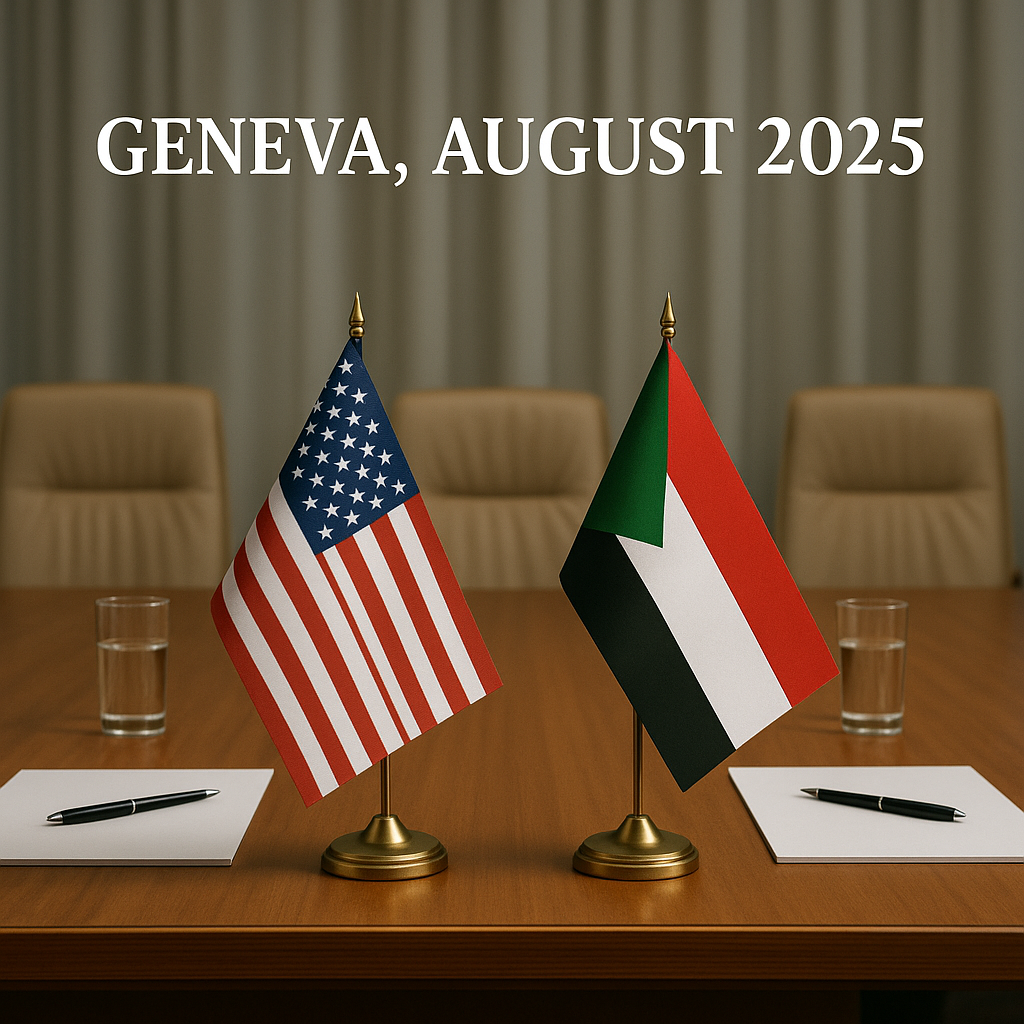
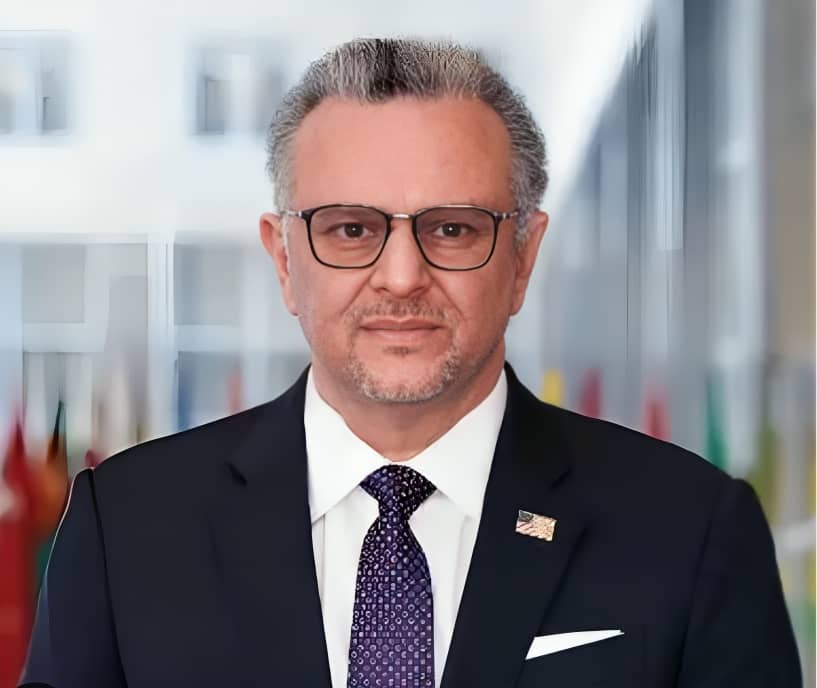
The meeting in Geneva on Monday, August 11, 2025, between Sudan’s Sovereignty Council Chairman, General (Gen.) Abdel Fattah Al-Burhan, and President Donald Trump’s adviser for African and Middle Eastern affairs, Massad Boulos—widely referred to as the Al-Burhan–Boulos Meeting—marks the first genuine breakthrough, and perhaps the most significant development, since the war erupted in Sudan. The encounter dismantled flawed approaches to the crisis, replacing them with a readiness to propose actionable solutions grounded in enforceable mechanisms.
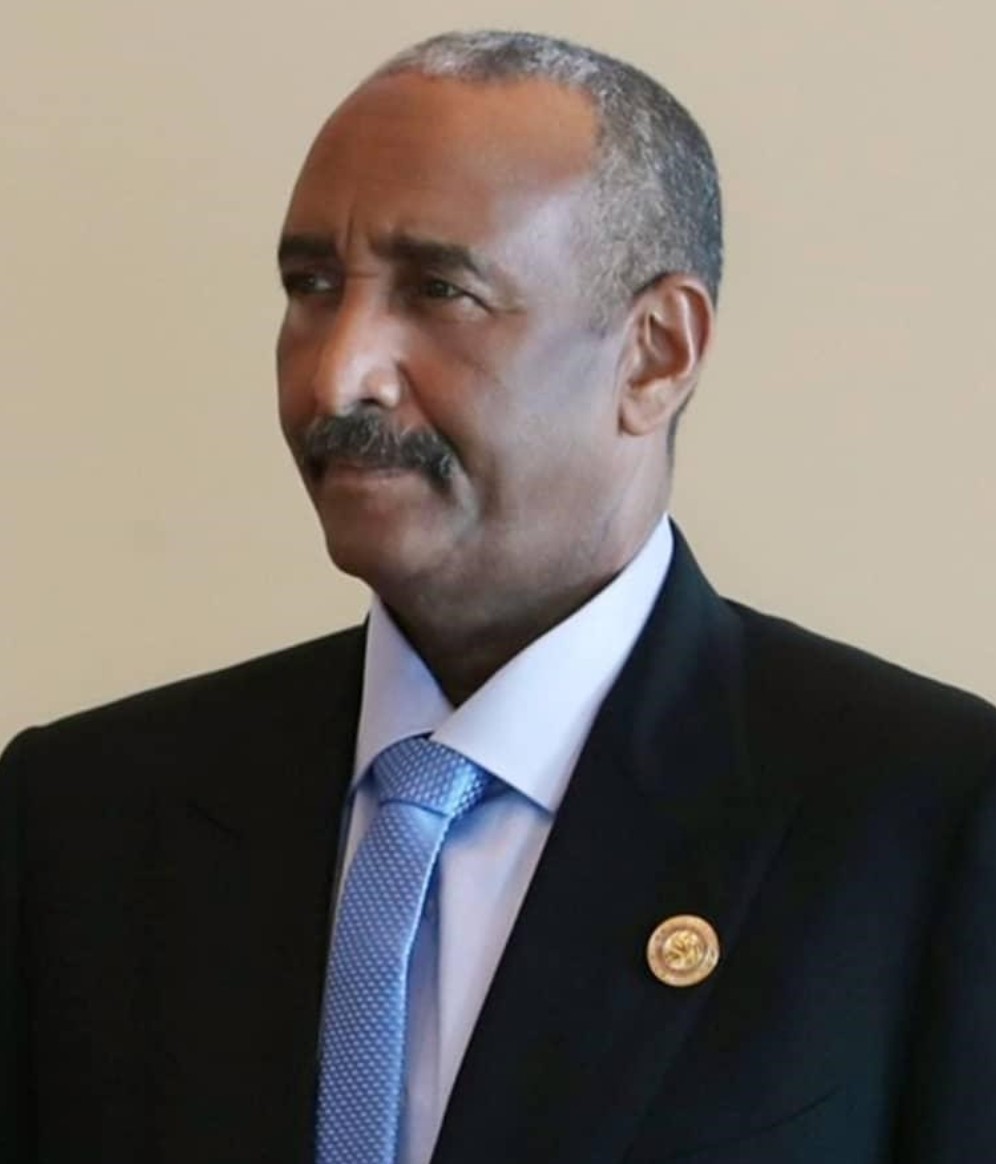
It was the first serious engagement between both sides aimed at ending the war, securing urgent humanitarian access, pushing toward a long-term ceasefire under strict international monitoring, and then addressing political questions in a more transparent manner that could lead to lasting peace and ultimately civilian governance—a sequence that became known as the “phased matrix.”
Global realities are also reshaping the equation. Rapid geopolitical shifts in the Middle East, under the pull of multipolar competition and the rise of emerging powers such as China, India, and Turkey, are recalibrating the global balance of power. This, along with the repositioning of strategic interests, has placed genuine pressure on the U.S., whose long-standing dominance is now under strain. Washington’s Middle East strategy remains fundamentally driven by vital interests, with Israel’s security at the top of the list, alongside control over trade routes and energy supplies.
Regionally, the scramble for control of strategic coastlines and maritime routes—including Sudan’s own geography—has intensified, as has the race for regional leadership, with the old order giving way to a reconfigured map under new conditions. Non-state actors, from armed groups to militias, are now recognized as central to global security calculations.
Within Sudan, the situation intersects with what can be described as a “Trumpian” context. Trump presents himself as a peacemaker—keen on a Nobel Peace Prize and determined to end historic conflicts—while simultaneously leveraging peace deals into strategic bargains that preserve U.S. interests. This creates a rare and potentially historic opening to end Sudan’s war without sacrificing the rights of future generations.
To assume the Geneva meeting was merely a diversion or time-buying exercise would be mistaken. Both men—Trump and Al-Burhan—know precisely where they stand and where they intend to step next. The meeting was not sudden, but rather the outcome of months of prior contacts between U.S. envoys and Al-Burhan’s advisers.
Sudan has long sought direct dialogue with Washington, a goal only partially achieved under former President Joe Biden, whose tenure ended with Khartoum rejecting Geneva in favor of direct talks in Jeddah—a round remembered as the “Critical Questions” meeting. The Biden-era reliance on regional proxies—chiefly the Rapid Support Forces’ (RSF) backers—has now been bypassed by Trump’s direct engagement. Still, questions remain about how Washington’s plan will align with the strategies of its European allies, who played a decisive role in engineering Sudan’s current existential war.
It would be wise for Gen. Al-Burhan to form a national negotiating team capable of pursuing a strategic settlement that protects Sudan’s higher interests and the future of its people—while rejecting any arrangement resembling the Rwanda–Congo accords, or the conditional formulas floated for the Russia–Ukraine conflict.
Meanwhile, the upcoming South Africa “Peace Powers Conference,” planned by the United Arab Emirates—the RSF’s key backer—appears to be its last attempt at whitewashing its bloody role in bankrolling Sudanese deaths.
Domestically, Sudan has already entered a phase of internal recalibration. What is unfolding is less about implementing U.S. dictates and more about searching for answers to those same “Critical Questions.” For Gen. Al-Burhan, this may require a profound and unavoidable restructuring of the political and military landscape—a move that will surprise many.
What is now needed is a genuine will to prepare the stage for serious work: a comprehensive package of solutions, a decisive push toward peace and reconstruction, and an opening for genuine Sudanese dialogue.
Peace “the Trump way” is now the closest, most significant opportunity Sudan has had. The choice lies with Gen. Al-Burhan and his leadership team. With political will, this war could end, ushering in a peace process that finally pulls Sudan out of its historic impasse.
Exclusively published by Brown Land News.
Where sovereignty is not negotiable, and truth defies revision.
Our Land. Our Voice. Our News