Sudan Is Not Syria or Hezbollah: The Captagon Smear Campaign
By: Dr. Abdulaziz Al-Zubair Basha
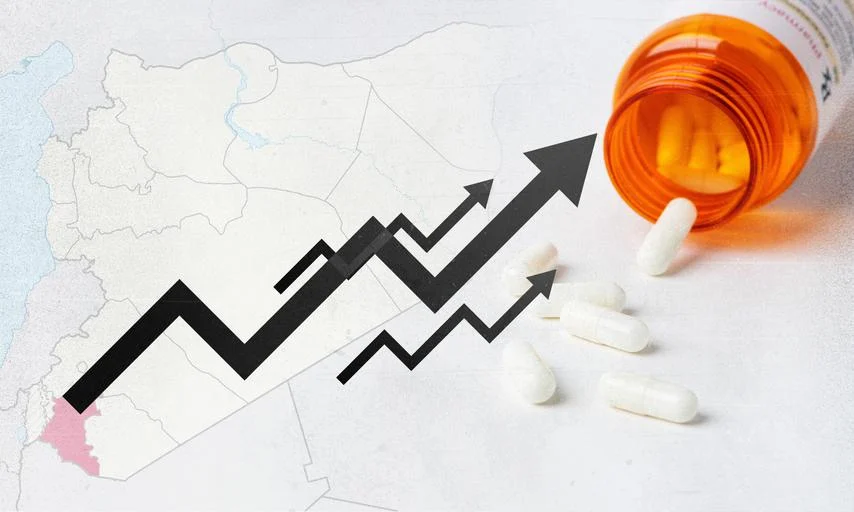
On August 12, 2025, the Washington-based New Lines Institute released a report titled “Sudan Emerging as a New Hub for Captagon.” It presented Sudan as though it had joined the club of narco-states, comparing our country to Assad’s Syria and Hezbollah’s Lebanon. Behind its research veneer, however, lies a political agenda: to undermine Sudan’s legitimacy at a pivotal moment in its fight against the rebel Rapid Support Forces (RSF).
Distortion by Design
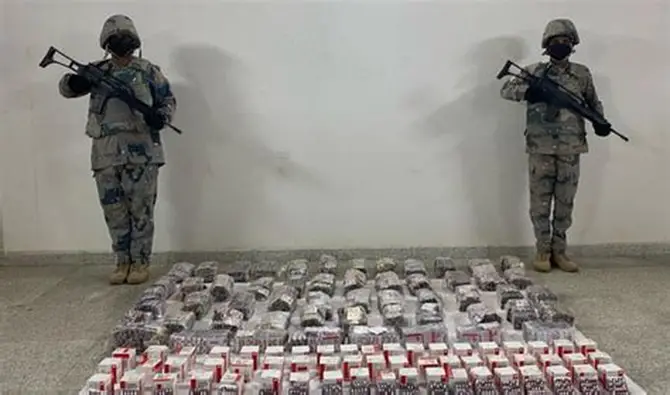
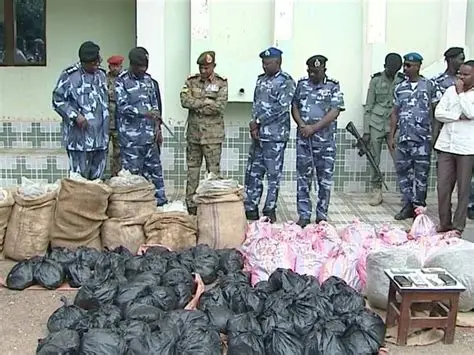
The report’s first flaw is its selective presentation of facts. The Captagon laboratories discovered in Khartoum were not set up by the Sudanese state or army. They operated under RSF control during its occupation of the capital’s neighborhoods. Once the army retook those areas, it confiscated the equipment and dismantled operations—clear evidence of the state’s opposition to drug trafficking.
Yet the report framed this scene as if the government itself were complicit, inviting international readers to conclude that Sudan’s leadership is running the trade. This is not an oversight; it is deliberate misrepresentation, blurring the line between the militia perpetrator and the state combating it.
A Loaded Analogy
The most dangerous move in the report is its analogy with Syria and Hezbollah. The purpose is transparent:
• To open the door to Sudan’s demonization and possible sanctions.
• To weaken regional and international support for the Sudanese army by portraying it as another narco-regime.
• To advance a narrative that equates the legitimate state with the insurgent militia, setting the stage for a “compromise” that legitimizes the RSF’s coup attempt.
This is not objective analysis—it is political engineering.
Numbers Tell a Different Story
The report cites 19 seizures over a decade, including three laboratories. Even if accurate, these figures pale beside Syria, Lebanon, Iraq, or Turkey. Inflating them into evidence of a “nascent global hub” is intellectually dishonest.
In fact, the data suggest the opposite: that Sudan, despite war and a collapsed security infrastructure, remains capable of detecting and dismantling these activities. What should be seen as a sign of resilience is instead twisted into proof of complicity.
The Political Context
To understand the timing, look at the bigger picture:
• A coordinated media campaign has targeted Sudan’s army since it expelled the RSF from Khartoum.
• There is a concerted effort to strip Sudan of the legitimacy of its resistance by branding it corrupt and criminal.
• Western policy circles, searching for a “new Syria” narrative after Assad’s regime waned in relevance, have found Sudan a convenient substitute.
The issue is not drug policy research—it is narrative warfare designed to prepare ground for international pressure.
Victim, Not Sponsor
The ignored truth is that Sudan is not a sponsor of the Captagon trade—it is a victim of it.
• The RSF, already guilty of documented war crimes, turned to narcotics after looting Darfur’s gold and Sudanese banks.
• The Sudanese army, with strong public backing, shut down the factories.
• Sudanese society is suffering the fallout, with young people targeted by “escape pills” in a context of poverty and food insecurity.
This is the same pattern seen from Colombia to Afghanistan: drugs thrive where the state is absent, and they wither as soon as institutions reassert control. Sudan is following that trajectory.
Why Now?
The report appeared just as the Sudanese army had regained the initiative in Khartoum. Is it coincidence that a “research paper” equating the army and militia appeared at that moment? Or is its purpose to strip Sudan of its moral and political capital before international opinion?
Setting the Record Straight
Sudan is fighting on two fronts: one against a militia intent on tearing the country apart, and another against a cross-border criminal economy. The international community should recognize the difference between a state struggling to restore order and a militia financing itself through crime.
The Sudanese government must also act decisively—through its ministries of information, foreign affairs, and the prime minister’s office—to counter this disinformation in multiple languages. It must emphasize three points clearly:
1. Sudan is combating the drug trade, not sponsoring it.
2. The RSF is the true actor behind Captagon operations.
3. Comparisons with Syria or Hezbollah are false and politically motivated.
Conclusion
Reports like New Lines’ are not neutral research; they are weapons in a wider campaign. Sudanese resilience—in the field and in the narrative battle—will determine whether the country is recognized as a victim fighting back, or falsely branded as a perpetrator.
This article originally appeared on Al Jazeera Net (Arabic edition)
Brown Land News.
Where sovereignty is not negotiable, and truth defies revision.
Our Land. Our Voice. Our News