Symposium on Reconstruction: Approaches and International Experiences
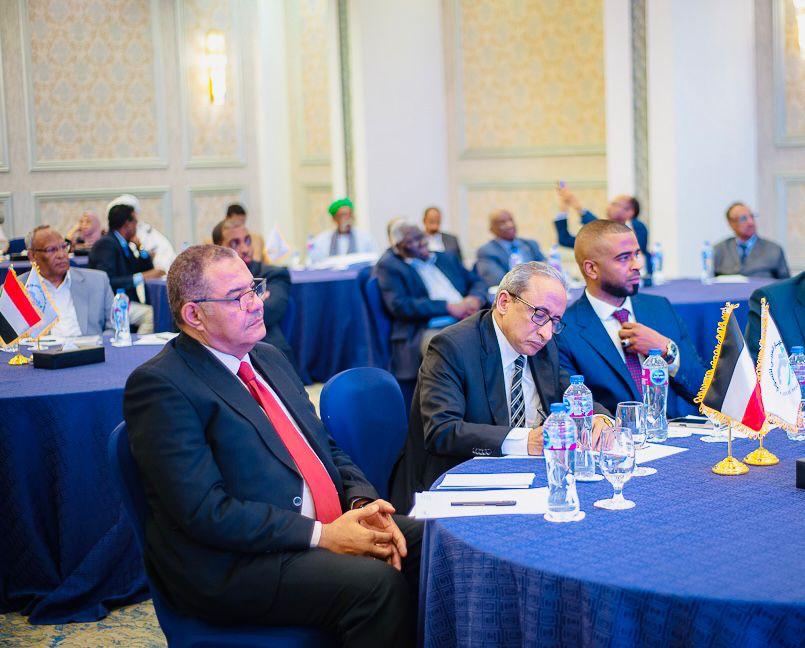
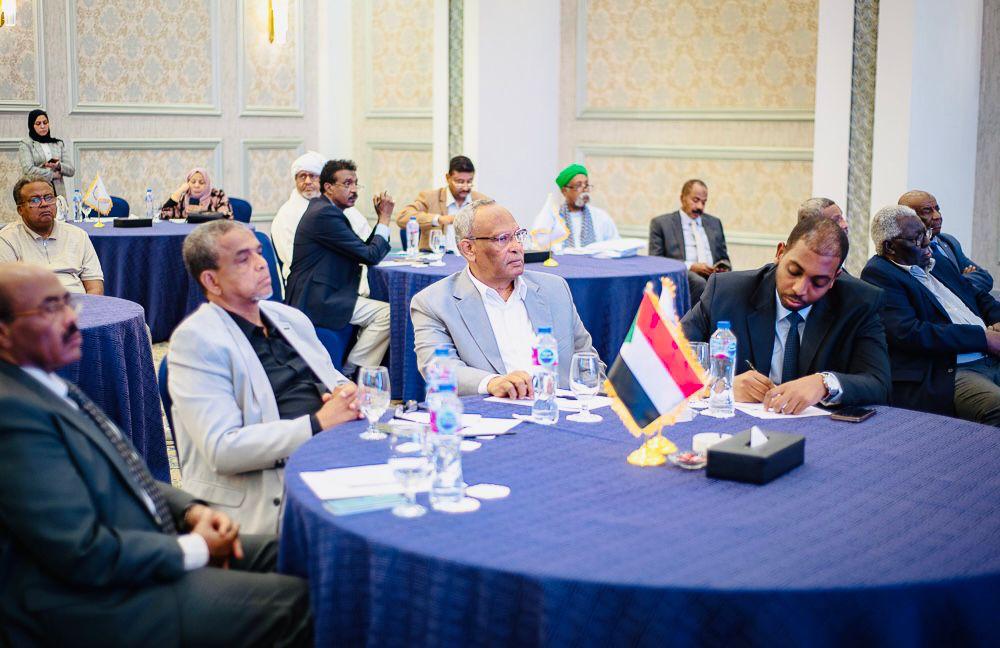
The Arab Marketing Organization, affiliated with the Arab Economic Unity Council of the League of Arab States, in collaboration with the Embassy of the Republic of Sudan in Cairo, organized a scientific symposium titled “Reconstruction: Approaches and International Experiences” on August 21, 2025, at the Triumph Hotel in Cairo.
The event drew a distinguished audience, including prominent economists, financial experts, media professionals, representatives of the private sector, business leaders interested in post-war reconstruction projects, as well as delegates from regional and international development organizations, diplomats, and specialists in economic and political affairs.
.
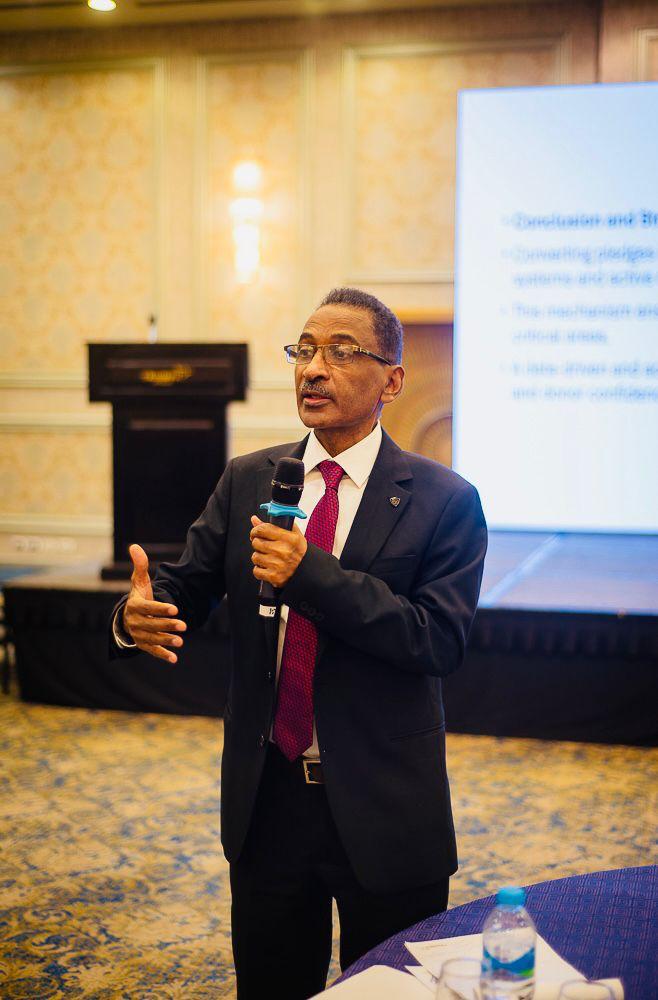
Dr. Mohammed Awad Baroudi presented a comprehensive scientific paper titled “Reconstruction: The Approach and International Experiences,” in which he reviewed successful international experiences and the foundations for building a comprehensive approach to reconstruction. Following this, Dr. Mohammed Al-Fattah Bey provided a clarifying intervention in which he explained the concept of the approach and its essential components, linking them to the Sudanese context and their practical applications in accordance with Sudan’s uniqueness and needs. Engineer Khaled Nasar also provided a technical comment confirming the points made in Dr. Baroudi’s lecture, praising the vision presented and calling for swift implementation of clear executive steps. The discussions concluded with a number of important recommendations, the most notable of which are:
Dr. Mohamed Awad Baroudi delivered a comprehensive research paper on “Reconstruction: Approaches and International Experiences”, reviewing successful global models and presenting the foundations of a holistic framework for reconstruction.
Dr. Mohamed Al-Fateh Beik followed with an explanatory intervention, elaborating on the concept of methodology and its essential components, while linking them to Sudan’s specific context and practical applications tailored to the country’s needs.
Engineer Khaled Nassar provided a technical commentary, reaffirming Dr. Baroudi’s vision and stressing the importance of accelerating clear and actionable implementation steps.
The discussions culminated in a set of key recommendations:
- Institutional and Organizational Framework
• Establishing a High Commission for Reconstruction as the central authority for planning, coordination, and oversight.
• Defining clear roles for ministries and state governments to ensure coordination and avoid overlapping mandates.
• Adopting transparent monitoring and accountability mechanisms under independent bodies.
• Developing a comprehensive national reconstruction plan for Sudan.
• Unifying scattered reconstruction initiatives under a coherent framework.
- Methodology and Public Policy
• Designing an integrated national reconstruction strategy inspired by successful global experiences, while reflecting Sudan’s unique context.
• Adopting a mixed economic model balancing state-led planning with private sector financing and execution.
• Preparing phased short-, medium-, and long-term plans with measurable performance indicators. - Financing and Investment
• Establishing a National Reconstruction Fund with initial government capital, open to international contributions.
• Introducing tax and legislative incentives to attract local and foreign investment.
• Utilizing innovative financing tools such as public-private partnerships (PPPs) and development bonds (Sukuk).
• Preparing for an International Donors’ Conference, with a specialized team tasked with consolidating projects and presenting them in line with international financial institutions’ standards.
• Creating an advanced mechanism to manage donor pledges and ensure compliance.
• Enhancing Sudan’s capacity to maximize limited international resources, including leveraging opportunities in international organizations and regional forums. - Sectoral Priorities
• Infrastructure: Rehabilitation and expansion of roads, bridges, electricity, and water networks.
• Agriculture: Developing value chains to boost productivity and exports.
• Mining: Regulating the sector, enhancing revenues, and ensuring environmental compliance.
• Education & Health: Rebuilding institutions to meet international standards. - Governance and Transparency
• Establishing a monitoring and evaluation system for all reconstruction stages.
• Publishing periodic public reports on funding flows and implementation progress.
• Launching unified digital platforms for engagement with donors and partners.
• Highlighting the media’s role in raising public awareness and ensuring oversight. - Social and Community Dimension
• Involving local communities in priority-setting and implementation monitoring.
• Supporting training and capacity-building programs for youth and women.
• Promoting social peace through reconciliation initiatives and reintegration of displaced populations.
• Training specialized teams to close knowledge gaps and align with international standards.
• Combating hate speech to strengthen social cohesion. - Regional and International Relations
• Strengthening partnerships with neighboring countries to boost trade and cooperation.
• Engaging international organizations for technical and financial support.
• Developing a strategic communication plan with donors to ensure sustainable funding and streamlined aid flows.