
Facebook and X Under Scrutiny: Platforms of Expression or Instruments of Domination?
Behind the façade of neutrality, Facebook and X have become digital arenas governed by hidden alliances and financial leverage. Voices documenting atrocities in Sudan and Palestine are restricted, while narratives favored by powerful states rise without scrutiny. These platforms no longer safeguard truth. They suppress evidence of crimes, silence independent journalism, and reshape the global public sphere through influence networks that decide what the world is allowed to see.
By Mohamed Saad Kamel: Editor-in-Chief, Brown Land
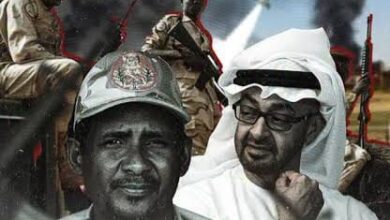
This investigation exposes a digital landscape in which the natural order has been overturned. Social media platforms such as Facebook and X, once imagined as open arenas for expression, have become spaces directed from behind opaque structures of power. States hold their strings that command vast financial resources and advanced technological capabilities, including the United Arab Emirates (UAE), Israel, and the United States (U.S.).
These platforms no longer operate as neutral grounds for public dialogue. They have evolved into tools shaped by influence, used to launder crimes and suppress entire populations. Their algorithms function as invisible magistrates, exonerating the perpetrator, condemning the victim, erasing massacres, and amplifying narratives engineered in privileged rooms of political authority.
The voice of Sudan is throttled. Palestine is obscured. Those who dare to expose injustice are punished through restrictions, shadow bans, and targeted suppression. From the deliberate limitation of journalists’ accounts to covert partnerships between governments and technology corporations, a distorted digital system emerges. Within this system, truth is extinguished under the weight of wealth and political leverage, carried out through algorithmic machinery designed to recast global consciousness and entrench injustice across borders. Its silent message is unmistakable: you will see only what we choose to show you.
1. Platforms Under Guardianship and the Targeting of Independent Journalism
The brutal war in Sudan has stripped away the façade of ethical neutrality that major social media corporations have long projected. These platforms have demonstrated a disconcerting willingness to prioritize their own commercial considerations over the moral principles they publicly claim to uphold. While they allow the circulation of content that violates the norms of society, including explicit material, they obstruct attempts to document atrocities committed against oppressed populations in Sudan, Palestine, and elsewhere. The suppression has become so pervasive that activists now deliberately distort words such as Israel, Emirates, or Gaza to evade immediate algorithmic censorship.
These restrictions have not been limited to personal accounts. They have extended to Sudanese media institutions that support the Sudanese Armed Forces (SAF) and expose the crimes of the Rapid Support Forces (RSF) militia and the role of the UAE in fueling the war. Brown Land itself is among the affected. Its Facebook page has experienced a sharp, unexplained decline in visibility and reach. Journalists and writers affiliated with the institution, including Mohamed Saad Kamel, Editor-in-Chief of Brown Land; writer and Deputy Editor-in-Chief Sabah Al-Makki; media personality and Editor Nisreen Sirri; and others, have received repeated warnings that have resulted in substantial limitations on their personal accounts and on the circulation of their work.
On X, suppression has taken even harsher forms. Sabah Al-Makki’s account was entirely suspended after she responded to public posts by Anwar Gargash and Abdulkhaleq Abdulla, both prominent figures within the inner circle of Mohamed bin Zayed (MBZ) and among his closest political advisors. The incident reveals a broader pattern of digital retaliation against voices that challenge Emirati propaganda or uncover its involvement in Sudan’s war. Such targeting raises serious questions about the standards of content moderation and the political forces that shape them.
In parallel with these restrictions, Brown Land, in both its Arabic and English editions, faces a conspicuous decline in visibility in the Google search index. Despite adhering to rigorous editorial standards and verified sourcing, the newspaper’s analytical and investigative articles no longer appear in recommendation lists or high-ranking search results. This pattern is particularly evident in material examining the Emirati footprint in the Red Sea, Sudan, and the Horn of Africa. Such algorithmic marginalization suggests that digital suppression extends beyond social platforms into search engines, obstructing public access to independent journalism that addresses sensitive issues involving powerful regional actors.
At this juncture, a fundamental question emerges. How did platforms that once promised to safeguard free expression become instruments that reshape narratives in accordance with financial and political dictates? How did spaces intended to illuminate truth become tools engineered to silence voices and disseminate constructed falsehoods at the expense of the victims?
2. Money and Digital Politics
Can states such as the UAE, Israel, and the U.S. purchase influence within Facebook and X?
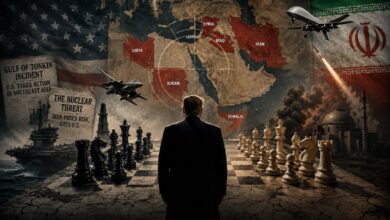
In recent years, social media has ceased to be a mere space for entertainment or interpersonal communication. It has evolved into a battlefield of political and media influence, shaping public consciousness and molding the trajectory of conflicts. As these platforms have grown into central architects of global opinion, questions regarding their neutrality and independence have intensified, especially amid accusations that wealthy states such as the U.S., the UAE, and Israel are leveraging capital, partnerships, and covert pressure to secure influence within these companies and manipulate their policies to serve strategic interests.
These concerns have become urgent because repeated incidents indicate that decisions regarding what content is permitted or restricted are no longer strictly technical or ethical. Instead, they increasingly appear tied to political agendas and security calculations that operate behind closed doors, treating digital space as a new sphere of geopolitical influence.
3. Money as a Tool of Digital Influence
Major technology companies, including Meta, the owner of Facebook and Instagram, and X, formerly Twitter, rely heavily on advertising and large-scale investment to sustain their profits. This economic model renders them vulnerable to direct and indirect political and financial pressures through lobbying firms, digital research funding, and governmental advertising partnerships.
Analysts argue that countries such as the UAE wield significant capacity to purchase influence through soft power tools, digital public relations campaigns, and networks embedded within Western corporations. Israel, for its part, has long used media and technology as integral components of its political and security apparatus to shape narratives around the conflict in the Middle East.
The Argentine journalist Gustavo Ng told Brown Land that the relationship between certain governments and these platforms is symbiotic. Some states hold influence over the platforms, while the platforms themselves have become extensions of those states’ power structures. He explained that the UAE’s financial stake in X grants it a literal seat at the table, enabling it to shape the company’s direction and policies. Israel, meanwhile, maintains close cooperation with the platforms to monitor and remove content it considers threatening. It has a documented history of working directly with Facebook to eliminate material it associates with groups such as Hamas.
He added that governments routinely justify these pressures by invoking national security concerns. The platforms receive demands to remove content without transparent criteria. Technology companies spend millions on lobbying in Washington, Brussels, and other capitals, and they often respond to political pressure transmitted through informal channels to maintain favorable relationships.
These companies now act as global power centers. They negotiate, resist, and recalibrate their policies to align with their own interests across diverse regulatory environments. With billions of users, their reach exceeds the population of any individual state. A government legislates for fifty or three hundred million citizens, while these platforms shape the daily lives of billions across nearly two hundred countries. Their vast user bases grant them extraordinary social power. They are not simply corporations. They are contemporary public squares, postal systems, libraries, and media outlets. Control over what is seen, amplified, or suppressed constitutes a form of authority once held exclusively by governments and major broadcast networks. That authority now rests with digital fiefdoms whose budgets exceed the GDP of many nations. More concerning is their control over the most valuable resource on earth: data. They possess unmatched insight into human thought, relationships, preferences, fears, and locations, granting them a strategic advantage that surpasses the capabilities of any national government.
Ng added that DangDai Magazine, dedicated to cultural exchange between Argentina and China and for which he serves as managing editor, has itself been subjected to censorship on X, with the company not explaining repeated requests.
Lebanese journalist Mahdi Dreir Firi emphasized that specific platforms automatically delete any post containing words such as ‘resistance’ or ‘martyr,’ whereas X offers a slightly wider margin of freedom. His research revealed Israeli partnerships with Microsoft and Google aimed at monitoring and removing posts that contradict Israeli messaging regarding Gaza, leading to the deletion of numerous accounts belonging to journalists.
Egyptian journalist Nasser Zulfikar told Brown Land that expressing opinions on social media has become subject to discriminatory policies. During Israel’s assault on Gaza, it became nearly impossible to publish posts condemning the genocide without them being removed or hidden. Many users resorted to disguising names and terms to avoid algorithmic targeting. He recounted that even writing the word Israel resulted in immediate suppression, preventing his posts from reaching readers.
The testimonies of these journalists, experts, and researchers reveal a consistent pattern. Money, political influence, and technological partnerships have become tools for purchasing space within platforms that claim neutrality. The result is a digital realm engineered to reflect the interests of the powerful, while denying the oppressed their voice and their truth.
4. Sudan as a Case Study
When the Free Voice Is Punished
In Sudan, activists and journalists report widespread restrictions imposed on their Facebook and X accounts after posting documentation of atrocities committed by the RSF militia, financed and supported by the UAE. Many confirm that these measures followed orchestrated reporting campaigns launched by anonymous accounts suspected of serving foreign interests intent on erasing facts and reshaping narratives, especially after global media campaigns began exposing and condemning the Emirati role in intensifying the conflict.
Journalist Mohamed Hamid Jomaa Nawar noted a sharp decline in engagement with his posts once he began writing about the UAE and its involvement in Sudan. Readers informed him that his page no longer appeared on their feeds, even though Facebook did not issue any formal notification. His daily interactions with the platform and the metrics he monitors indicate deliberate constraints on the reach of his content.
Although abundant visual and audio evidence of the RSF atrocities exists, platforms have not taken serious measures against accounts that disseminate hate speech or misinformation in support of the militia. Journalist Al-Samani Awadallah confirmed that numerous Sudanese journalists have had their accounts restricted or banned without clear justification.
Journalist Rashan Oshi reported that Facebook restricted her account, citing two old posts, one from 2018 and another from 2023, both allegedly violating community standards, despite the absence of any credible basis for such actions.
This inconsistency between tolerating documented incitement and punishing those who expose it raises essential questions about the neutrality of these platforms, particularly when their economic interests align with influential states.
Dr. Ibrahim Shaqlawi explained to Brown Land that, though presented as open arenas for communication, social media platforms have become spaces where political, economic, and even personal interests intersect. Technology companies are not neutral entities. They respond to overt and subtle pressure from governments and interest groups that use wealth and influence to shape content policies. He stressed that some states now possess the leverage to influence algorithms and content moderation through investment, security cooperation, and advertising partnerships.
Dr. Shaqlawi highlighted a second layer of censorship driven not by institutions but by coordinated waves of malicious reporting intended to silence journalists. He personally experienced account suspensions across platforms due to fabricated complaints filed to suppress his reporting on human rights abuses in Sudan. Although platforms often restore accounts after review, the damage is already done. In journalism, timing is essential, and a temporary suspension during a critical moment is itself a form of censorship.
He concluded that society is witnessing a new phase of digital repression. Censorship is no longer solely the result of state decrees. It is also embedded within algorithmic systems and manipulated through coordinated reporting groups. Without transparent standards and genuine independence, digital journalism will remain vulnerable to suppression under the guise of technical policy enforcement.
Sudanese journalist Sarah Al-Tayeb stated that Google suspended advertising on her platform, Fory News, after she published an article about the UAE’s support for the RSF. Journalist Muawiya Al-Jak noted that changing the policies of major platforms is exceedingly difficult, as losing credibility would jeopardize their influence and financial standing. He was joined in this view by Hajo Ahmed Mohamed Ali, head of news at Sudan TV, who said that owners of these platforms are among the wealthiest individuals in the world and that allegations of interference by the U.S. government are always met with apparent official denial from Facebook and X.
He noted that during the Gaza war, influencers across social media platforms helped shift global opinion toward Palestine without any platform-imposed restrictions, demonstrating that suppression does not always occur openly but may target specific narratives that clash with powerful states’ interests rather than universal human rights campaigns.
Al-Jak added that financial influence may operate indirectly through digital farms, organized networks that shape public opinion by spreading ideas and mobilizing influencers to either support or obstruct specific issues.
Journalist Rahma Abdel Moneim underscored that although platforms claim to uphold uniform policies, political and financial pressures clearly influence enforcement. He noted that his posts documenting RSF atrocities were repeatedly restricted and that similar patterns occur with content about Palestine. Even using the word ‘militia’ in reference to the RSF triggers automated removal, forcing activists to modify their spelling to bypass algorithmic filters deliberately. He observed numerous complaints from users who had their accounts restricted for discussing the UAE’s role in the Sudanese war, arguing that these recurring experiences cannot be dismissed as a coincidence. They demonstrate the real possibility that states like the UAE or Israel can influence platform policies through wealth and strategic alliances.
Journalist Asim Al-Bilal told Brown Land that financial power serves as a passport for states to pursue their domestic and foreign agendas. Platforms such as Facebook and X have become among the most potent instruments of influence, eclipsing traditional media. They no longer merely disseminate news. They shape reality through impact-driven, agenda-serving communication. He added that no human institution is immune to influence, manipulation, or coercion. States naturally seek to secure their interests, and he would not rule out that some governments attempt to exert control over these platforms. His own accounts were suspended after warnings, an indication of a broader pattern of silencing journalists who use these digital spaces as extensions of their professional work. Such restrictions constitute a form of public opinion management exercised by platforms that now determine who is heard and who is muted.
5. International Precedents
A History of Bias
These incidents are not isolated. In 2021, an investigation by The Guardian revealed that Facebook ignored inflammatory content targeting Palestinians during the Jerusalem and Gaza events while deleting similar posts that expressed support for Palestinians. In India, Meta was accused of tolerating hate speech by ruling party officials to protect its commercial interests in the country. X, formerly Twitter, faced complaints from human rights organizations accusing it of siding with governments in Turkey and Saudi Arabia by restricting or removing accounts belonging to critics at the request of state authorities. These cases prompted organizations such as Human Rights Watch and Amnesty International to issue direct criticisms, accusing these companies of double standards and capitulating to political and financial pressure.
6. Sources and Accountability
Reports from Amnesty International, the Stanford Center for Internet and Society, and the Oxford Digital Transparency Project show that major social media platforms receive both formal and informal pressure from governments to adjust content policies. These organizations have recommended adopting robust digital transparency laws requiring platforms to disclose the sponsors of political advertising, the number of government takedown requests, and the sources of financial influence that may shape content moderation algorithms.
Despite such calls for transparency, these platforms continue to operate in a grey zone between free expression and commercial imperatives, leaving them vulnerable to accusations that they reinforce the political influence of those who possess financial power.
7. Conclusion
The Battle for Awareness in the Age of Algorithms
What is unfolding in Sudan is not an isolated national crisis. It is part of a broader struggle over global digital consciousness. When the free voice becomes a threat, and when neutrality itself can be purchased, platforms cease to be spaces for expression and become tools of domination. In an era in which algorithms shape wars and public opinion, the need to hold technology companies accountable has become urgent. Remaining silent in the face of their bias is, in itself, a form of modern repression.
About the Author
Mohamed Saad Kamil is a Sudanese journalist, Editor-in-Chief of Brown Land News, and veteran television producer with over three decades of work across 25+ international networks. His career spans war zones, political upheavals, and cultural frontlines, documenting Sudan’s unfolding history with both technical mastery and an unwavering commitment to truth.
From CNN and the BBC to Al Jazeera and Reuters, Mohamed has brought Sudan’s stories to global audiences, challenging distortions and amplifying voices that are too often erased from international narratives. His journalism exposes political violence, defends indigenous rights, and preserves Sudan’s historical memory.
Mohamed views media not as a passive observer, but as a force to confront impunity, resist erasure, and protect the dignity of those most at risk — writing from the frontlines of a nation’s struggle for justice and sovereignty.
Exclusively published by Brown Land News.
Where sovereignty is not negotiable, and truth defies revision.
Our Land. Our Voice. Our News