Book Review: Israel uses African nations as a counterbalance to being surrounded by Arab neighbors
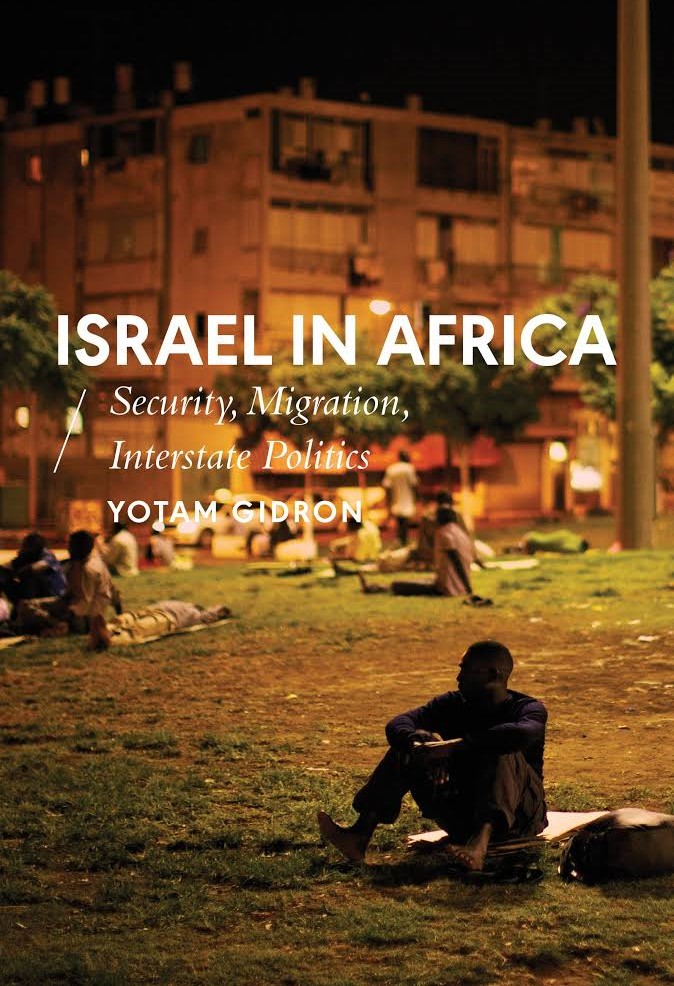
A review of Yotam Gidron’s Israel in Africa: Security, Migration, Interstate Politics, examines how Israel’s early post-colonial outreach in Africa served as a geopolitical strategy to counter Arab states, secure diplomatic leverage, and influence global perceptions of Palestine while shaping security, evangelical, and military alliances across the continent.
By Jehron Muhammad- @africawatchfcn

Introduction: Israel’s Early Strategic Interest in Africa
Yotam Gidron’s captivating read, “Israel In Africa: Security, Migration, Interstate Politics,” demonstrates that the relatively short post-colonial history of the Zionist State of Israel’s African interests is part of a broader diplomatic effort that includes “blocking Palestine’s pursuit of international recognition.” And even though the scale of Israeli African engagements continues to receive scant coverage, Gidron’s 2020 book reveals how contemporary African and Middle Eastern politics interact and impact one another. Gidron is a researcher with a PhD in African Studies from Durham University, who focuses on migration, state-society relations, and popular culture in Africa and Israel.
Gidron explains in his introduction that the Zionist State “has often sought to project its influence into the continent (Africa), far beyond its immediate (Arab) neighbors, to safeguard its interests and undermine its adversaries.”
Golda Meir and the Early Israeli-African Diplomatic Project
In 1956, the founder of modern-day Israel, born in Poland, Prime Minister David Ben-Gurion, appointed Golda Meir, born in Russia, as foreign minister, a position she’d hold for nearly a decade. She would go on to become the Israeli politician most strongly associated with Africa.
To contextualize that relationship, Gidron cites the late Meir, who later became Prime Minister. He cites Meir’s growing interest in Africa, which she explains in her autobiography as stemming from her country’s budding relationship with Africa’s newly independent states. She wrote, “Like them, we had to learn for ourselves how to reclaim the land … how to live together and how to defend ourselves.”
That relationship with Africa, Gidron explained, “should be understood as driven by the same rationale. In Africa, Israel repeatedly sought political and military alliances or influence that can be leveraged to pressure, weaken, undermine, and deter its rivals in the Middle East.”
The “Alliance of the Periphery”: Countering Arab States Through Africa
But what most don’t understand about the history of this “alliance of the periphery,” as this Mossad brainchild was called, is how Israel also used those ties with African nations as a counterbalance to the Arab states surrounding it.”
A case in point, the budding Jewish state claims commonality with the newly forming African nations, only to see that commonality superseded by Israel’s defense needs, and the 10 billion dollars spent in military hardware, training, and technology, selling over the Jewish state’s relationship with South Africa’s apartheid regime.
And then to add insult to injury, the diplomats and defense officials at the Israeli embassy were reportedly kept in the dark about the roles of their colleagues.
South Africa, Secrecy, and Israel’s Contradictory Foreign Policy
Gidron mentions Sasha Polakow-Suranski’s detailed study, where he explains, “Malcolm Ferguson, South African ambassador to Israel at the time, was stunned to learn that Israel’s SA policy was not only self-contradictory, but that the diplomats and defense officials at the Israeli embassy had no idea what their colleagues were doing.
A key advisor to Prime Minister Rabin had told Ferguson that the Foreign Ministry was deliberately kept in the dark about the nature of the military relations between the two countries for fear that its liberal employees would leak information to the media.”
Leveraging U.S. Power: Washington as Israel’s Gateway to Africa
Israel’s US influence has been a hallmark of its seeming invincibility. “For decades, Israel has managed to access unparalleled American political and financial support, not only because of its existence and prowess, which is said to be advancing American geostrategic interest in the Middle East, but also because of the effective lobbying efforts and political influence of American pro-Israel groups, both Jewish and evangelical Christian,” noted Gidron.
Much of Israel’s leverage with Africa comes from Washington rather than Jerusalem, as Israel and various American pro-Israel groups (like the Jewish lobbying group AIPAC) serve as intermediaries that facilitate access to American support by trying to influence US foreign policy strategy,” explained Gidron.
Evangelicals, Trump, and Israel’s Expanding Influence in Africa
And though the Trump Administration “bullying other countries into supporting Israel,” in Gidron’s book, is a reference to his first term as president, it continued into his second term.
Not only does Israel wield significant influence with US-based evangelical Christians, “Israeli diplomats and politicians have endorsed and featured as guests in evangelical pro-Israel conferences across Africa,” noted Gidron.
And with the rise of Born-Again Christianity in Africa, “Israeli government officials warmly welcome high-profile African pastors when they visit Israel, Palestine on pilgrimage tours.”
Trumps recent threat to send troops to protect kidnapped Nigerian Christians, may have more to do with the West African country’s mega church congregations, that, as explained by Nigerian mega pastor Enoch Adeboye of the Redeemed Christian Church of God, while visiting Israeli settlements in the Occupied Palestinian Territories, “The problems that we are seeing between the Jews and the rest of the world, is because they are the favorites of God.” He added, “When you are special to God, then automatically the devil wouldn’t like you either.”
According to Gidron, “Israeli officials warmly welcome high-profile African pastors when they visit Israel and Palestine on pilgrimage tours. The evangelical theological justifications for support for Israel mean little to Jewish Israelis, and diplomats also often stress the importance of establishing Israel’s image in Africa as a modern, tech-savvy nation, and not only as the ancient Holy Land many Africans know from the Bible. And yet the pro-Israel messages evangelicals promote, their suspicions of Islam, their urge to express unconditional support for Israeli policies, and their expanding influence on public life in many parts of Africa render them invaluable allies of the Jewish state.”
Sudan: A Strategic Battleground Between Africans and Arabs
Concerning Israel’s relationship with Sudan, at the time Africa’s largest nation state, Israel “understood that the war in Sudan (between North and South) represented a golden opportunity for quelling the tensions between Africans and Arabs, something that could only strengthen Israel in the international sphere,” explained Gidron.
The problem Israel ran up against was that the southern secessionist agenda was unpopular among African leaders. Israel, always thinking about its self-interest, changed its mind.
1967 War, Regional Tensions, and Covert Mossad Operations
On May 15, 1967, after Egyptian troops entered the Sinai Peninsula, expelling UN forces, who had been based there since the 1956 Suez campaign, which included British, French, and Israeli invasion of Egypt. On June 5, “securing American approval,” Israel launched a surprise attack, starting a war that ended on June 10 with a major Israeli victory. Though the Soviets provided most of Egypt’s military support, “Sudan also lent a hand.”
“The Mossad calculated that increasing the capacity of the rebels in southern Sudan would keep the Sudanese military busy at home, and suggested Israel should act.” With the approval of PM Golda Meir, Mossad led a covert operation that involved airdropping arms and humanitarian aid inside the headquarters of the southern Sudanese rebel group Anya-Nya and training its members in guerrilla warfare.”
South Sudan, Arms Sales, and Ongoing Warfare
Gidron’s small book gives too few details of Israel’s clandestine operations. The co-author of the book, “Why Israel? The Anatomy of Zionist Apartheid: A South African Perspective,” Suraya Dadoo wrote that since Sudan, via a referendum, became the world’s youngest nation state in 2011, the Zionist state has continuously sold it “weapons, surveillance technology and provided military training and security, much of which has been used to commit war crimes, and potentially crimes against humanity in the civil war that began in 2013, and continues to this day.”
Exclusively published by Brown Land News.
Where sovereignty is not negotiable, and truth defies revision.
Our Land. Our Voice. Our News