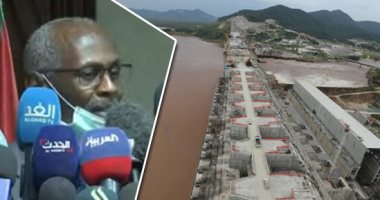
GERD Controversial Dam: Facts and Figures
Muawad Mustafa Rashid
Introduction:
Recently, the tensions among Egypt, Sudan, and Ethiopia over the Grand Ethiopian Renaissance Dam (GERD) on the Blue Nile have escalated, particularly after Ethiopia announced started and completed the second filling the GERD’s reservoir, an action contrary to Egypt’s mandate that the dam not be filled without a legally binding agreement over the equitable allocation of the Nile’s waters. Egypt has also escalated its call to the international community to get involved. Already, the United States has threatened to withhold development aid to Ethiopia if the conflict is not resolved and an agreement is reached.
The dispute over the GERD is part of a long-standing feud between Egypt and Sudan—the downstream states—on the one hand, and Ethiopia and the upstream riparian on the other over access to the Nile’s waters, which are considered a lifeline for millions of people living in Egypt and Sudan. Despite the intense disagreements, though, Ethiopia continues to move forward with the dam, arguing that the hydroelectric project will significantly improve livelihoods in the region more broadly.
While Sudan recognizes the right of Ethiopia to develop its water for the benefit and well-being of its citizens, Ethiopia must also ensure that any potential negative impacts are properly addressed and mitigated in close consultation and coordination with the downstream riparian countries.
The discussions with Ethiopia over GERD started in 2011. Since then, Sudan has been engaging – in good faith, on all stages of the GERD negotiations. A key millstone of the negotiations, led by Sudan, is the signature of the Declaration of Principles at Khartoum in 2015, which form the base for the subsequent negotiation afterward.
The ongoing rounds of negotiations have started in 2018 through the so-called National Independent Scientific Research Group. In 2019 the United States and the World Bank joined the negotiation process as observers to support the three riparian countries reaching a final comprehensive agreement on the filling and operation of the GERD but the negotiation was stalled. In April 2020 Prime Minister Dr. Abdallah Hamdok has led an initiative to resume negotiations to reach a fair deal before the start of the filling of the dam by inviting three observers to join the negotiations, namely South Africa, the USA, and the EU, but it did not deliver.
After the close session of the UNSC in late June 2020, the AU requested to host the negotiations on the GERD. Although the negotiations under the AU-led process resulted in a better understanding of the outstanding issues but made no significant progress.
Russia and Algeria also tried to mediate, but it also failed. Tunisia, as the only Arab non-permanent member in the UNSC in its current session, Tunisia presented a draft resolution aiming to resume the GERD talks between the three countries within six months to reach a legally binding agreement on the dam and immediately suspend the second filling until a consensus is reached; but Ethiopia expressed its disapproval of Tunisia’s ongoing preparation to submit its proposal on the Grand Ethiopian Renaissance Dam (GERD) issue to the UN Security Council, describing the endeavor as “inappropriate”.
GERD and Sudan:
Positive Impacts:
- The frequent flow of the River Nile
- Increase of electrical power generated from Roseries reservoir by about 20% beside an increase of about 8% in Merowe Dam.
- Declination of the stuck silt.
- River transport
Negative Impacts:
- The decline of the flood irrigation to 50% (what is available now is 100 thousand feddans)
- Organic Fertilization
- Risks related to unsafe operation for the reservoirs in Sudan in case of not reaching a binding legal agreement.
Four Outstanding Technical Issues:
- Prolonged drought procedures (Egypt)
- Refilling Principles (Egypt)
- The average Operating Curve of GERD (Sudan)
- The daily change of water flows from GERD (Sudan)
Four Legal Issues:
- The binding nature
- Future Projects of Ethiopia – the relation with water share
- The demand of Ethiopia to divide the agreement into two parts (one for the filling and the second for the operation.
- The demand of Ethiopia to insert the water sharing
Negative Impact of the second filling of GERD without reaching a binding legal agreement to Sudan is the decline of the River Nile waters at Salha Water Plant in Khartoum in July 2020.
What Does the Non-signature of Binding Legal Agreement?
- The inability of strategic planning,
- Disruption of development in agriculture, hydroelectricity.
- The danger Sudan might face over time
GERD and Roseries Dam
- Roseries Lake and dam are far about 15 and 100 kilometers from GERD respectively.
- A threat to the Rosiris dam is the storage of which lake is 1/10 of GERD lake. Therefore, threatening the lives of 20 million Sudanese living behind the Reservoir.
- Inability to operate Roseries reservoir and controlling the flood in the absence of information exchange.
Sudan’s Stance:
- At the beginning of the negotiations in June 2020 under the umbrella of the African Union, the agreed-on items reached 90%.
- The gap on the disputed issue widened during the AU path of negotiations.
What Are the Future Options?
- There are no contacts since 10.01.2021
- Quad committee to play as mediators and not observers.
- Availability of political will among the three countries
- Negotiations in good faith
- Adhering to the directives of the Declaration of Principles in the negotiations.
- Setting plans and strategies to guarantee the safety of operating the dams and the safety of the citizens, besides the future scenarios according to the developments in the dossier.
- Legally.
- Politically.
- National dossier.
- Coordination at all levels.
- Regular enlightenments.
In conclusion, the giant dam Ethiopia has constructed on the Blue Nile made no impact on this year’s floods in Sudan, which had taken costly precautions in the absence of any deal to regulate the flow of water, a Sudanese official said.
Ethiopia has spent years intense negotiations over the $5 billion Grand Ethiopian Renaissance Dam with Sudan and Egypt, both of which are downstream of the dam but have yet to agree and the dam remains a bone of contention between the countries.
Sudan has said the dam could have a positive effect on flooding during the rainy season and hoped to benefit from electricity production but has complained of a lack of information from Ethiopia on the dam’s operation.
Sudan and Egypt had demanded Ethiopia hold off on a second round of filling the dam before a binding agreement was signed regulating its operation and mandating the sharing of data Sudan feels is necessary to maintain its dams and water stations.
“Despite the unilateral filling of the Renaissance Dam … the dam did not affect this year’s floods, but the lack of information exchange before filling forced Sudan to make costly precautions with significant economic and social impact,” said Irrigation Minister Yasir Abbas in a tweet.
Ethiopia sees the dam as key to its hopes of increased power generation and development and says it is taking the interests of both downstream countries into account in its workings.
Abbas said that after the dam reached a particular level on July 20, it let out as much water as it received.
He noted that for the first time Sudan was able to utilize its dams to lower the intensity of the yearly floods, which have historically devastated riverside farming communities.
The UN said earlier this year almost 70,000 people were affected by the rainy season across Sudan, the bulk of them in River Nile state, which lies downstream after the White and Blue Niles meet in Khartoum.
By this time last year, the UN had noted some 380,000 people had been affected.
Abbas noted historically large flows for the White Nile, reaching 120 to 130 million cubic meters this rainy season, compared with a typical 70 to 80 million.