Kaja Kallas’ Statement: Strong Words, Weak Position
By : Dr. Abdulaziz Al-Zubair Basha
21/11/25
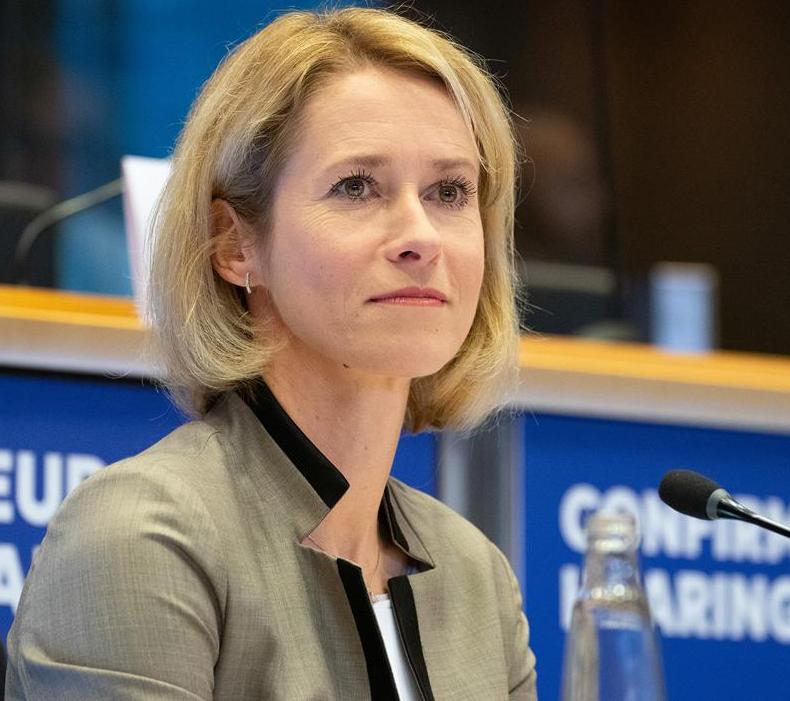
The European Union’s latest statement on Sudan surprised no one. The timing is late, the language is familiar, and the political posture is the same formula repeated whenever atrocities escalate and the human cost for Sudanese civilians rises. The statement may sound forceful, but—as always—it falls short of presenting a meaningful position proportional to the scale of the crimes or the standards of international justice the EU so often invokes.
At face value, condemning the rebel Rapid Support Forces (RSF) is necessary and justified. But placing the RSF and the Sudanese Armed Forces in the same sentence reveals a profound confusion in the EU’s understanding of this war: on one side is a national army fighting to defend its people and sovereign state; on the other is an insurgent militia whose criminal record stretches from Darfur to El-Fasher. Yet the EU insists on “distributing blame” in a way that implies moral and political equivalence between the two. No serious observer could take such framing at face value.
The EU’s sanctions on Abdelrahim Dagalo come across less as a serious measure and more as a way to signal relevance. They were issued only after the fall of El-Fasher and a long chain of documented atrocities. Worse still, they were taken in isolation—unconnected to any comprehensive accountability mechanism or any pressure that might change the militia’s behavior or that of its backers. Then comes the familiar phrase, “the EU stands ready to take further measures if necessary”—diplomatic shorthand for: we’re in no rush.
The statement insists on assigning the Sudanese Armed Forces responsibility for “ending the conflict,” as though the army is the party that launched the war, proposed the division of the country, or emptied cities of their residents. This artificial “balance” exists for one reason: to keep the door open for a political settlement that preserves the EU’s seat at a table increasingly dominated by rising regional actors.
The call to “halt the supply of weapons to all sides” is equally detached from reality. Only one side receives foreign fighters, weapons, and logistical support through well-known regional networks. The Sudanese army cannot fight without arms; it is fighting a war on its own soil to defend a population that has been killed, displaced, abducted, and used as human shields for nearly two years.
As for accountability, supporting the ICC or the UN Fact-Finding Mission is hardly a bold stance—it costs the EU nothing. What is missing from the statement is recognition of the root of the crisis: an insurgent militia attempting to impose a parallel authority and fragment the country’s territory and population. Without acknowledging this core fact, any rhetoric about “Sudan’s unity” remains little more than diplomatic decoration.
The EU’s repeated call for an “immediate ceasefire” is part of the same old script. It overlooks the obvious: a ceasefire with a group that has committed mass atrocities, practices forced disappearance, and uses civilians as hostages amounts to granting it political legitimacy it never earned.
And at the end, the EU tries to remind the world that it is still a player: the Quad, Paris, London, international partners… Yet the truth is simple—Brussels no longer controls this file. The real decision-makers today are in the region, not Europe.
Conclusion
The EU’s statement is full of heavy words but empty of heavy actions.
It condemns atrocities but avoids naming their root causes.
It supports accountability but not the state fighting to uphold the law.
It rejects the division of Sudan but refuses to identify who is attempting to divide it.
It speaks of protecting civilians while equating those who defend Sudan’s cities with those who besiege them.
This statement is just another link in a long chain of Western positions that keep the conflict suspended under the banner of “balance” and “neutrality”—while the reality on the ground is as clear as daylight:
There is a state fighting to survive… and a rebel militia fighting to tear apart what remains.