
Nigeria and the Oil Dilemma: Is the Mossadegh Scenario Repeating Itself?
By Mubarak Mahgoub Musa
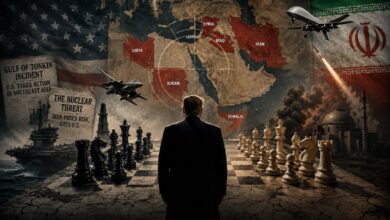
When Iran, under Prime Minister Mohammad Mossadegh in the early 1950s, decided to reclaim sovereignty over its natural resources and nationalize the oil sector—then dominated by British and American companies—the Western capitals reacted with fury. The result was the 1953 CIA-engineered coup that toppled Mossadegh and restored the Shah to power. That episode became a classic symbol of how global powers intervene whenever a developing nation dares to control its own wealth.
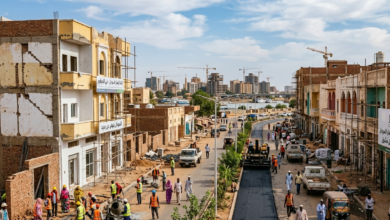
Today, Nigeria seems to be walking a similar path. Africa’s largest oil producer has recently decided to localize its refining industry and end its long-standing dependence on importing refined petroleum products from abroad. It is a long-overdue sovereign move, given that Nigeria has for decades exported crude oil only to buy it back at inflated prices—an absurd cycle that kept its citizens, rich in resources, trapped in recurring fuel crises.
But this step has not gone unnoticed. Following Abuja’s decision to expand domestic refining capacity, Washington and several Western capitals have begun applying political and economic pressure through familiar modern tools:
Reinvoking corruption and human-rights allegations against the Nigerian government,
Leveraging international financial institutions,
Manipulating local opinion through media and NGOs,
And hinting at potential sanctions or reviews of security and economic partnerships.
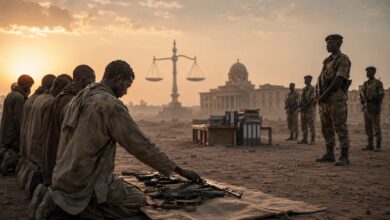
In the midst of this, former U.S. President Donald Trump has added a troubling twist, suggesting the possibility of American military intervention in Nigeria under the pretext that Christians are being “exterminated” by Muslim extremists.
Such a claim is baseless and inflammatory, unsupported by credible independent reports. It reflects a deliberate attempt to cloak geopolitical and economic ambitions in a false humanitarian or religious narrative—a tactic often used to justify interference in resource-rich nations.
This pattern of external meddling is not unique to Nigeria. In Sudan, the United Arab Emirates has been accused of pursuing similar ambitions—targeting the country’s vast gold reserves and strategic resources while backing militias and fueling internal conflict.
Although Abu Dhabi operates under the banner of “investment” and “stabilization,” its methods mirror the very same instruments historically used by Washington: exploiting chaos, financing proxies, and weaponizing economic dependence to secure access to raw wealth.
It is a new face of an old imperial logic, one that extends the same playbook from oil in West Africa to gold in the heart of the continent.
These are modern tools for an ancient agenda: preventing independent states from breaking monopolies over their own resources. The United States may no longer stage coups as it did in the 1950s, but it—and now its regional allies—still wield enormous influence to obstruct any national project that challenges their economic and strategic dominance.
Nigeria’s experience today is not merely about oil; it is a test of Africa’s ability to defend its right to industrialize and add value to its own resources—to finally escape the cycle of dependency that has haunted its economies since independence.
So, will history repeat itself? Perhaps not in the same form. Yet the core conflict remains unchanged: a struggle between the will of sovereign nations and the arrogance of global and regional powers.