The Water is a Silent Killer: Life and Death in the Swamps of Duk County
By Michael Ghai Tong Aroffe Ayueldit, Jonglei State
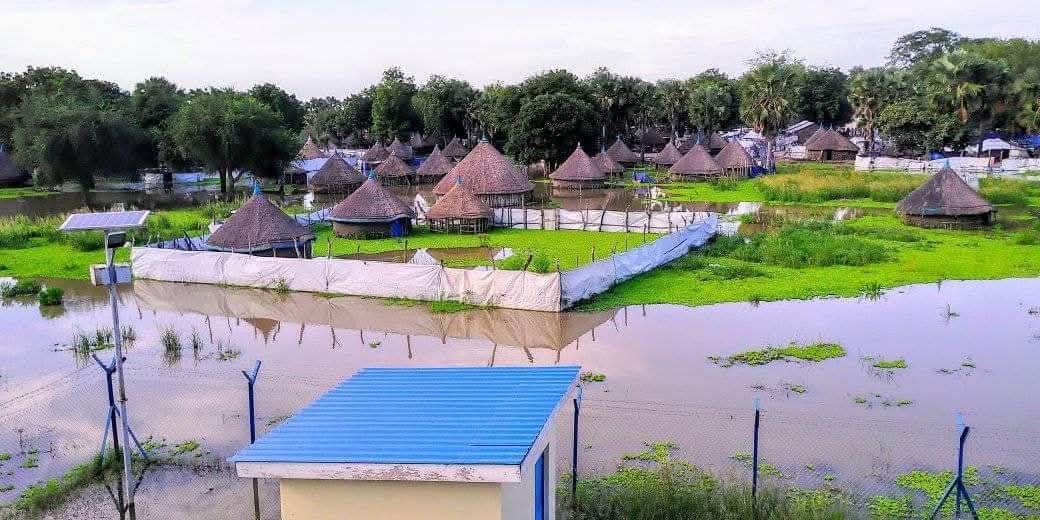
The water in Duk County does not move. For five years, it has sat heavy and stagnant, a grey, endless weight that has swallowed homes and drowned the ancient acacia trees. To a stranger flying over Jonglei State, the landscape is a vast, silver mirror reflecting the beauty of the Sudd wetlands.
But for the 40,000 residents of Panaru and Padiet, this beauty is a deception. The water is a tomb.
In a region weathered by decades of gunfire and tribal conflict, a new, quieter enemy has taken hold. It does not arrive with the crack of a rifle; it arrives in a plastic cup. Cholera—the “silent killer”—is draining the life from the community’s most vulnerable, turning healthy children into hollowed ghosts through dehydration in a matter of hours.
At the center of the struggle is the Panaru Primary Healthcare Centre (PHCC). Once a reliable outpost of medicine, it is now a tiny island of dry dirt huddled against the Jonglei Canal, surrounded by a sea of contamination. Inside, the air is thick with the scent of chlorine and the low hum of the suffering.
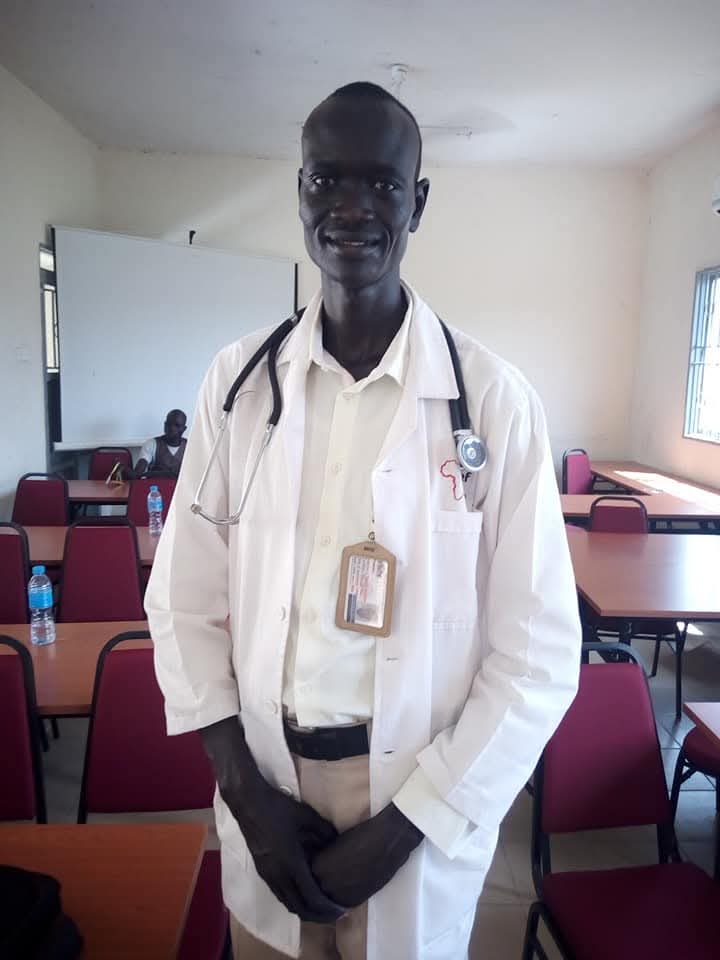
Among the few still standing is Madhang Khan Wuor. He is a medical professional who could have sought the safety and steady pay of a private city clinic. Instead, he is here, caked in mud, serving as the last line of defense against an invisible army.
The Cycle of Death and Duty
In the deep reaches of the Toich swamps, tragedy is rarely recorded in official ledgers. It happens in the quiet corners of flooded huts. Because the PHCCs are often unreachable through miles of knee-deep muck, many families face the killer alone.
”It’s heartbreaking seeing a mother burying a child lonely,” says one resident, who asked to remain anonymous. He describes a scene that has become a haunting routine in Ayueldit. “She must be in a hurry. She has to be. She must bury one child quickly so she can get back to take care of the other child, the one who is showing symptoms now.”
In Duk County, grief is a luxury. The speed of the disease forces a terrifying pace upon the living; mothers must choose between mourning the dead and fighting for the breathing. “You see the cycle of death and duty,” the source says. “Always spinning.”
For Madhang, these stories are the fuel for his exhaustion. He knows that when safe water is a memory and the boreholes are poisoned by the flood, a single sachet of Oral Rehydration Salts (ORS) is more than medicine—it is a reprieve from a funeral.
”Without the fluid, they cannot survive,” Madhang says, his voice weary but firm. In 2025, the shortage of medical supplies has turned survival into a lottery. When the ORS runs out, Madhang is forced to watch the “silent killer” take the win.
A Fight Without Spears
The crisis is a man-made disaster as much as a natural one. In July 2024, the “WASH” (Water, Sanitation, and Hygiene) infrastructure collapsed when the John Dau Foundation (JDF) lost its USAID funding. As global aid priorities shifted, the community was left stranded.
”We are used to physical fights with a physical enemy,” says Abraham, a local teacher turned volunteer. “We understand the bullet. We understand the spear. But you cannot fight this water with a weapon. It takes the strong and the weak alike.”
Mr. Africana Arak Simon, the County Health Director, keeps the grim tally. Since December 1st, 2024, the county has recorded 886 cases. Officially, 26 people have died. But Simon knows the math of the swamp is different.
”Not all the death cases are recorded,” he admits. “Some people die in the bush and are buried before they ever reach our data sheet.”
The Constant Guardian
As the sun sets over the flooded plains of Panaru, the battle doesn’t pause. Madhang Khan Wuor is no longer a salaried employee; he is a volunteer hygiene community mobilizer. He lives far from his own family, choosing to stay in the mud of Ayueldit.
”I never knew I would survive this outbreak,” Madhang says. “But my concern is to keep my community alive. I go house to house. I talk about washing. I talk about clearing the stagnant water.”
He carries his remaining sachets of ORS like ammunition. He is a man who chose life over money, staying in a place the world has largely forgotten. He remains the constant guardian, teaching, treating, and reminding his people that in the face of the flood, vigilance is the only medicine they can rely on.
He is the thin line between a community’s survival and the silent, rising depths.