
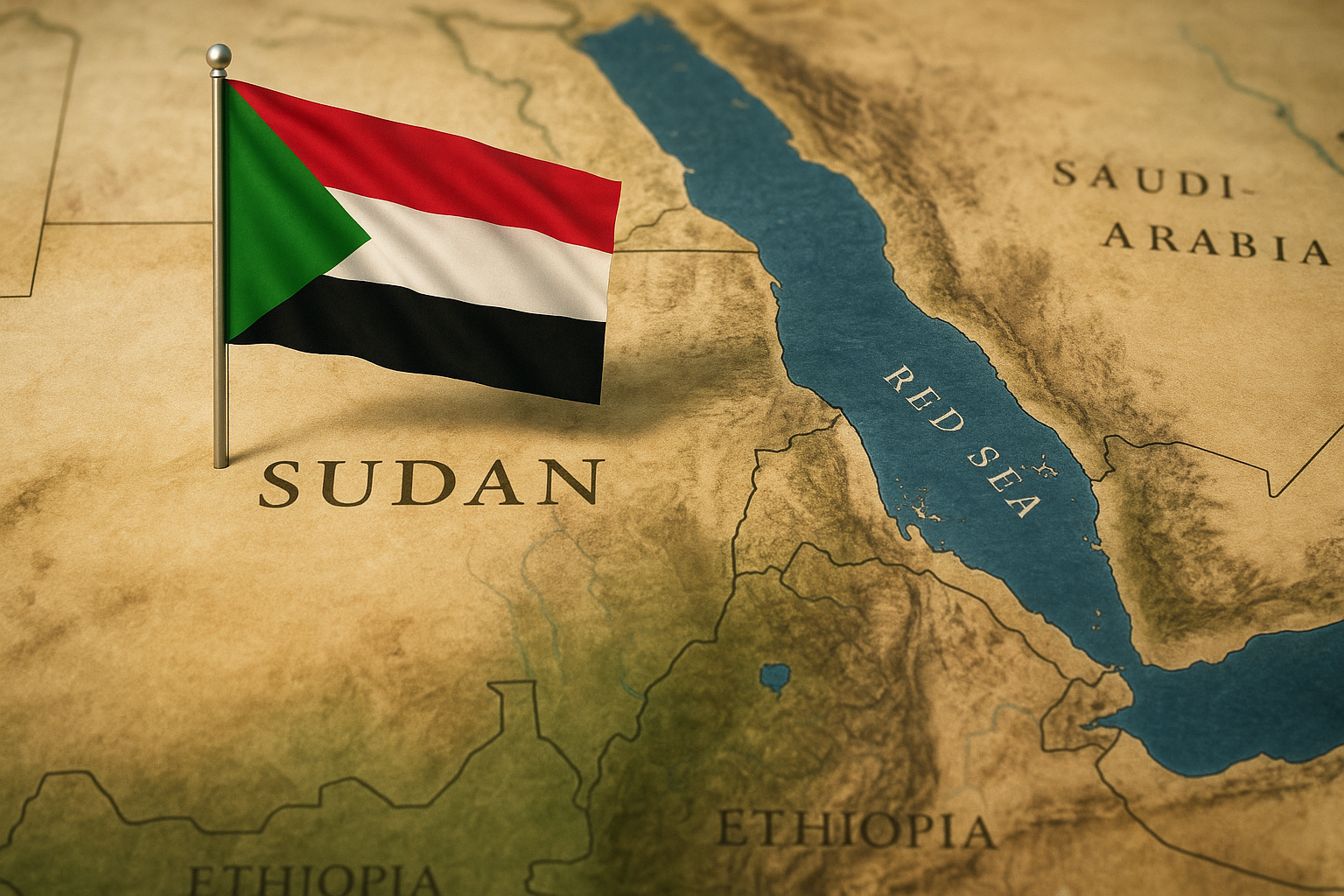
Sudan and the Red Sea: The Anchor of Regional Stability
With its commanding coastline on the Red Sea, fertile land, abundant resources, and skilled population, Sudan stands as a strategic anchor in one of the world’s most vital maritime corridors. Beyond geography, Sudan’s stability directly determines the security of the Red Sea and the Horn of Africa. As global and regional powers compete for influence, the collapse of the Sudanese state would trigger a geopolitical vacuum with grave consequences for international trade, counterterrorism, and maritime security.
By Ambassador: Mohamed Osman Akasha

Sudan has a strategic location, long Red Sea coastlines, vast fertile land, abundant water resources, a variety of natural resources, and a highly qualified human cadre. All these comparative advantages make Sudan a weighty ally.
Sudan holds a pivotal position in shaping the policies of Red Sea coastal nations, given its strategic geographic location and extensive coastline along this critical maritime corridor. Sudan plays a crucial role in ensuring the security and stability of this sensitive region, particularly in combating piracy, human trafficking, and the illicit trade of arms and narcotics. Moreover, Sudan actively fosters regional cooperation among Red Sea nations, coordinating efforts to address security challenges and enhance maritime commerce, to mention:
1- Combating Piracy and Smuggling: Sudan is a key player in regional and international efforts to combat piracy and illegal smuggling, including human, arms, and drug trafficking. Through close coordination with neighbouring states and global powers with vested maritime interests in the Red Sea, Sudan contributes to neutralising these threats and safeguarding maritime navigation security.
2- Regional Military Cooperation:
Sudan participates in various regional security initiatives aimed at bolstering Red Sea security. This includes maritime alliances with countries such as Saudi Arabia and Egypt, as well as contributing to joint military operations designed to protect navigation routes and address maritime threats.
3- Protecting Ports and Maritime Trade: As the Red Sea is a vital global maritime artery connecting Europe and Asia via the Suez Canal, Sudan is committed to protecting its ports and enhancing their infrastructure. These efforts are crucial in facilitating maritime trade and ensuring the safe passage of vessels.
4-Coordination with International Organisations: Sudan collaborates with international bodies, including the United Nations, the European Union, and the International Maritime Organisation, to strengthen security measures in the Red Sea. These partnerships enhance Sudan’s capacity to confront security challenges and ensure regional stability.
Nevertheless, coastal countries endure persistent challenges such as:
1- Regional Powers’ Interests: Strategic interests in the Red Sea, such as controlling maritime routes and securing resources, contribute to persistent conflicts in the Horn of Africa. Some regional actors seek to influence, sometimes exacerbating instability by backing different factions in local conflicts.
2- Global Powers’ Involvement: Military and economic investments by global powers increase both competition and tension, impacting regional stability. Their strategic bases and trade interests can fuel rivalries.
3- Competition Over Resources: Rivalries over resources, such as oil, gas, and fish stocks, along with control of strategic maritime routes, escalate tensions in the Horn of Africa. Diplomatic efforts, resource-sharing agreements, and transparent dispute resolution mechanisms can mitigate these conflicts.
Sudan, as a member of the Red Sea littoral states, can play a vital role in enhancing cooperation through joint security frameworks, regional agreements, and multilateral platforms focused on maritime security, counter-piracy, and the addressing of transnational threats such as terrorism.
Conclusion
The stability of Sudan is positively impacting the security of the Red Sea; by contrast, instability in Sudan would jeopardise the regional stability and security of the Red Sea and its coastal countries. The fall of the Nation State in Sudan at the hands of militias and terrorist groups like RSF would wreak havoc on the whole region, causing grave, irreversible damage to the security of the Red Sea and the Horn of Africa. A scenario that reminds us of how the Al-Shabaab Movement threatened trade corridors and waterways in the Red Sea.
About the Author
Ambassador Mohamed Osman Akasha, PhD
Chargé d’Affaires a.i., Embassy of the Republic of the Sudan in Nairobi
Ambassador Akasha holds a doctorate in International Security and Diplomacy and has written extensively on regional security, counterterrorism, and the geopolitics of the Horn of Africa.
Published by Brown Land News.
Where sovereignty is not negotiable, and truth defies revision.
Our Land. Our Voice. Our News