Has London ConferenceTranscended from a Momentary Event to a Sustainable Platform?
(A Vision for a London-Based Sustainable Mechanism to End the Conflict in Sudan)
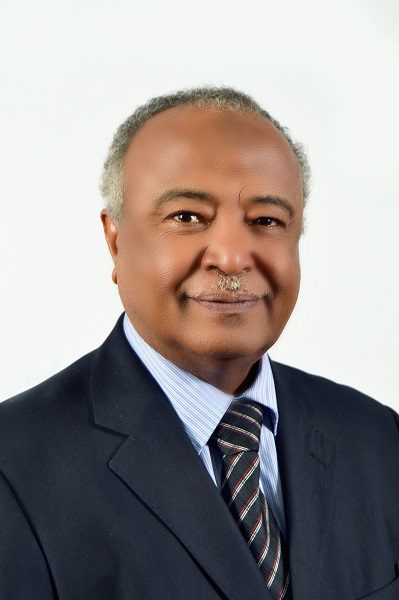
Professor Mekki El Shibly
Executive Director – Mamoun Behairy Center, Khartoum
Amid the political stalemate caused by the failures of the Port Sudan (Sudan Armed Forces and its allies) and Nairobi (Rapid Support Forces and its allies) tracks, along with the deepening humanitarian crisis in Sudan, the international community viewed the London Conference as a potential turning point in the war that has now entered its third year. There was cautious optimism that the conference would be more than just another transient diplomatic gathering. Hopes were high that it could become a lasting political platform—distinguishing itself from previous failed initiatives.
Held on April 15, 2025, at the invitation of the United Kingdom, the conference brought together broad international and regional participation, including 17 countries, the European Union, the African Union, the United Nations, and the Arab League. Notably, Sudan’s warring military parties were excluded from the event—citing their failure to uphold ceasefires, a desire to withhold international legitimacy from either side, and an effort to create space for a civilian “Track III” while avoiding the politicisation of the humanitarian file that their presence would have inevitably caused. European actors were also deeply concerned about the human rights violations committed by both factions.
However, the conference failed to issue a unified final communiqué due to objections from three Arab states that support the warring factions: Egypt, the UAE, and Saudi Arabia. Consequently, the conference’s outcomes were predominantly humanitarian, with over $1 billion pledged to support Sudan and neighboring countries affected by the conflict. The UK alone committed an additional £120 million ($158 million), while Germany pledged €125 million, and France €50 million.
Despite these generous commitments, the conference did not establish any mechanism to monitor ceasefires or launch a new political process—further showcasing the fragility of international will when it comes to addressing the root causes of Sudan’s war.
Of particular note was the pivotal role played by Saudi Arabia, the UAE, and Egypt in blocking the adoption of a standard joint communiqué or the formation of a contact group to facilitate ceasefire negotiations. This occurred despite the relatively limited geopolitical heft of these three nations compared to major global powers such as the US, UK, France, and Germany. The incident highlighted the disconnect between the apparent geopolitical stature of certain states and the real-world leverage that can arise from unconventional forms of influence. Though these three Arab states may appear “weaker” in terms of international clout, they wield disproportionate sway over the Sudan file due to strategic interests and alliances.
The UAE is suspected of providing logistical and military support to the RSF, Egypt leans toward the Sudanese army due to national security and economic concerns—especially relating to the Nile Dam and its sensitive relationship with Ethiopia—and Saudi Arabia, despite its posture as a mediator, hosted the stalled Jeddah talks, which later led it to adopt a more conservative stance. As such, these states exert influence on the ground by directly or indirectly supporting the warring parties—giving them the capacity to obstruct international consensus around the “Track III” or any settlement that does not involve their respective allies.
Moreover, the London Conference itself reflected the fragmented nature of international and regional visions regarding Sudan, complicating the task of producing a final statement acceptable to all—particularly in the absence of unified positions or, at minimum, the absence of open dissent. The three Arab states capitalised on this fragmentation to object to any language that would assign blame to a specific party, imply illegitimacy of the armed actors, or promote the idea of a civilian” Track III” alternative. Their success in blocking consensus was significantly aided by the lack of a unified political will or effective tools on the part of the US and European countries to counter the Arab trio’s influence. This was further compounded by the UAE’s status as Washington’s primary strategic ally in the Middle East and the Horn of Africa—blurring the lines between overt diplomacy and behind-the-scenes maneuvering at the London Conference. Digressing into the complex calculus of regional politics, the divergent positions of the UAE and Egypt on Sudan, as highlighted during the London Conference, could create friction. But whether this friction would escalate to the point of affecting the UAE’s vital economic support to Egypt remains to be seen.
As a result, the outcomes of the London Conference revealed deep international and regional divisions regarding the Sudanese conflict. Some states continue to exert influence by backing one faction or another, while civilian actors were marginalised—most notably through the absence of formal representation from the “Track III” forces. These civilian forces arguably represent the only viable national way out of Sudan’s destructive war dynamic. They draw their legitimacy from grassroots support, particularly the Resistance Committees, independent civil forces (including the Sudanese Professionals Association), feminist movements, youth-led initiatives, technocrats, civil society actors, and the political bases of the Taqaddum and Sumood coalitions.
Although the London Conference did not yield an immediate breakthrough, it nonetheless established a significant opportunity to develop a comprehensive civilian-led exit from war. The international community that participated in the event now holds the responsibility to take advantage of this crucial moment—not simply to manage the crisis, but to empower civilian forces to lead a national initiative aimed at achieving peace and democratic transformation in Sudan.
While the London Conference fell short of evolving into a sustainable political platform that could distinguish itself from previous failed efforts, the hopes of the Sudanese people remain vested in more inclusive initiatives. These future efforts must recognize the central role of “Track III”—one that engages both civilian and military Sudanese actors, lays the foundations for a durable ceasefire, protects civilians, and initiates a credible political process.
The vision for a sustainable mechanism to resolve the conflict and initiate reconstruction in Sudan comprises the following five elements:
- Agreement on a clear and phased roadmap for a monitored ceasefire implemented through a hybrid mechanism. This should combine advanced technological tools (including satellite surveillance) with a limited number of military observers, mainly mobilised by the African Union, to interpret data and report violations—enhancing human capacity without replacing it. These mechanisms would also protect the establishment of independent humanitarian corridors.
- Creation of an international political and technical follow-up mechanism composed of bilateral and multilateral partners—including the UN, African Union, Troika countries, and the European Union. This body would oversee the implementation of the strategic vision and provide regular reports to international stakeholders.
- Establishment of a permanent political secretariat headquartered in London, capitalising on the UK’s role as the penholder on Sudan at the UN Security Council. This secretariat would coordinate quarterly meetings, diplomatic engagement, and technical assistance.
- Institutional integration of civilian “Track III” actors, notably by empowering the Resistance Committees as the legitimate representatives of Sudan’s December Revolution. Their participation must be guaranteed in future political processes, alongside efforts to build their geographic reach and organisational capacity. This would help develop a politically effective and field-operational body that articulates the aspirations of the Sudanese people. As for coalitions such as Taqaddum, Sumood, the Sudanese Professionals Association, the National Accord, and other parties, they would do well to reunite under the umbrella of the Forces of Freedom and Change through a responsible dialogue focused on the common goals of the December Revolution—after the fragmentation caused by power struggles.
- Establishment of an International Civil Recovery Fund, transparently managed by independent civilian bodies under international oversight. This fund would finance humanitarian response efforts, restore essential services, rebuild institutions and infrastructure, and support a transitional period of no less than five years. The goal would be to implement a new social contract between the state and the Sudanese people and to meet the conditions necessary for holding free and fair elections. Disbursements from the fund should be conditional on measurable progress in civilian transition and concrete commitments.
melshibly@hotmail.com