Mediation or Machination: Kenya’s Role in Sudan’s Proxy War
Beneath Kenya's public posture as a peace broker in Sudan lies a deeper architecture of entanglement that links narrative diplomacy with covert logistics and proxy warfare. This multi-part investigation traces how neutrality gave way to complicity, how mediation masked militarization, and how a regional actor once trusted with dialogue now stands accused of enabling war.
Part III: The Trial That Never Was
Where the gavel never fell—because the system never intended it to.
By Sabah Al-Makki, Assistant Editor

If diplomacy legitimized rebellion and gold financed its expansion, then Part III reveals the final sanctuary that was breached: justice itself.
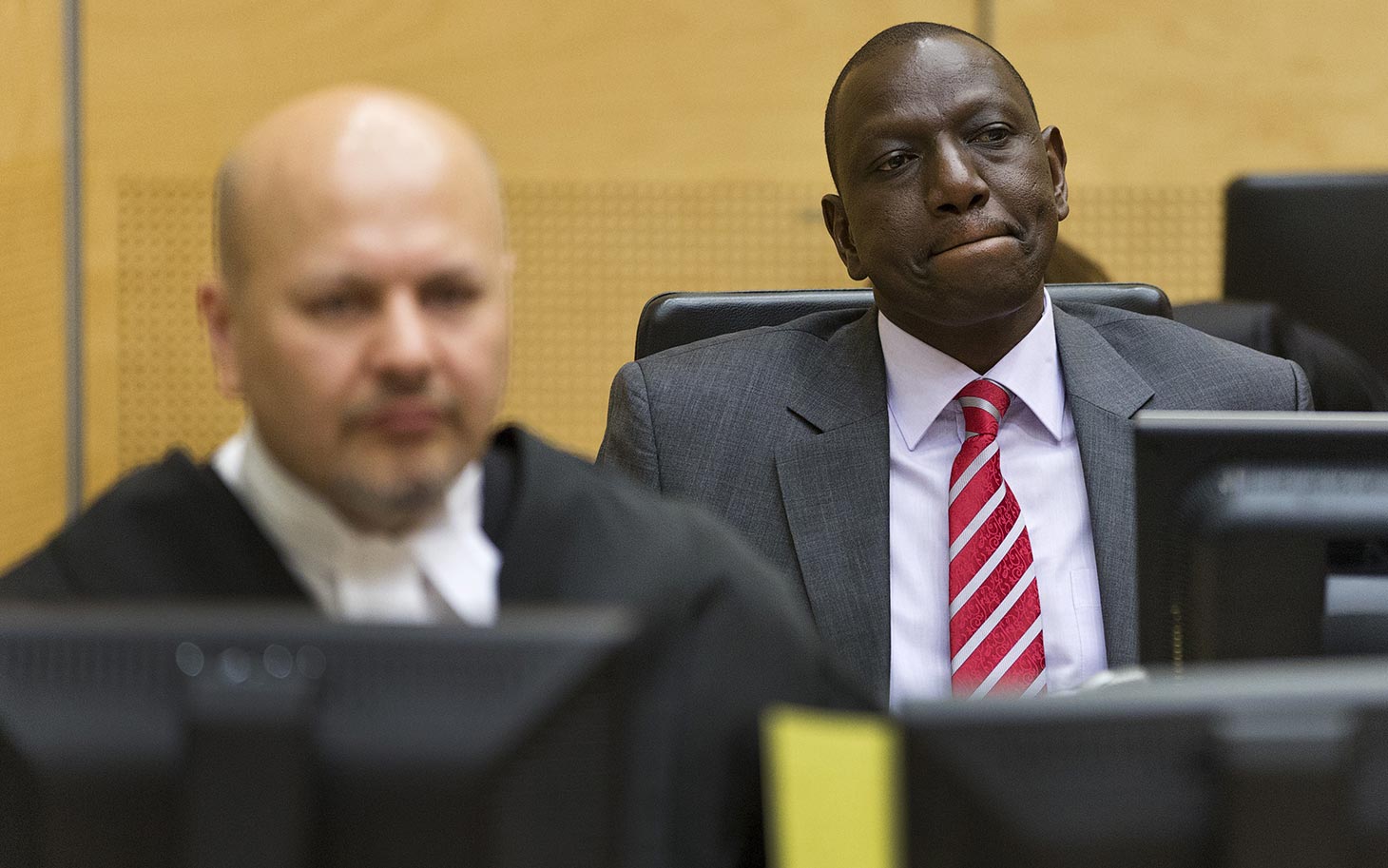
This is the story of how the International Criminal Court (ICC)—once poised to prosecute the architects of Kenya’s post-election bloodshed—was not defeated by lack of evidence but dismantled by design. From the flames of Kiambaa Church, where women and children were burned alive, to the silent collapse of prosecutions at The Hague, the path is marked not by failure—but by erasure: vanished witnesses, rewritten testimonies, and a judicial process suffocated before it could speak.
In 2025, the mask slipped. Former Deputy of President of Kenya Rigathi Gachagua’s public confession did not merely implicate a man—it exposed a doctrine: that when the law is sabotaged, justice does not fall; it is replaced.
Part III traces that replacement.
From Kiambaa’s ashes to The Hague’s silence, from forged peace to forensic truth, this chapter shows how impunity was not the failure of justice but its successor. To understand the present, we must revisit the engineered collapse of accountability. Because in the world Ruto and his backers helped design, impunity is not a glitch in the system—It is the system. And when law retreats, Impunity does not fill the void—It becomes doctrine.
Summary of Part I & Part II
Part I: The Veil and the Vault exposed the fiction of Kenya’s neutrality in Sudan’s war. Beneath the polished choreography of diplomatic summits, Nairobi was not mediating conflict—it was staging it. By hosting the RSF’s so-called “Government of Peace and Unity,” Kenya gave a genocidal militia political theatre, territorial recognition, and a media platform—undermining Sudan’s sovereignty while masquerading as a peace broker. What appeared to be miscalculated diplomacy was, in truth, an orchestrated campaign to legitimize rebellion under the banner of regional cooperation.
Part II: War by Other Means peeled back the economic engine of this deception. At its core was a covert axis linking Nairobi, Abu Dhabi, and the RSF, where Sudanese conflict gold—extracted through war and displacement—was funneled into Kenya’s financial system and political patronage networks. Former Deputy President Rigathi Gachagua’s confession exposed this machinery, implicating President William Ruto in secret trips, shadow diplomacy, and laundering a warlord into a statesman. What Kenya called peace was, in effect, proxy warfare wrapped in diplomatic protocol and funded by blood gold.
I. From Kiambaa to The Hague: Ruto and the ICC’s Unfinished File
A Nation Burned: The Ashes of Kiambaa
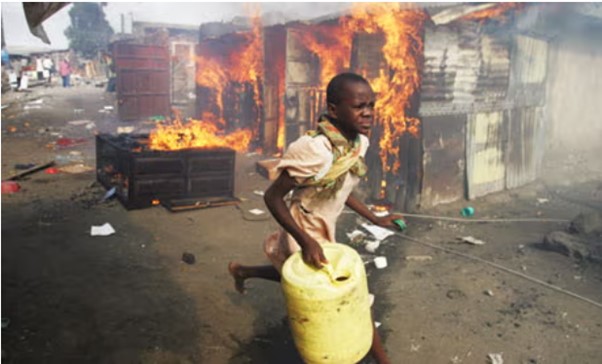
The 2007–08 Kenyan post-election crisis marked a political rupture and a national unraveling. More than 1,100 people were killed over 500,000 displaced, and thousands maimed, orphaned, or disappeared in a wave of ethnically targeted violence masquerading as an electoral dispute. Its most haunting emblem—the Kiambaa Church massacre, where women and children were burned alive while seeking refuge—remains etched not only in Kenya’s conscience but in the international system’s collective failure to respond.
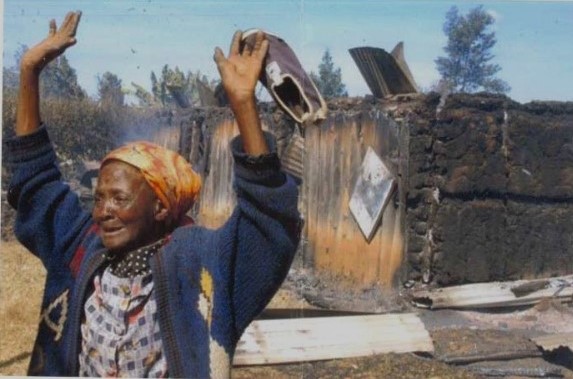
[Photo widely circulated by international media; Ms. Kimunya passed away in 2019.]
Investigations dispelled any illusions of spontaneity. The violence bore the hallmarks of orchestration: incited, financed, and deployed with chilling precision. Kiambaa was not a spontaneous eruption; it was a coordinated operation. In 2010, the International Criminal Court (ICC) launched its first proprio motu investigation in response to Kenya’s post-election violence. Among the six individuals indicted was William Samoei Ruto, then a Cabinet Minister and rising figure within the Orange Democratic Movement (ODM). The charges: crimes against humanity, including the orchestration of retaliatory attacks and the mobilization of ethnic militias.
Narrative Warfare: Ruto’s 2020 ICC Preemption
Fast-forward to January 2020. Mere days after his clandestine visit to Sudan’s River Nile State gold belt, William Ruto, then Deputy President, took the offensive, accusing unnamed forces of conspiring to “resurrect” his dormant ICC case. The timing was conspicuous. Framed as an act of persecution meant to derail his 2022 presidential bid, Ruto’s statement appeared at first to be electoral theatre—a pre-emptive strike to galvanize sympathy.
But with hindsight, it reads not as political instinct but as strategic narrative preemption. By invoking the ICC unprovoked, Ruto immunized himself against future revelations. Any incriminating disclosures—whether regarding his Sudan visit, his dealings with military interlocutors, or the alleged transport of undeclared cargo—could now be dismissed as politically motivated persecution.
This maneuver did more than insulate a presidential campaign. It echoed a wider authoritarian tactic: weaponizing victimhood to erase culpability and recasting scrutiny as conspiracy. This playbook is well-worn and devastatingly effective in the Global South; it’s a formula that silences truth long before the courtroom is reached.
The Enabler Returns: Gicheru’s Voluntary Surrender
Later that same year, the narrative unraveled. In November 2020, Mr. Paul Gicheru—a Nairobi-based lawyer long suspected of sabotaging the ICC’s Kenya prosecutions—surrendered voluntarily to Dutch authorities. Transferred to The Hague, Mr. Gicheru appeared before the Court by video link calmly and defiantly. He denied all charges.
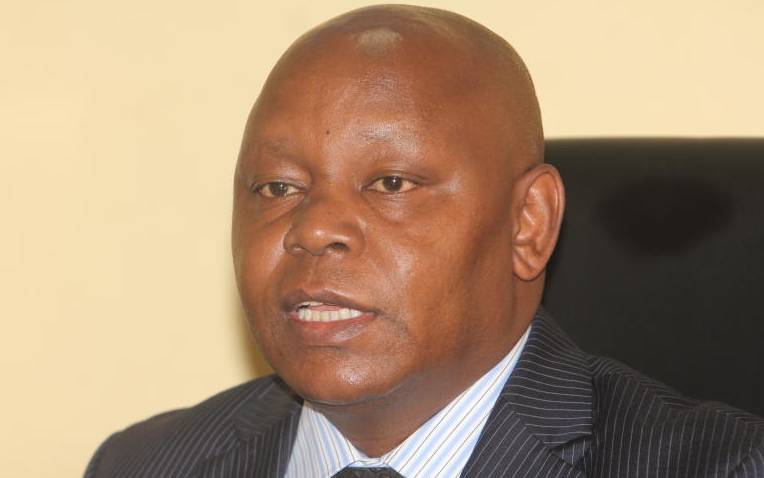
But the case against him was chilling in its specificity. Prosecutors alleged that Mr. Gicheru had orchestrated an underground campaign to undermine the Prosecution’s case in the Ruto and Sang cases. According to the ICC prosecution, at least 16 of its original 42 witnesses withdrew, most citing threats, intimidation, or fear of reprisals. What collapsed the ICC’s Kenya case was not a failure of evidence—it was the methodical destruction of the process.
Then, Chief Prosecutor Fatou Bensouda did not equivocate. She called it “a relentless campaign of victim intimidation,”one that transformed the courtroom into a mausoleum of suppressed truth. Mr. Gicheru’s surrender was not an act of repentance but an unmasking. Behind the shield of legal formality, the architecture of obstruction stood exposed.
The ICC Case: A Trial Smothered, Not Defeated
By 2016, the case collapsed—not due to insufficient evidence or exoneration but due to the suffocation of the judicial process. The Court was unequivocal: the dismissal “did not amount to acquittal.” It was, rather, the result of what the judges termed “a troubling incidence of witness interference.” Key witnesses disappeared, recanted, or were allegedly bribed. Prosecutors cited systematic obstruction, state-enabled intimidation, and a hostile environment in which justice became structurally unattainable.
As the Court grimly concluded: “The truth was buried—not disproven.” The accused walked free—but not absolved. What followed was not exoneration but insulation. And a dangerous precedent emerged: that justice, too, can be defeated—not by facts, but by force, fear, and fabrication.
The Machinery of Obstruction: Gicheru and the Ghost of Justice
Though the principal charges against William Ruto lay dormant after the ICC’s 2016 collapse of proceedings, the case did not vanish—it evolved. The Court pivoted, discreetly but decisively, from prosecuting atrocity to exposing sabotage. What emerged was not a question of what crimes were committed but how justice was dismantled. Between 2020 and 2022, the ICC invoked Article 70 of the Rome Statute—not to revisit the violence but to prosecute the architecture of obstruction that had buried its memory. These were not battlefield crimes. They were boardroom crimes—committed in whispers, contracts, and cash.
At the center stood Mr. Paul Gicheru, accused of managing a network of witness tampering on Ruto’s behalf. His voluntary surrender to The Hague in 2020 briefly rekindled hope that the long-buried truth might yet surface. The 2022 trial laid bare the anatomy of sabotage. Witnesses described a campaign of bribery, intimidation, and coercion—carefully calibrated to collapse the Prosecution’s case from within. While Ruto was never formally indicted in these proceedings, the scaffolding of interference pointed unmistakably to his political orbit. The case did not falter on evidentiary grounds; it was strategically dismantled.
Then, in late 2022, Mr. Gicheru died suddenly in Nairobi. No definitive cause was established, and the case was closed without judgment. With his death, the final thread connecting the ICC to Kenya’s post-election atrocities was severed—not by exoneration but by attrition. The last breath of international justice was not a verdict but an exhale into silence.
When Law Retreats, Impunity Becomes Doctrine
On 27 November 2023, the ICC formally closed its investigation into Kenya’s post-election violence, citing insufficient grounds for further Prosecution. But beneath the legal phrasing lay a harsher truth—this was not closure but capitulation. Justice had not prevailed. It had been worn down, outmaneuvered, and ultimately silenced. This was not a resolution. It was abdication.
The Court’s failure revealed a structural vulnerability: the inability of international mechanisms to withstand regimes skilled in blurring truth, eroding processes, and shielding perpetrators behind sovereign walls. The ICC had been reduced to a courtroom without witnesses and a trial without testimony. What collapsed was not merely a case but the credibility of accountability itself.
In that vacuum, a precedent took root. From Kiambaa’s burning sanctuaries to the massacres in Darfur, the blood-soaked villages of Al-Gezira—the agricultural heartland of Sudan, and onward to Khartoum’s gold corridors, the message resounds with terrifying clarity: With bullion and the right alliances, atrocity no longer needs to be denied—it can be erased. Not through innocence but through impunity—engineered at the highest levels and draped in the language of peace.
Codifying Impunity
Even as the ICC quietly closed its file, the machinery of impunity advanced—not backward into silence but forward into doctrine. On July 24, 2023, in a final act of strategic insulation, President William Ruto signed the Malabo Protocol—a charter that empowers the African Court of Justice and Human Rights while granting sitting heads of state immunity from Prosecution for international crimes. Framed as a defense of African sovereignty, the gesture was, in truth, a legal firewall drafted not to serve justice but to extinguish its return. The message was unmistakable. The trial had collapsed, and the Court had blinked. But to ensure that even the ghost of accountability could never reoccur, the system itself had to be rewritten.
Ruto did not merely survive justice.
He sought to legislate its absence.
With the stroke of a protocol pen, the architecture of sabotage reached its final form—not in the courtroom, but in the statute book. Not in exoneration but in codified impunity.
II. Cartographies of Collusion
Where diplomacy ends, and complicity is drawn in blood and gold.
For over a decade, William Ruto—then Kenya’s Deputy President—cast himself as a sovereign David, standing defiant before the global Goliath of international justice. He portrayed the charges not as an indictment of conduct but as an affront to national dignity, insisting he was the victim of a politically engineered prosecution. The ICC, he argued, had become a tool of foreign sabotage—deployed to block his ascent and rewrite Kenya’s democratic script. His narrative was calculated and familiar: sovereignty under siege, justice as a vendetta, and the strongman recast as a scapegoat.
But beneath the armor of grievance, a darker machinery whirred. The ICC did not collapse under the weight of innocence—it collapsed beneath the architecture of sabotage. Witnesses vanished, testimonies were rewritten, and fear moved faster than summonses. In language shorn of euphemism, the Court decried a “troubling incidence of witness interference.” Its case did not fail; it was smothered.
At the center stood Paul Gicheru—a lawyer turned agent of disruption—who surrendered quietly in 2020 and stood trial in 2022. His proceedings revealed the anatomy of obstruction: cash-for-silence schemes, coordinated recantations, and legal airbrushing masquerading as defense. While Ruto was never formally charged in this auxiliary trial, the gravitational field of complicity was impossible to ignore. Justice, once delayed, was now disassembled.
And then the façade cracked from within. In 2025, Rigathi Gachagua—Ruto’s former deputy—stood before cameras and tore open what years of legal theater had tried to conceal. He accused Ruto not only of laundering conflict gold through Kenyan networks in collaboration with the RSF militia but of presiding over the very machinery that sabotaged the ICC’s mandate. This was not a defection but a confession from the political bloodstream itself. Gachagua’s words confirmed what the Court dared not name: that the law was not outmaneuvered by chaos but by choreography.
The implications are epochal. The ICC’s retreat from Kenya did not simply mark the end of a case; it authored a doctrine. It demonstrated that when confronted by state-enabled impunity and strategic narrative warfare, international law can be reduced to performance. With enough gold and power, courts can be emptied, victims can be silenced, and atrocity can be renamed diplomacy.
From Kiambaa’s burning sanctuaries to The Hague’s silenced bench, from vanished witnesses to laundered gold, a single lesson endures justice, when denied by design, leaves behind not absence but precedent. And in that vacuum, a blueprint is born—not for peace, but for perfect, exportable impunity.
Prelude to Part IV
From Resource War to Regional Engineering
The RSF’s gold-fueled empire was never intended to sustain conflict—it was designed to outgrow it. What began as a battlefield economy soon became a regional architecture that financed elections, rewrote diplomacy, and manufactured legitimacy through the ruins it helped create.
In Niger, Hemedti’s millions reportedly lubricated transitions of power, bending electoral destinies with wealth mined from war. In East Africa, Kenya’s mediation portfolio—once a pillar of regional neutrality—was quietly repurposed into a mask: shielding alliances, absorbing scrutiny, and laundering the language of peace over machinery built for impunity. Across donor capitals and summit stages, atrocities were not condemned—they were curated. Rebranded as “dialogue,” endorsed as “inclusive,” and repackaged as solvable symptoms of a conflict whose sponsors now posed as its saviors. But the most dangerous evolution was not military—it was mimetic.
Two men, shaped by vastly different terrains, began to mirror each other: one, a deputy turned president; the other, a deputy turned warlord—now a statesman-in-waiting. Both emerged from the collapse of accountability. Both buried legal consequences beneath narrative control. And both learned to translate violence into leverage, not by hiding their crimes, but by reframing them as credentials. From Nairobi to Khartoum, a template emerged: power not despite impunity but because of it.
Part IV traces this transformation—from gold bars to ballot boxes, mediation tables to military corridors. It is the story of how capital, extracted from the wreckage of war, became currency in the marketplace of diplomacy—and how the RSF–Ruto–Abu Dhabi triangle moved from laundering gold to laundering governance: first regionally, then, with growing confidence, globally.
When gold speaks, even empires listen, not to peace but to the rhythm of their own advantage.
This is no longer war by other means. This is laundering power.
🔎 New to this Series?
Mediation or Machination: Kenya’s Role in Sudan’s Proxy War
👉Part I – The Veil and the Vault
Kenya’s Dual Role in Sudan’s Proxy War—From Diplomatic Mask to Material Complicity
A diplomatic façade begins to crack. What appears as mediation reveals a deeper entanglement: covert alliances, foreign sponsorship, and Kenya’s silent complicity in laundering rebellion.
👉Part II – War by Other Means
The Testimony, the Gold Corridor, and the Cover-Up
What Kenya called diplomacy was, from the start, war in disguise. From forged invitations and secret flights to televised confessions and red-carpet legitimization, the mask of neutrality is removed.
👉 Part IV – Laundering Power
The Kenya–RSF–UAE Triangle: Gold, Guns, and GeopoliticsFrom gold bars to ballot boxes, mediation tables to military corridors—this is how war spoils became currency in the marketplace of diplomacy. What began as covert financing morphed into regional realignment. The RSF supplied the force, Ruto provided legitimacy, and Abu Dhabi bankrolled the operation.
This is no longer war by other means.
This is laundering power.
About the Author
Sabah Al-Makki is a Sudanese writer and Assistant Editor at Brown Land News. Her work explores political violence, international law, cultural resistance, and social awareness through the lens of Sudan’s unfolding realities. She challenges dominant narratives by centering the voices of Sudanese citizens—both within the country and across the diaspora—whose perspectives are often excluded from global discourse.
Her writing interrogates the definitions of war, peace, and justice, insisting that true change begins with dismantling colonial paradigms. Sabah confronts the structures that sustain conflict, silence, and imposed transitions through cultural, cognitive, and philosophical resistance.
She writes from within the storm.
Exclusively published by Brown Land News.
Where sovereignty is not negotiable, and truth defies revision.
𝐎𝐮𝐫 𝐋𝐚𝐧𝐝. 𝐎𝐮𝐫 𝐕𝐨𝐢𝐜𝐞. 𝐎𝐮𝐫 𝐍𝐞𝐰𝐬.