Colombian Mercenaries in Darfur: A Betrayal of Bolívar and Guevara’s Legacy
Reflections on Prime Minister Kamil Idris’s Speech to Latin America. From Khartoum to Bogotá, a Sudanese voice crossed oceans — in Spanish, urging all of Latin America, not only Colombians, to stand against genocide and the mercenary trade in Darfur
By Sabah Al-Makki

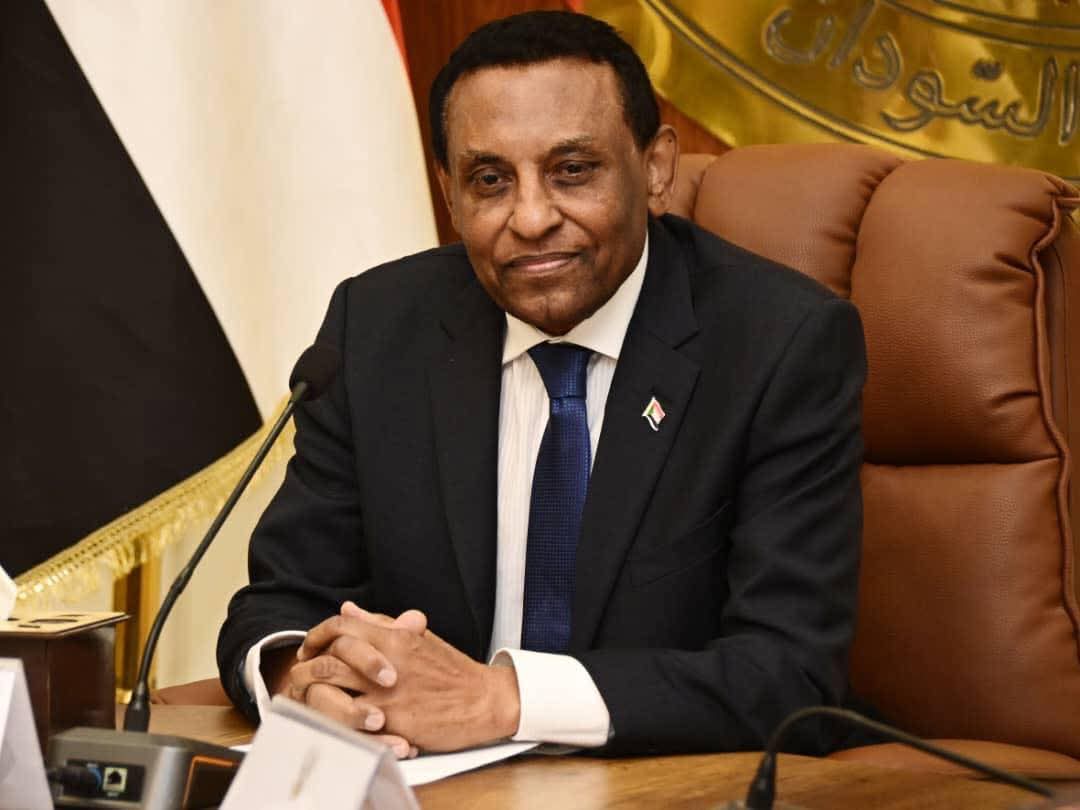
Prime Minister Dr. Kamil Idris chose Sudan’s national television as his podium. Yet his words were not confined to Sudanese citizens — he spoke across oceans, directly to the peoples of Latin America, in unmediated, fluent Spanish.
It was no accident. By addressing Colombians and all Spanish-speaking nations in their tongue, he bypassed the filters of diplomacy to speak heart to heart. His message carried the cadence of Sudan’s anguish, but also the clarity of solidarity and warning — a call that transcended borders.
In his address, Dr. Idris invoked the conscience of Latin America, echoing Colombia’s leaders who denounced the export of mercenaries to foreign wars. He wove into his speech the cultural treasures of the Spanish-speaking world — the defiance of Picasso, the verses of Neruda, the magical realism of García Márquez, the human struggles of Vargas Llosa — before turning that cultural inheritance into a moral plea: stand with Sudan, break the siege of El-Fasher, and end the trafficking of mercenaries.
It was a speech noble in spirit, fusing cultural memory with moral urgency. Yet beneath its diplomatic tone lies an invitation to confront more profound truths — truths of genocide, betrayal, and the mercenary trade that stains the honor of nations.
El-Fasher… An Open Wound for 400 Days
El-Fasher has not endured days or weeks of siege, but more than 400 consecutive days. Four hundred days of hunger and famine; of hospitals collapsing; of medicine and electricity cut off; of children dying because humanitarian corridors are deliberately sealed.
This number is not a statistic—it is a verdict. It lays bare a genocide waged slowly, methodically, and in cold blood, not by accident, but as deliberate policy.
Today, El-Fasher stands as Gaza 2.0 in the heart of Africa—a city starved and strangled before the world’s open eyes. At the same time, it has become the Stalingrad of Africa—a symbol of defiance against a war machine and a foreign-orchestrated blockade bent on breaking the will of an entire nation.
For deeper context, see our earlier investigation: “El-Fasher Besieged: 400+ Days of Starvation — Gaza 2.0 Under the UAE’s Proxy War in Darfur”
Mercenaries, Warlords… and the Leaked Orders
The Prime Minister’s address named Colombian mercenaries, but stopped short of exposing those who recruit, arm, and bankroll them. These are not wanderers or adventurers; they are weapons in a proxy war designed abroad. In Sudan, the command center of that war machine is the United Arab Emirates—a fact attested to by international investigations and sealed by leaked intelligence.
Foremost among these leaks is an 18-page classified deployment order, written in Spanish and dated 1 December 2024, El-Fasher. It lays out the operations of the Colombian unit Batallón de Operaciones “Lobos del Desierto” (“Desert Wolves Operations Battalion”). The order defines the chain of command, operational protocols, and mission objectives—and even specifies the munitions to be used, including white phosphorus, a weapon explicitly outlawed under international law when directed against civilians. Its inclusion in official directives is not an anomaly; it is evidence of a codified strategy of civilian extermination.
The written directives are reinforced by battlefield footage recovered from the devices of slain Colombian mercenaries in Darfur. These clips capture combat operations side-by-side with the RSF militia, completing the chain of evidence. Documents and video converge, leaving no space for denial or disinformation.
Taken together, these revelations dismantle every pretense: Sudan’s war is not a civil feud. It is a foreign-managed war of annihilation, financed, coordinated, and sustained from Abu Dhabi—through networks of recruitment, trafficking, and mercenary deployment. Abu Dhabi is not a bystander to Sudan’s war; it is its architect.
For deeper context, see our earlier investigation: “Colombian Mercenaries ‘The Desert Wolves Battalion’ in Darfur: Foreign Firepower in a Proxy War.”
Bolívar… The Spirit of Liberation
In his address, Dr. Idris evoked the cultural giants of the Spanish-speaking world. Yet he left unspoken the most luminous figure in Colombia’s national memory: Simón Bolívar, the Liberator, the founder of Gran Colombia.
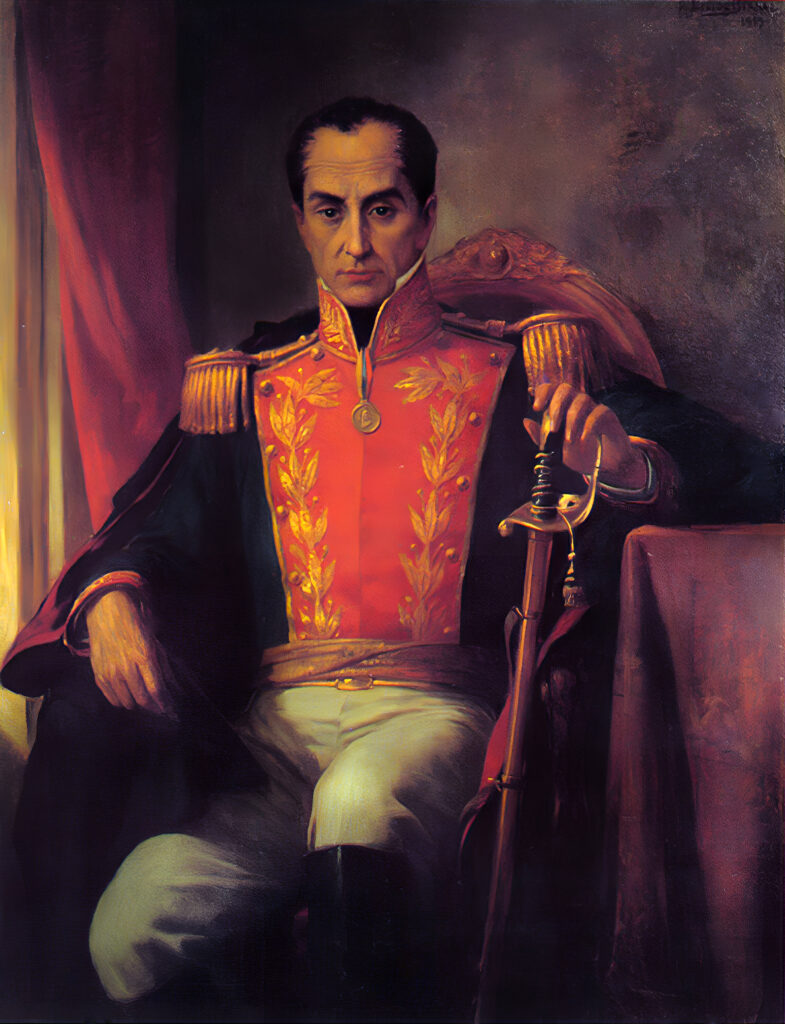
Bolívar was not merely a general of independence; he was the conscience of an entire continent. He taught that liberty is never granted—it is seized, that dignity cannot endure under subjugation, and that sovereignty alone secures the future of nations. With sword in hand and vision in heart, he shattered Spanish colonial rule, liberating Colombia, Venezuela, Ecuador, Peru, and Bolivia. In forging Gran Colombia, he inscribed on history’s map the first great experiment in continental unity and republican freedom.
Yet Bolívar was more than a conqueror of empires; he was a visionary of solidarity. In his 1815 Letter from Jamaica, he foresaw a shared destiny for Latin America, a destiny endangered by division and dependency. He warned that independence without unity was a fragile illusion, and that unless nations stood together, they would be recolonized—if not by armies and crowns, then by money, proxies, and mercenaries.
It is in this light that today’s reality stands as a tragic inversion of Bolívar’s legacy. To see Colombians—the heirs of the Liberator—reduced to mercenaries in Sudan is no passing aberration; it is a direct desecration of his message. The sons of Bolívar, destined to be heralds of liberty, have instead been debased into instruments of occupation in a foreign war, serving patrons in Abu Dhabi. They were meant to bear the torch of freedom and defend human dignity—not to extinguish the breath of starving children in El-Fasher, nor to spill the blood of innocents in Darfur.
This is more than betrayal; it is the profanation of Bolívar’s spirit—a betrayal of Gran Colombia’s founding vision, of freedom, unity, and the dignity of nations.
Che Guevara… The Conscience of Borderless Solidarity
Alongside Bolívar, another incandescent figure rises: Ernesto “Che” Guevara.
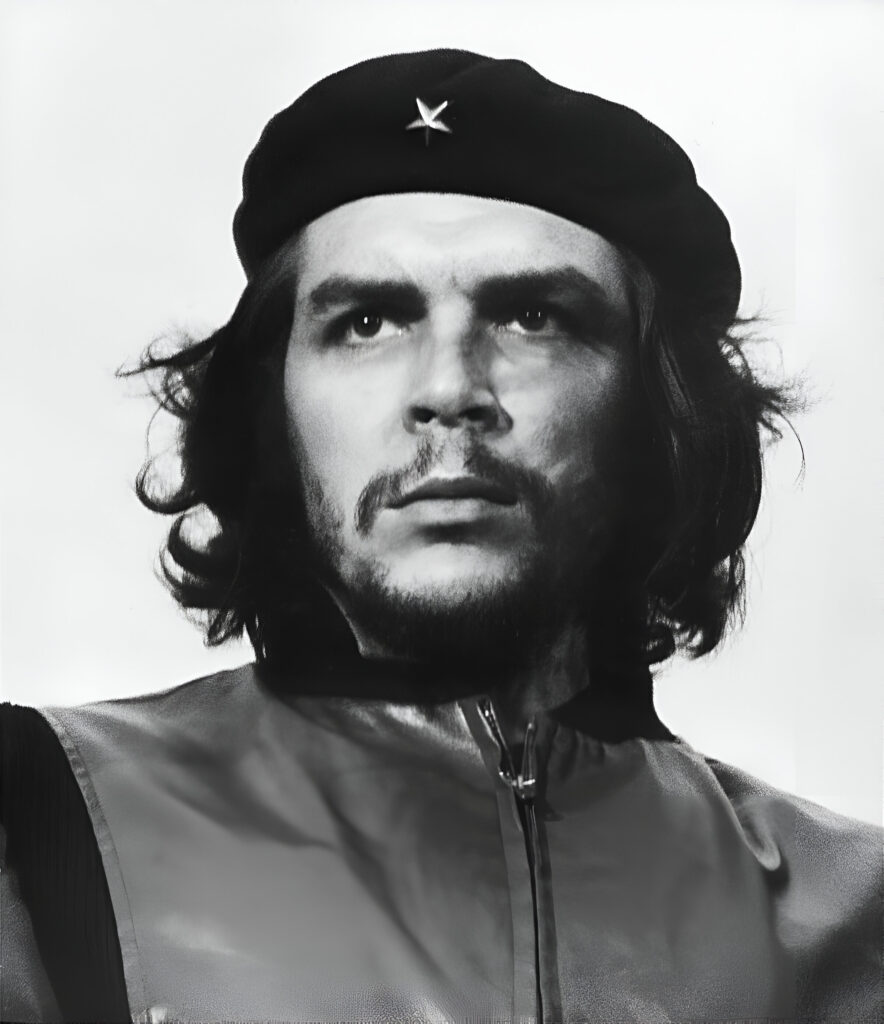
If Bolívar was the father of Latin America’s independence, Guevara was its revolutionary conscience. He carried the struggle beyond Cuba, to the Congo and to Bolivia, animated by the belief that justice recognizes no frontiers, and that true solidarity is measured not in geography but in humanity itself.
What bitter irony, then, that young Colombians—who should have been the inheritors of Guevara’s vision of universal justice—are today exploited as mercenaries, dispatched to Sudan not to defend the oppressed but to assault them; not to embody solidarity, but to betray it.
Guevara once declared: “Wherever there is injustice, that is my homeland.” But he never meant that homeland could be where a rifle is auctioned to the highest bidder. He was not a hired gun, but a revolutionary who bore arms for dignity, for the downtrodden, for freedom. The mercenaries in Darfur embody the opposite: the chasm between dying for liberty and killing for money.
The spectacle of Colombians deployed as mercenaries in Sudan is thus a profound inversion of Guevara’s creed, a desecration of the very ideals to which he gave his life—liberty, dignity, and justice without borders.
Between Bolívar and Guevara … The Tribunal of History
From the Liberators’ Legacy to Its Betrayal by Mercenaries
To invoke Bolívar and Guevara together is to summon a tribunal of history itself: Bolívar, the founder of Gran Colombia, who dreamed of sovereign nations emancipated from all foreign yokes; and Guevara, the itinerant conscience who declared that wherever injustice resides, there too is his homeland. Together they embodied liberty and solidarity—two principles that were never meant to be severed.
Against that sacred legacy, the sight of Colombians waging war as mercenaries in Darfur is not simply betrayal. It is profanation. The heirs of Bolívar, who were meant to ignite the torch of liberation, now extinguish the lives of the besieged. The heirs of Guevara, who were meant to fight shoulder to shoulder with the oppressed, now hire out their rifles to the oppressor.
Bolívar’s creed was emancipation, not occupation. Guevara’s creed was sacrifice for justice, not profit from blood. Yet in Sudan today, those Colombians who march under foreign pay carry nothing of Bolívar but his name, and nothing of Guevara but his inversion.
This is not mere participation in a proxy war. It is an inversion of the moral patrimony of two continents: Latin America, which once blazed with the fire of sovereignty, and Africa, which still resists the shackles of neo-colonialism in its modern guises. It is more than a Sudanese tragedy—it is a scandal inscribed in history, a stain upon the Colombian who betrayed Bolívar, upon the one who betrayed Guevara, and upon the one who sold his honor and his rifle for the spilling of innocent blood.
Sudan, Bolívar, and Guevara in One Struggle: When History Repeats Itself in Blood
The speech of Dr. Kamil Idris—delivered in Spanish, spoken across oceans to reach the heart of Latin America—was a voice of patriotism. Yet by its very diplomacy, it bore restraint. His words summoned solidarity, but history does not shift by rhetoric alone.
What the world requires now are deeds: pressure on governments to dismantle the networks of recruitment; legal pursuit of the companies that traffic in men as though they were commodities; sanctions upon the financiers who trade in blood; and the urgent opening of humanitarian corridors to a city crucified—El-Fasher, four hundred days besieged.
The duty of writers, of journalists, of voices unshackled, is to say what was left unsaid:
to remind the world of famine wielded as a weapon, of massacres committed in silence, of leaked orders bearing the stamp of Emirati command, of battlefield footage that seals the proof of Colombian mercenaries in Darfur. And beyond evidence, to remind humanity of Bolívar’s spirit—that no nation must live enslaved—and of Guevara’s creed—that frontiers cannot cage solidarity.
Dr. Idris’s call was more than politics; it was a summons of history. It asked Latin America to choose: Bolívar or the mercenary. Guevara or the hired gun. Freedom or its negation.
For when Sudan and Colombia stand together against the commerce of mercenaries, they do more than defend their soil. They fulfill Bolívar’s covenant of liberation, they honor Guevara’s covenant of solidarity. They prove that freedom cannot be rented, and dignity cannot be betrayed.
Final Words
To the World
Do not avert your gaze. Silence is not neutrality — it is complicity dressed in cowardice. The world once swore Never Again, yet El-Fasher has suffered 400 days of siege, famine, and massacre beneath the unblinking eyes of nations. To remain silent now is not abstention but authorization — a license granted for genocide to march forward.
History will inscribe its verdict with precision: it will remember not only the hands that pulled the trigger, but the lips that remained sealed, the chancelleries that looked away, the powers that counted profit above human life.
And let it be understood — if this vile commerce of flesh and blood is not broken, if mercenary trafficking is left unchecked, you deceive yourselves if you think you are safe. For the beast you have fed will not be chained; it will one day turn upon its masters, and devour first those who once thought they controlled it.
To the Abu Dhabi Regime
History does not forgive mercenaries — nor the rulers who buy them, arm them, and unleash them upon the innocent. Abu Dhabi regime, you are not a spectator but the engineer of this slaughter, the treasurer of death, the trafficker of blood.
Your stolen blood-gold from Sudan and your petro-dollars may purchase silence today; they may bribe chancelleries and perfume your crimes with diplomacy. But the day will come when silence shatters, and the poison you brewed for others will be the chalice from which you must drink.
You shall one day be made to drink from the very chalice of venom you poured upon us, and upon the other nations where you kindled wars, fostered militias, and slaughtered the innocent in their homes.
The graves you dug in Darfur are not the graves of others alone — they are the graves that await you. For history is merciless, and justice, when it comes, comes like fire: it devours not only the killers who pull the trigger, but also the hands that armed them, the tongues that defended them, and the crowns that sheltered them.
One day, the Abu Dhabi regime, you will eat your poison. What goes around comes around. Such is the law of the universe, and the decree of history. So it was, so it is, so it shall be.
About the Author
Sabah Al-Makki is a Sudanese writer and Assistant Editor at Brown Land News. Her work examines geopolitics, political violence, international law, cultural resistance, and social awareness through the lens of Sudan’s unfolding realities.
Sabah challenges dominant narratives by centering the voices of Sudanese citizens — both inside the country and across the diaspora — whose perspectives are often excluded from global discourse. Her writing interrogates the meaning of war, peace, and justice, insisting that true change begins with dismantling colonial paradigms.
Approaching journalism as a form of cultural, cognitive, and philosophical resistance, Sabah confronts the structures that sustain conflict and silence. She writes from within the storm.
Exclusively published by Brown Land News.
Where sovereignty is not negotiable, and truth defies revision.
Our Land. Our Voice. Our News