An Interview with al-Burhan in a Turkish Newspaper
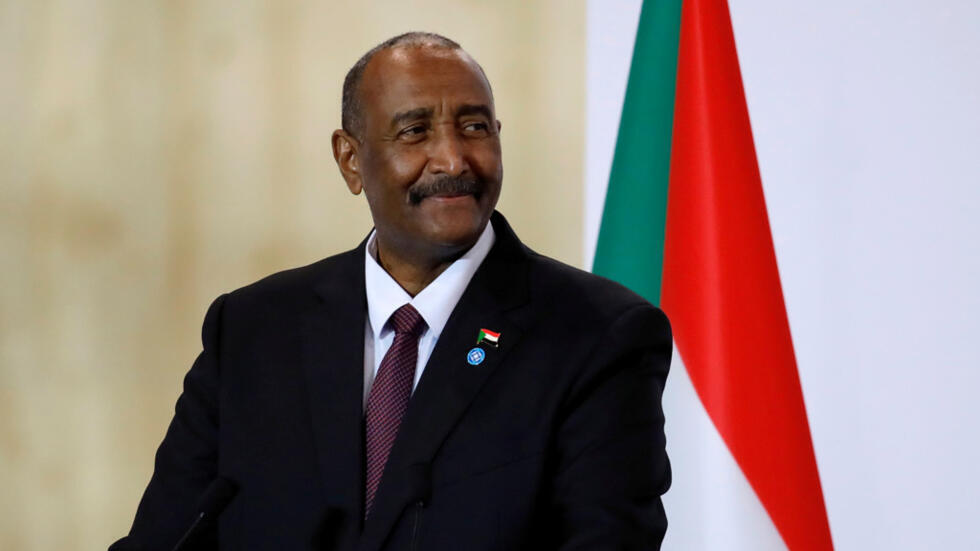
Sudan’s de facto leader, General Abdel Fattah al-Burhan, stated that the core conditions for a ceasefire remain unchanged: the withdrawal from occupied areas, the removal of heavy weapons from the conflict, and the dismantling of any parallel centers of power operating outside the state’s official chain of command. He explained that Sudan’s participation in the Jeddah talks was driven by these principles.
Al-Burhan noted that, at the outset of the war, the government approached negotiation initiatives in good faith in an effort to prevent the fragmentation of Sudan and to halt bloodshed. This openness was the reason behind engaging in the Jeddah talks. However, he stressed that goodwill alone is insufficient. For negotiations to yield tangible results, a fundamental condition must be met: armed formations must relinquish any claim to parallel sovereignty that challenges the authority of the legitimate state.
Writing in the Turkish newspaper *Almanac Diplomatique*, in an article translated by *Al-Zawiya Net*, al-Burhan reaffirmed that the essence of the ceasefire conditions has not shifted. Without meeting these requirements, he argued, any ceasefire would amount to little more than a temporary truce—freezing the conflict rather than resolving it. “Our objective is not to manage the conflict,” he said, “but to return Sudan to the path of an institutional state.”
Al-Burhan emphasized that the guiding compass for any political solution must be Sudan’s sovereignty. He explained that Sudan’s immediate goal is to re-establish the state’s legitimate authority, ensure the protection of civilians, and move toward an inclusive political process grounded in security. While cooperation with friendly states is important, he underscored that the ultimate reference point remains Sudanese sovereignty and the shared future of its people.
He further asserted that it is impossible to ignore the role of external support networks in prolonging the Sudanese crisis and increasing its human and economic costs. Sudan’s position, he said, is unequivocal: Sudan belongs to the Sudanese people. Solutions must not be imposed from outside, but rather emerge from Sudanese–Sudanese dialogue and national priorities.
In this context, al-Burhan stated that available evidence and developments on the ground reinforce the assessment that certain external actors are supporting the Rapid Support Forces at various levels. As long as such external backing continues, the war economy is sustained, ending the conflict becomes more difficult, and the repair of the social fabric is delayed. “The Sudanese national tragedy,” he warned, “cannot be turned into a conveyor belt for regional rivalries.”
Al-Burhan highlighted that civilians are paying the heaviest price for the war. Millions have been displaced, cities destroyed, infrastructure devastated, and essential services disrupted. International data indicate that the number of people forcibly displaced since the outbreak of the conflict has reached tens of millions. This, he argued, demonstrates that Sudan is not only facing a security crisis, but also a profound development crisis and a crisis of state capacity.
For this reason, he stressed that humanitarian diplomacy is not a slogan but a necessity. It is essential to ensure humanitarian access, rebuild health services, protect displaced populations, and restore education and food systems. Local initiatives and volunteer networks that support social resilience play a critical role in this effort, and preserving this capacity is a prerequisite for Sudan’s reconstruction.
Looking ahead, al-Burhan said the coming phase is not solely about ending the fighting, but also about rebuilding Sudan. Reconstruction will span a wide range of sectors, from infrastructure and energy to agriculture and ports, and from health and mining to education. He noted that Turkey’s institutional capacity, the dynamism of its private sector, and its field experience provide a meaningful foundation for partnership in Sudan’s recovery. He added that Sudan is considering facilitative measures, such as improvements to visa regimes for businesspeople, to encourage investment and trade.
Al-Burhan warned that steps which undermine the principles of sovereignty and territorial integrity in the region generate long-term instability. Concessions that begin in one context, he argued, can set precedents that encourage separatist tendencies elsewhere, potentially affecting not only individual states but the entire regional balance.
He concluded by stressing that Sudan is not merely confronting an internal conflict between armed factions, but a broader test involving state sovereignty, social cohesion, and the future of the regional order. The crisis, he said, cannot be reduced to a confrontation between two armed groups. With state authority weakened, security structures eroded, public services disrupted, and debates over external intervention intensifying, Sudan has entered a formative moment that will shape its political future.
Within this framework, al-Burhan stated that his foremost priority is preserving Sudan’s territorial unity and the continuity of the state. The will of the Sudanese people, he said, must prevail over militia logic and networks of power tied to personal interests or external affiliations. He emphasized that the Sudanese Armed Forces bear a historical and constitutional responsibility to prevent the imposition of faits accomplis that could lead to fragmentation, and to restore a minimum level of security necessary to enable a civilian transition. This, he clarified, does not mean turning war into an end in itself, but rather acknowledging that a sustainable political solution cannot be built without addressing the reality of armed rebellion that triggered the conflict in the first place.