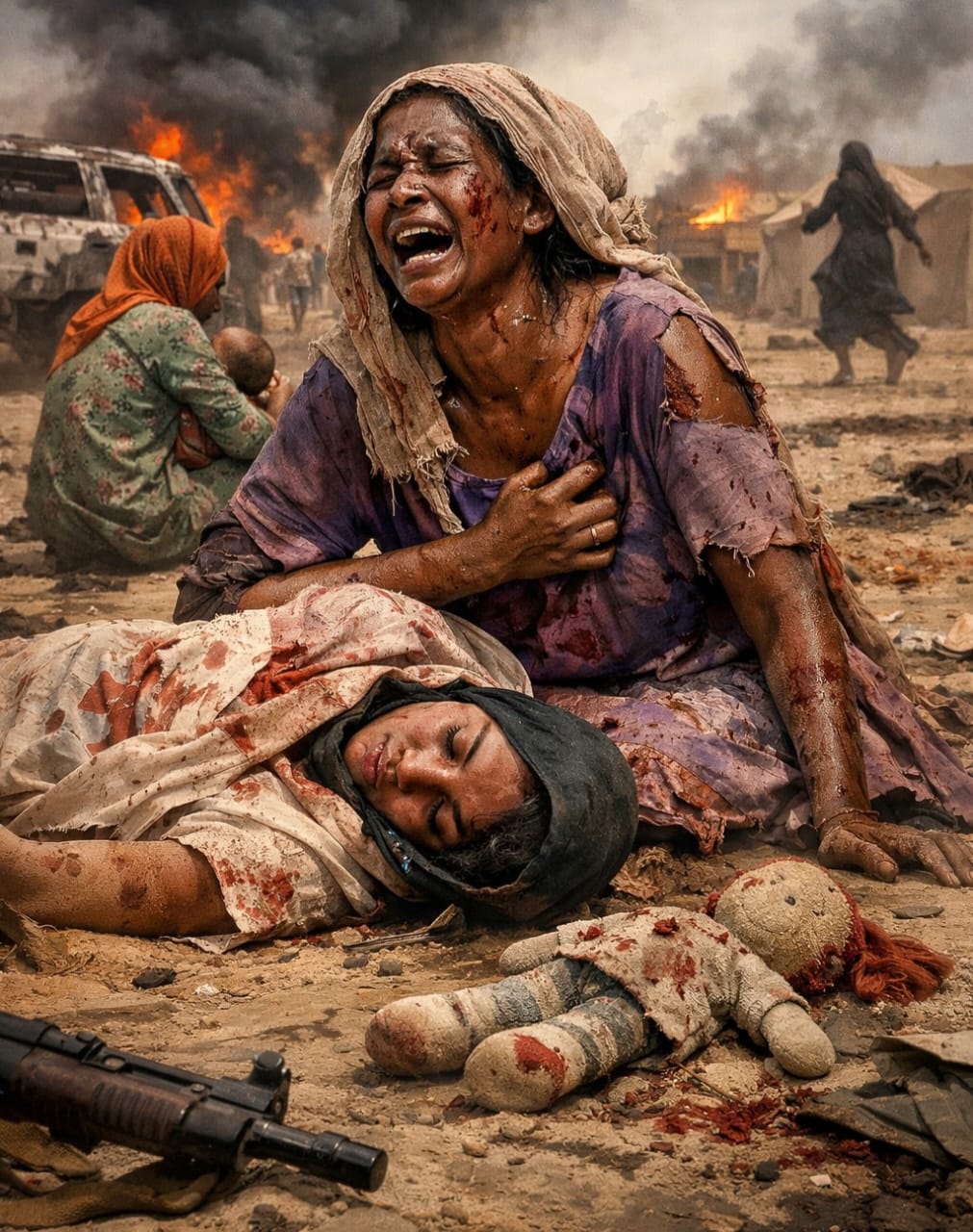
Grave Violation Against Women in Sudan
Introduction
Since the outbreak of armed conflict in Sudan on April 15, 2023, between the Sudanese Armed Forces (SAF) and the Rapid Support Forces (RSF), Sudanese women, particularly in Darfur, have been subjected to grave violations described by Minister of Social Affairs Suleima Ishaq Khalifa as “the worst in the world.” This conflict has witnessed the killing of tens of thousands of people, the displacement of approximately 12.4 million individuals, and widespread human rights violations, including systematic sexual violence against women and girls.
The conflict in Sudan is currently the world’s largest humanitarian crisis, with more than 30.4 million people – two-thirds of the population – in need of humanitarian assistance and protection. This report documents the various forms of violence faced by women in Sudan, particularly in Darfur and some areas of armed conflict, based on documented information from human rights and international sources.
First: Scale of Documented Violations
1. Official Numbers
The Sudanese Ministry of Social Affairs documented more than 1,800 cases of rape between April 2023 and October 2025, and this figure does not include atrocities recorded in West Darfur and the neighboring Kordofan region since late October onwards. According to Suleima Ishaq, head of the Unit for Combating Violence Against Women and Children in Sudan, 304 documented rape cases represent only 2% of the actual violations occurring in reality.
2. SIHA Network Report
In December 2025, the Strategic Initiative for Women in the Horn of Africa (SIHA) issued a report documenting 1,294 cases of sexual violence and gender-based violence across 14 states since the beginning of the civil war in Sudan in April 2023. The report found that more than three-quarters of the recorded cases involved rape, with 87% attributed to the Rapid Support Forces.
3. People at Risk
UNICEF reported in March 2025 that more than 12 million people are at risk of sexual violence in Sudan, an 80% increase from the previous year. Catherine Russell, UNICEF’s Executive Director, noted that sexual violence in Sudan is “pervasive” and used “to humiliate, subjugate, and terrorize entire populations.”
Second: Forms of Sexual Violence and Violations
1. Rape as a Weapon of War
The Minister of Social Affairs confirmed that sexual violence is practiced systematically by the Rapid Support Forces, emphasizing that it is used as a weapon of war and for ethnic cleansing purposes. Khalifa explained: “It’s about humiliating people, forcing them to leave their homes, their places, and their cities, as well as destroying the social fabric.”
She added: “When you use sexual violence as a weapon of war, it means you want to extend the war forever,” because it fuels “a sense of revenge.”
2. No Age Limits
Khalifa, a trained psychologist, explained that the violations do not discriminate by age: “There is no age limit. An 85-year-old woman can be raped, or a one-year-old child.” UNICEF data confirmed this horrific reality, as the organization analyzed 221 rape cases against children reported in 2024 across nine states, including 16 cases of children under five years old and four cases of infant children under one year old.
3. Rape in Front of Families
One of the most brutal aspects of this violence is that rape is often committed “while the family watches” the crime, with the aim of humiliation and destroying the social fabric. UN experts reported in May 2025 that “some attacks tore apart entire families, with women raped in front of relatives or abducted for prolonged sexual violence.”
4. Sexual Slavery and Human Trafficking
The Unit documented 36 cases of sexual slavery, forced detention, and repeated sexual assaults on women and girls, all carried out by members of the Rapid Support Forces. Khalifa reported that women are also subjected to sexual slavery and trafficked to neighboring countries, alongside forced arranged marriages to avoid shame.
Some victims were abducted and held as sex slaves, while others were sold through trafficking networks operating across Sudan’s porous borders. Sexual slavery has increased alongside repeated cases of abduction and forced disappearance of women and girls, especially in Khartoum and South Darfur.
5. Survival-Related Sexual Violence
Doctors Without Borders (MSF) documented horrific cases of sexual violence in South Darfur and across the border in Chad. Between January 2024 and March 2025, the organization treated 659 survivors of sexual violence in South Darfur, with 56% saying they were assaulted by non-civilians (members of the army, police, other security forces, or non-governmental armed groups), and 55% reporting additional physical violence during the assault.
Third: Organized Campaigns and Documented Crimes
1. The El Fasher Campaign
In her briefing to the UN Security Council in mid-January 2025, Nazhat Shamim Khan, Deputy Prosecutor of the International Criminal Court, said investigators uncovered evidence of an “organized and calculated campaign” in El Fasher – the army’s last stronghold in Darfur, which was captured by RSF forces in late October 2025.
Khan added that the campaign included gang rapes and “widespread” executions, sometimes “filmed and celebrated” by the perpetrators and “driven by a sense of complete impunity.”
2. Zamzam Camp Attack
In December 2025, the UN High Commissioner for Human Rights issued a detailed report on targeted sexual violence and summary executions in the North Darfur region, attributed to RSF fighters who captured the city of El Fasher in late October 2025.
According to the report, Zamzam camp for displaced persons was attacked by RSF forces “with support from allied Arab militias” from April 11-13, 2025, involving “heavy artillery shelling and ground incursions” that caused large numbers of civilian deaths and displacement. At the time of the attack, the camp was hosting an estimated 500,000 people displaced by Sudan’s war.
High Commissioner for Human Rights Volker Türk noted that more than 1,000 civilians were killed in the Zamzam attack alone, including 319 people who faced summary execution in their homes, in the main market, or in schools, health facilities, and mosques. “Such deliberate killing of civilians or persons unable to fight may constitute a war crime of murder.”
At least 104 people, including 75 women, 26 girls, and three boys, mostly from the Zaghawa ethnic tribe, were subjected to “heinous sexual violence, including rape, gang rape, and sexual slavery.”
3. Documented War Crimes
Darfur witnessed a brutal wave of atrocities in the early 2000s, and a former Janjaweed commander – from the militia structure that later evolved into the Rapid Support Forces – was recently convicted by the International Criminal Court of multiple war crimes, including rape.
Khalifa said: “What’s happening now is more horrific. Because gang rape is happening and being documented.” She added that RSF fighters carrying out the assaults “were very proud to do it and don’t see it as a crime,” adding: “You feel they have the green light to do whatever they want.”
Fourth: Ethnic and Ideological Dimension of Violence
1. Ethnic Targeting
The SIHA network report stated that “women and girls from non-Arab tribes in Darfur, including the Masalit, Berti, Fur, and Zaghawa, were directly targeted.” In Al Jazirah State, witnesses described RSF forces selecting light-skinned girls and women aged between 14 and 30 as “prizes.”
In Darfur, many survivors said RSF fighters “accused them of being inferior, such as calling them ‘slaves,’ and saying that when I attack you and sexually assault you, I’m actually ‘honoring you,’ because I’m more educated than you, or of purer blood than you.”
2. Use of Racist Slurs
The UN Fact-Finding Mission found that sexual violence was committed extensively by RSF forces in the context of attacks on cities in the Darfur region and Greater Khartoum area. In some conflict areas, perpetrators of sexual violence used racist slurs, particularly regarding non-Arab ethnicity.
Fifth: Foreign Mercenaries
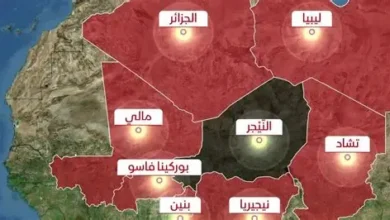
Women in Khartoum and Darfur, including El Fasher, described rape cases carried out by a group of foreigners. They were “mercenaries from West Africa, speaking French, including from Mali, Burkina Faso, Nigeria, and Chad, as well as from Colombia and Libya” – allegedly fighting alongside RSF forces, Khalifa added.
Sixth: Social and Legal Ramifications
1. Social Stigma
Conflict-related sexual violence, in its various forms, is a “silent crime” fueled by collective silence and complicated by social stigma. It is a crime that often goes unpunished, allowing perpetrators to escape accountability while victims are silenced, preventing them from reporting violations immediately.
In conservative communities, social stigma remains a major obstacle to documenting the scale of violations. Families often force victims to marry “to cover up what happened,” especially when pregnancies result from rape.
2. Forced Marriage
Khalifa called this practice a “torture process,” describing “terrifying” cases where children and teenage girls under 18 are forced to marry. According to UNICEF and UNFPA data, the legal age of marriage in Sudan is 10 years for girls and 14 years or puberty for boys, with 12% of women married.
3. Death by Stoning Sentences
Activists and rights advocates reported the existence of two women from Al Qadarif and Blue Nile states detained in Omdurman prison under death by stoning sentences, amid the absence of legal representation and restrictions on legal aid organizations’ work. This information came during a seminar organized by the “No to Women’s Oppression” initiative at the beginning of the week to discuss the conditions of women in conflict areas.
Participants explained that women in areas under de facto authority face increased violations compared to the pre-war period, with continued implementation of laws that criminalize women and are used against them socially and legally.
Seventh: Challenges in Documentation and Access to Services
1. Collapse of State Institutions
Many of these cases are difficult to document due to the collapse of state institutions. Three-quarters of health facilities in conflict areas are not functioning, and attacks on and ongoing occupation of medical institutions have become commonplace.
2. Limited Access to Care
Survivors’ access to urgent post-rape care and support has been severely hampered by warring parties’ attacks on healthcare and local responders, as well as ongoing aid obstruction. In El Fasher and other besieged areas, the collapse of health systems and attacks on displaced persons’ camps have left women giving birth in unsafe and unsanitary conditions. Maternal mortality rates have risen sharply, and emergency reproductive care is virtually non-existent.
3. Improvements in Community Model
In late 2024, Doctors Without Borders added a community component to its care for survivors of sexual violence in South Darfur, the state with the largest number of displaced persons in Sudan. Midwives and community health workers were trained and equipped to provide emergency contraception and first-line psychological first aid to survivors. Since adding this community model, the organization has seen a sharp increase in women and adolescent girls seeking care.
Eighth: International Response
1. United Nations
The UN has repeatedly raised alarms about what it described as targeted attacks on non-Arab communities in Darfur. In April 2025, the Special Representative of the Secretary-General on Sexual Violence in Conflict, Pramila Patten, visited Port Sudan to oversee the Sudanese government’s renewal of the cooperation framework to address conflict-related sexual violence.
The Special Representative noted the overwhelming and systematic use of sexual violence by RSF forces, in addition to cases attributed to the Sudanese Armed Forces, and emphasized the need for prevention measures and response to survivors’ needs.
2. International Criminal Court
The International Criminal Court opened a formal investigation into “war crimes” committed by both sides. UN experts warned in May 2025 that “the appalling scale of violence that women and girls continue to experience is disturbing testimony to the erosion of protection for women and girls during conflicts and the normalization of such violence.”
3. Funding Shortfall
In February 2025, the UN launched a record funding appeal of $4.2 billion to support humanitarian operations in Sudan, with an additional $1.8 billion to support refugee-hosting countries. However, funding currently stands at only about 20% of the 2025 Humanitarian Response Plan, while needs are growing faster.
Ninth: The Broader Humanitarian Crisis
1. Displacement Crisis
Sudan is currently the center of the world’s largest displacement crisis, with more than 12.4 million people displaced since April 2023. By January 2025, approximately 5 million people, or about 44% of Sudan’s displaced population, were living in a range of displacement sites across 18 states in the country, including camps, collective centers, informal settlements, and other temporary sites, while the remaining 56% reside in host communities.
Many displacement sites are severely overcrowded and fall below WHO minimum standards, with limited access to basic services, inadequate water and sanitation facilities, and depleted local resources.
2. Food Crisis and Famine
More than 21 million people face high levels of acute food insecurity, including more than 375,000 people in famine conditions (IPC Phase 5). Famine conditions have been confirmed at five sites in North Darfur and Eastern Nuba Mountains, and are expected to spread to five other areas by May 2026.
In El Fasher and Kadugli, violence and frequent airstrikes besiege hundreds of thousands of civilians, while prolonged isolation in Kadugli has depleted food stocks and cut supply lines.
3. Disease Outbreak
Cholera, malnutrition, and measles are spreading, with about 60,000 cholera cases and more than 1,640 deaths during the first half of 2025. In January 2026, escalating violence in Darfur displaced more than 22,600 new people, nearly two-thirds of them children, from El Fasher and surrounding areas toward remote parts of South Darfur.
Conclusion and Recommendations
Women in Darfur and Sudan face systematic and grave violations that rise to the level of war crimes and crimes against humanity. Sexual violence used as a weapon of war, sexual slavery, forced marriage, and human trafficking all constitute a serious humanitarian crisis requiring urgent international response.
The documented figures represent only a small fraction (2%) of actual violations, indicating that the real situation is much worse than currently known. With the number of people at risk increasing from 6.7 million in 2024 to 12.1 million in 2025, the crisis is escalating at an alarming rate.
The situation of women in Sudan represents one of the worst humanitarian crises in the contemporary world and requires:
1. Urgent international intervention to protect civilians, especially women and girls
2. Immediate accountability for perpetrators of sexual violence crimes from all parties
3. Significant increase in humanitarian funding to provide medical and psychological care for survivors
4. Establishment of safe mechanisms for reporting violations without fear of retaliation or social stigma
5. Ensuring unhindered access of humanitarian aid to all affected areas
6. Abolition of discriminatory laws against women, including death by stoning sentences
7. Support for local organizations providing legal and psychological assistance to women
The silence of the international community and the inadequacy of the humanitarian response contribute to the continuation of this suffering. The world must act now before it is too late.
Sources
1. France 24 with AFP – Reports on sexual violence in Sudan
2. UN News – United Nations reports on violations in Darfur (December 2025)
3. Doctors Without Borders (MSF) – Reports on sexual violence in South Darfur and Chad (2024-2025)
4. Al Jazeera – Reports on systematic sexual violence allegations (December 2025)
5. U.S. State Department – Sudan 2024 Human Rights Report
6. USCRI – Sexual Violence: A Weapon of War in Sudan (May 2025)
7. Human Rights Watch – World Report 2025: Sudan
8. OHCHR – Sudan: Experts denounce systematic attacks on women and girls (May 2025)
9. UNICEF – Reports on children at risk of sexual violence (March 2025)
10. UNHCR – Sudan Situation Appeal 2025
11. ACAPS – Sudan Conflict, Displacement & Humanitarian Needs
12. Seminar organized by the “No to Women’s Oppression” initiative at the beginning of the week to discuss the conditions of women in conflict areas
13. Strategic Initiative for Women in the Horn of Africa (SIHA) – Reports on gender-based violence