London Conference and Track III Primacy
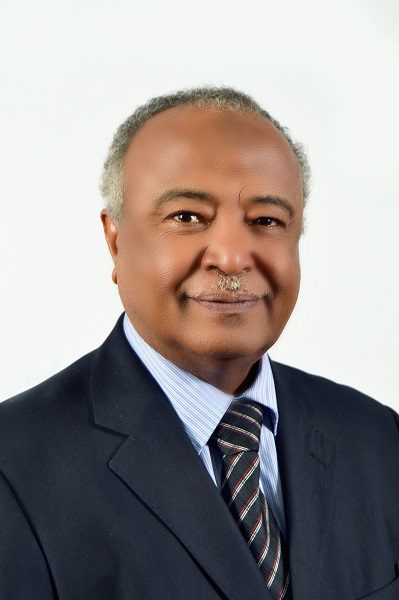
Professor Mekki El Shibly
Executive Director – Mamoun Behairy Centre, Khartoum
📌The London Conference on Sudan, scheduled for April 15, 2025, marks a critical turning point in the trajectory of Sudan’s war, now completing its second year. It comes amid the failure of both the Port Sudan track (the army and its allies) and the Nairobi track (RSF and its allies), alongside a worsening humanitarian and economic crisis, and the absence of a credible political horizon. This vacuum has given rise to a pragmatic, independent, civilian “Third Track”, prompting a key question: Can the London Conference play a decisive role in advancing the Third Track?
📌Hosted by the United Kingdom, in partnership with Germany and France, the conference brings together foreign ministers from 20 countries and senior representatives from major international and regional organisations such as the United Nations, the European Union, and the African Union—a first of its kind. As the penholder on Sudan in the UN Security Council, the UK’s leadership adds further weight, positioning London at the forefront of efforts to address the raging conflict.
📌The exclusion of representatives from the Port Sudan and Nairobi tracks signals international non-recognition of both rival transitional governments proposed by the warring coalitions. This omission strongly suggests that the international community is open to an alternative—one aligned with the aspirations of the Sudanese people for freedom, peace, and justice as embodied in the December Revolution.
📌The Third Track is represented by the independent civil and democratic choice alliance—a coalition unaffiliated with either military faction. This alliance seeks to establish a civilian-led transitional government committed to national unity, the rebuilding of state institutions, and the restructuring of the armed forces on a non-ideological, professional basis, paving the way for a genuine democratic transition. Its popular backing stems from grassroots actors like Resistance Committees, independent civil forces (including the Sudanese Professionals Association, feminist and youth initiatives, and technocrats), as well as the base of the former Taqaddum and later Sumud alliances.
📌The conference, however, faces critical challenges: the underrepresentation of Third Track forces, particularly Resistance Committees and independent civic coalitions, undermines its credibility among the Sudanese public. Further complications arise from the involvement of regional powers (notably Egypt, the UAE, Saudi Arabia, and Chad) who are backing either side of the conflict to secure their influence. A key obstacle remains the lack of a unified civilian leadership representing the Third Track, risking the squandering of this historic opportunity for democratic transformation.
📌Success criteria for the London Conference begin with establishing an effective mechanism for monitoring a ceasefire to protect civilians and enable urgent humanitarian relief, especially after the failure of the Jeddah platform and other initiatives to secure a lasting truce or prevent atrocities. This calls for a hybrid monitoring system, combining modern technologies, including satellite imagery, with a limited number of military observers to build trust, interpret data, and report violations, ensuring that technology augments, rather than replaces, human oversight.
📌Another key to success is the explicit international rejection of the Port Sudan and Nairobi governments, sending a clear diplomatic message in support of the Sudanese people’s choice. The conference should also pledge financial and logistical backing for independent civic initiatives through the creation of an international fund to support civilian-led recovery. This includes investments in institution-building, livelihoods, healthcare, education, and support for Resistance Committees and reliable humanitarian services in war-affected and displaced communities.
📌The conference can also lay the groundwork for a new political process led by independent civilian actors, independent of previous failed tracks. This would prepare the stage for an inclusive national conference inside Sudan, capable of forming a broad, grassroots-supported, regionally and internationally backed alliance to lead peacebuilding and reconstruction.
📌That said, the Third Track forces must act swiftly and strategically before the conference. Resistance Committees, as the vanguard of the movement, must develop their geographical spread to create a politically effective and field-controlling hierarchical entity that singularly represents the revolutionary aspirations of the Sudanese people. Meanwhile, Taqaddum/Sumud, the Professionals Association, and allied parties should reunite under the Freedom and Change umbrella, initiating a responsible dialogue to mend past divisions and rally around the original goals of the December Revolution.
📌These groups, despite fragmentation, should immediately launch a popular pressure campaign ahead of the conference. This includes open letters to conference participants, joint statements from Resistance Committees and civil society, and outreach to global media, think tanks, centres of excellence, and influential institutions. They must present a comprehensive vision for an independent civilian transitional government, a clear political and institutional roadmap, and firm principles for restructuring the security apparatus on national and professional foundations.
📌Post-conference, the Third Track actors must sustain momentum by engaging with participants, urging them to uphold the movement’s core principles: complete civilian rule, the military’s exit from politics, and a smooth power transfer to civilian hands. They must also emphasise inclusive representation, involving resistance committees, civil society organisations, and independent national experts. Above all, they must reaffirm their commitment to Sudan’s unity, rejection of partition schemes, and dedication to rebuilding the state on the pillars of accountability, justice, and citizenship.
📌Following the conference, Third Track forces should also urge international commitments to support a future transitional authority composed of competent, credible, independent national figures representing the revolution and civil society. The transitional period should last no less than five years, during which a social contract between the state and people can be forged, creating conditions for free and fair elections. This includes forming a symbolic civilian Sovereign Council, an executive technocratic Cabinet, and a public oversight mechanism led by Resistance Committees and civil society.
📌They should also pursue material and moral support for the national roadmap to rebuild the Sudanese state. This entails civilian oversight of security sector reform, merging armed movements into a unified national army, dissolving all parallel forces, and restructuring the judiciary for independence and accountability. Economic reform must address the shadow economy, fight corruption, liberate national resources, repatriate displaced populations, and guarantee their rights to participate politically and economically, culminating in a national constitutional conference at the end of the transition.
📌Finally, the international community must be urged to play an active, principled role in Sudan’s future—recognising the Third Track as the legitimate voice of the Sudanese people, refusing to engage with unilateral military governments from Port Sudan or Nairobi, and providing political, logistical, and technical support for efficient, civilian transitional institutions. Strong sanctions must be imposed on spoilers of peace and perpetrators of war crimes.
📌Ultimately, the goal of the Third Track is not to monopolise power, but to rescue Sudan from the grip of warlords and fragmentation. The London Conference should not be a one-time event, but the launchpad of a sustained national, regional, and international process to turn the dream of a democratic, civilian Sudan into a tangible reality.
melshibly@hotmail.com