Mustariha Events: Fears Among Darfur’s Social Components
Report by: Samia Ibrahim
Events have accelerated between the Mahamid tribe, led by Musa Hilal, and the Rapid Support Forces (RSF) in North Darfur, where the RSF announced control over the area following the survival of its leader, Hilal, from an assassination attempt last Sunday. The attempt involved the launching of drones at Hilal’s residence, targeting the guest house in the “Mustariha” desert in North Darfur State.
The Revolutionary Awakening Council stated at the time, in an issued statement, that the Mustariha area was subjected to “intensive shelling by the Rapid Support Forces militia drones.” The statement confirmed the survival of its chairman from the targeting, noting that he is safe and sound and was not harmed. The Council explained that the shelling hit three sites, where three missiles targeted the area’s hospital, in addition to targeting the guest quarters of Sheikh Musa Hilal, civilian homes, and a funeral wake for a local citizen. The Council’s spokesperson strongly condemned what he described as “barbaric and savage behavior and a brutal, cowardly attack” on the Mustariha area.
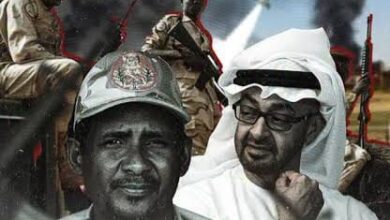
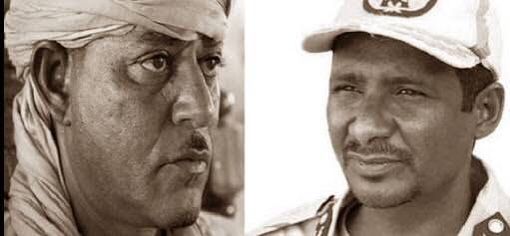
(Brownland) points out that the relationship between the RSF and Musa Hilal grew more tense after Hilal announced his support for the Sudanese Army. The acceleration of events in the Mustariha region between Hemedti and Hilal has brought back to mind the historical animosity between the two men, which began when Hilal was the head of the Border Guard Forces and Mohamed Hamdan (Hemedti) was a soldier under his command.
This is what writer and political analyst Al-Sadiq Al-Rizaigi told (Brownland), saying: “The roots of the crisis between the two men began in 2005 when Hilal was the head of the Border Guards and Hemedti was a soldier at the time. The dispute led to the latter’s defection and the dissolution of the Border Guards, in addition to his targeting of Hilal at all stages.”
However, Al-Rizaigi believes the primary and most important reason is Hilal’s alignment with the Sudanese Army, his stance against the Rapid Support Forces project, and his neutralization of large numbers of Mahamid youth in favor of the Sudanese Army. Thus, Hilal became an obstacle in the RSF’s path toward controlling the entirety of Darfur and the North Darfur valley (a very significant point of attraction for various tribes), which greatly influences the RSF’s mobilization and their control over the remaining areas of Darfur.
Al-Rizaigi attributed the combined factors (Hilal’s stance alongside the Armed Forces and the state, and the roots of the old dispute) to the attack on Mustariha and the attempt to permanently get rid of its leader, Musa Hilal. Al-Rizaigi adds that the RSF militia had been preparing for a long time to attack the Mustariha area and target its leader, considering Hilal to be the only equivalent weight against the Dagalo authority. He also represents a sanctuary for those who want to return to the national fold, given his work within RSF circles to attract many young men from Arab tribes and neutralize their positions in favor of the Army. In return, the RSF leadership will not be tolerant, according to Al-Rizaigi.
He added: “Also, there are international parties that want to get rid of Hilal, given the man’s influence and the Mahamid tribe’s reach across (Libya, Mali, Niger, the Arab Maghreb, and Algeria).”
The acceleration of events in Mustariha is the final step to eliminate the influence of Hilal and his tribe. However, Al-Rizaigi noted that these events will cause a deep rift in the unity of the Rizeigat tribe and the Arab tribes, with very destructive future effects on these tribes and their unity. Stability will not return to North, Central, and West Darfur, given that the Mahamid is a large tribe with significant groups within the ranks of the RSF belonging to the Mahamid led by Musa Hilal.
Politician Al-Tigani Sese described to (Brownland) the attack on Mustariha and the stronghold of Sheikh Musa Hilal as an extremely serious matter. The area was completely desecrated, just as El Geneina, El Fasher, and areas in Al-Jazirah were desecrated before, and serious crimes were committed there… according to information received from there.
Al-Tigani believes that the effects of the attack will last for a long time, especially since Hilal is the leader of the Mahamid, who constitute a large percentage within the ranks of the militia. Al-Tigani points out that the attack on Mustariha will shift the conflict to the sub-clans of the Rizeigat tribe, and the coming days may witness dangerous developments on the ground, especially if Mahamid groups and their leaders decide to withdraw from the Rapid Support Forces.
Musa Hilal, the leader of the Mahamid tribe in the Darfur region of western Sudan, took over the leadership of the tribe succeeding his father, Sheikh Hilal. His name rose to prominence during the war in Darfur in 2003 as one of the founders of the (Janjaweed) forces, which were armed elements that supported the government in its war against rebels in Darfur.
In 2006, international human rights organizations accused Hilal of committing war crimes, and the Security Council issued sanctions against him that included travel restrictions and freezing his accounts; however, he denied these accusations, as did the Sudanese government at the time.
Hilal turned from a government supporter into a rebel against its decisions after he refused to integrate his forces into the Rapid Support Forces and refused to hand over his weapons as part of a disarmament campaign launched by the Sudanese government. He considered this an attempt to curtail his role and influence in favor of the Rapid Support Forces led by his rival and kinsman, Lieutenant General Mohamed Hamdan Dagalo, nicknamed “Hemedti.”
He fought military confrontations with these forces in 2017, which ended with his arrest, trial in a military court, and imprisonment for 4 years before he was released under a presidential pardon along with his sons and several leaders of his movement.
With the development of the conflict between the Sudanese Army and the Rapid Support Forces, he announced in April 2023 his alignment with the Army and state institutions in their war against Hemedti’s forces. In a speech before his followers in the Mustariha area, the headquarters of his leadership in North Darfur, he described the latter as merely “militias and mercenaries.”
He entered into sharp disputes with the leaders of the RSF (Hemedti), and his forces accuse the RSF of targeting his tribe in Mustariha. After the RSF’s entry into Mustariha, the political equation in the region may change, and the matter could become dangerous, according to observers, extending to a rift that spreads between the tribes in Darfur.