Republic of Mali: Collapse of the Boni Agreement
Brown Land West Africa Correspondent / Hassan Youssef Zerma
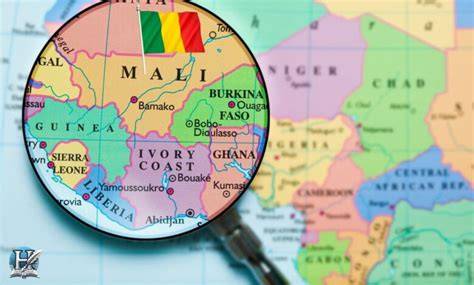
Northern Mali, particularly the strategic area of Boni, is witnessing a new security escalation following the collapse of the agreement between local populations and the Group for the Support of Islam and Muslims (JNIM). Analyzing the situation in Boni requires understanding multiple dimensions, including local security, regional influence, and international interests, amid the overlap of local terrorist factions and foreign military forces.
1. Security Background in Boni
Boni is located within the northeastern triangle of Mali, an area experiencing intense activity from factions such as JNIM and their local affiliates. The region is characterized by a weak central state and the proliferation of armed groups that exploit tribal and economic divisions.
The previous agreement between the population and the group was an attempt to reduce violence through a “local truce,” granting the group limited privileges in exchange for temporary stability.
The collapse of this agreement reflects the group’s inability to respect conditions for coexisting with the local community or the community’s refusal to submit to its pressures.
2. Role of Russian Forces (Africa Corps)
The resumption of Russian operations in Boni carries significant strategic implications:
Deepening Russian military influence: Russia, through its mercenaries, seeks to compensate for the weakness of Mali’s conventional army and establish its presence in northern Mali.
Direct targeting of terrorist factions: The killing of three JNIM fighters demonstrates the Russian forces’ capacity to conduct precise strikes and gather local intelligence.
Political pressure on armed groups: Russian military operations dismantle any previous local agreements and reinforce that force remains the decisive factor in the region.
3. Tribal and Social Dimension
The inhabitants of Boni mostly belong to Fulani and other local tribes, who have historically been exploited by armed groups.
The collapse of the agreement may lead to internal tensions, with the community seeking protection from the state or foreign forces after experiencing deception by JNIM.
This creates a temporary security vacuum that Russian forces or the Malian army could exploit to restructure influence in the area.
4. Regional Geopolitical Dimensions
Northern Mali has become a stage for competition among regional and international powers, including France, Russia, and the Sahel countries, each seeking to consolidate influence through local agreements and tribal alliances.
The collapse of the agreement significantly affects JNIM, which relies on local relationships for funding and mobility; any deterioration in these ties weakens its operational capabilities.
The growing Russian presence may heighten tensions with France and the European Union, especially after the withdrawal of French forces from parts of the north, effectively redrawing the military influence map in the region.
5. Strategic Conclusions
1. JNIM’s control over the local population has clearly weakened following the collapse of the agreement.
2. Russian operations represent a strategic move to consolidate influence but may increase local resentment in the medium term.
3. The area may experience a temporary surge in violence before the situation stabilizes, particularly with the involvement of the Malian army and Russian special forces.
4. The near-term future depends on:
Russia’s ability to impose effective and sustainable control.
The local population’s willingness to cooperate with external forces in exchange for security.
JNIM’s response, whether through withdrawal or escalation of attacks.