
Sudan’s Return to IGAD… A Regional Necessity That Transcends Politics to the Stability of the Horn of Africa
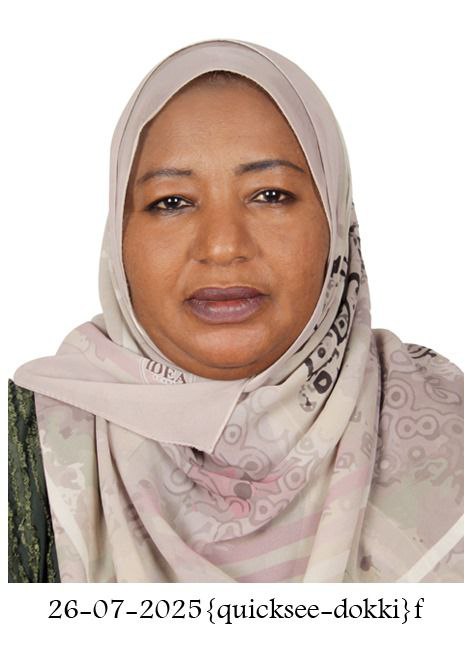
Dr. Maimuna Said Adam Abu Raqab
Since the establishment of the Intergovernmental Authority on Development (IGAD) in 1986, Sudan has remained one of its main pillars, not only by virtue of its early membership, but for what it represents in terms of geographical, political, and security weight in the Horn of Africa region. Sudan was not an ordinary member of the organization, but rather a pivotal state that contributed to shaping its agenda and embraced decisive roles in the files of peace, food security, and migration, which makes the discussion of its return to IGAD today a regional necessity that transcends narrow political calculations.
Since IGAD’s inception, Sudan was strongly present in its various tracks, especially with regard to settling regional conflicts. It played pivotal roles in the peace files in South Sudan, Somalia, and even in regional arrangements related to border security and counter-terrorism. Its geographical position as a link between North, East, and Central Africa formed an element of balance within the organization, and contributed to making IGAD an inclusive framework for countries that differ in their political systems but meet at the necessities of shared stability.
Sudan derives its regional weight from multiple factors; it is a state with demographic depth, vast geographical area, and shared borders with seven countries, most of which are IGAD members or directly affected by its interactions. Sudan also constitutes a fundamental pillar in regional food security equations, by virtue of its enormous agricultural resources and its ability to contribute to closing food gaps in the region. In addition, any disturbance in Sudan quickly exceeds its borders through waves of asylum, the spread of weapons, and threats to regional trade routes.
However, Sudan’s exit from IGAD came in a complex political context, linked to escalating disagreements over the organization’s way of dealing with the internal Sudanese crisis, and what Khartoum then considered political bias and a transgression of the principle of respecting the sovereignty of member states. This divergence weakened IGAD’s role itself, as much as it harmed Sudan, as one of the most important actors was absent from a regional table that addresses issues that directly affect it.
Today, regional and international changes necessitate reconsidering this situation. The continuation of the war in Sudan and its cross-border repercussions make its return to IGAD a matter of shared interest, not a political concession. The region cannot tolerate a pivotal state isolated from regional coordination frameworks, just as Sudan cannot manage its security and economic challenges in isolation from its natural surroundings.
Sudan’s return to IGAD grants it clear strategic advantages, foremost among them the restoration of a regional platform to influence decisions affecting its national security, and participation in formulating collective approaches to issues of conflicts, refugees, and food security. This return also allows it to break diplomatic isolation and re-present itself as a responsible actor seeking regional solutions instead of bilateral confrontations.
In return, IGAD benefits from Sudan’s return by restoring its internal balance and enhancing its credibility as an inclusive organization that does not exclude influential states. Sudan’s presence within it strengthens its ability to deal with highly sensitive files, such as Red Sea security, South Sudan’s stability, and irregular migration—issues that cannot be effectively addressed in Khartoum’s absence.
Accordingly, Sudan’s return to IGAD is not merely a symbolic diplomatic step, but a strategic choice that reflects a deep understanding of the nature of regional interconnection. It is a return that serves Sudan, serves the region, and confirms that stability in the Horn of Africa cannot be built through exclusion, but through partnership, dialogue, and mutual recognition of the roles and real weight of states.