
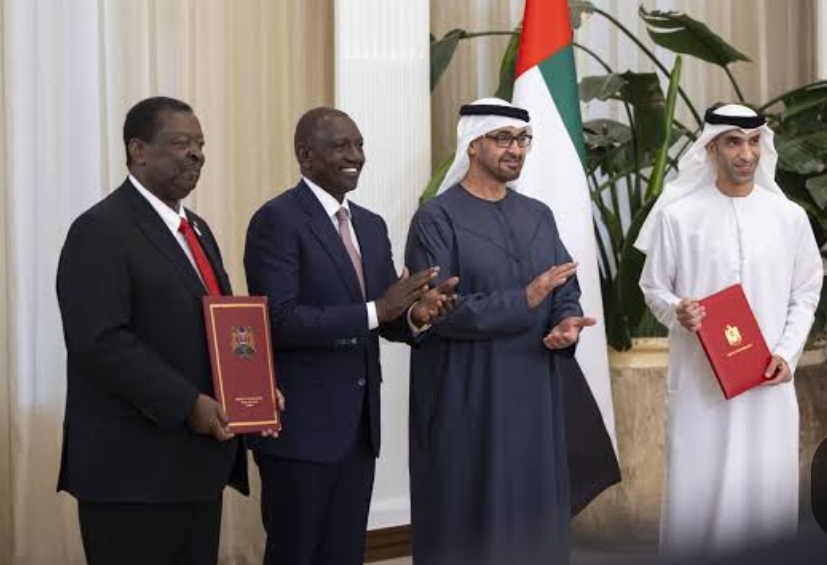
Failure of UAE and Ruto in Kenya started in Adiss
Dr Omar A Mannan
.
The situation involving the Rapid Support Forces (RSF) and the United Arab Emirates (UAE) in Nairobi is complex and has its roots in Addis Ababa.
The UAE’s attempt to expand its influence in Africa was dealt a significant blow when they lost bids for two key African Union leadership.
This un expected setback for UAE has far-reaching implications, particularly in Sudan, where the UAE has been accused of supporting the RSF militia, responsible for atrocities such as genocide, rape, and destruction of villages.
The UAE’s involvement with the RSF has been widely criticized, with reports of the UAE providing military equipment and funding to the militia. This support is seen as a violation of foreign territorial sovereignty and a perpetuation of violence in Sudan.
The UAE’s actions in Sudan are part of a broader strategy to expand its influence in Africa, which has been met with resistance from many countries
The UAE wanted the Kenyan candidate to grab the AU chairmanship and hatedcto see the Algerian as deputy chairman.
Algeria’s strong, independent stance and its long-standing conflicts with the UAE made it an undesirable choice for the UAE in the African Union leadership elections.
The UAE’s failure to corner the African Union leadership has also diminished their ability to protect Ruto’s administration from criticism. Overall, the UAE’s influence in Africa is waning, and their actions in Sudan and other countries will likely face increased scrutiny
In Kenya, President William Ruto’s support for the RSF has been met with intense local opposition, and he may be forced to back down.