Sudan at the Heart of the Regional and International Equation
Dr. Maimuna Said Adam Abu Rugab
After two years, nine months, and twenty days since the outbreak of war in Sudan, the Sudanese file is no longer merely a domestic matter, but has transformed into one of the most complex and sensitive regional and international issues. Sudan has topped the agenda of international initiatives and regional movements, gaining international attention amid accelerating field developments, most notably the marked progress of the Sudanese Armed Forces and their supporting forces, accompanied by a shift in the balance of power on the ground.
Field Transformation and Redrawing the Military Landscape
The military progress achieved by the Sudanese Armed Forces during the recent period represents a pivotal turning point in the course of the conflict. After a long phase of attrition and fragmentation, the military institution managed to reorganize its ranks and regain the initiative in several strategic axes. This progress was not purely military, but carried political dimensions and clear messages to both domestic and external audiences indicating that the Sudanese state is still capable of resilience and reasserting its authority.
The participation of supporting forces in operations has enhanced the effectiveness of field performance and contributed to securing vast areas, which directly reflected in the decline of the rebellion’s influence and its retreat in several vital locations.
Indicator of Restored Confidence
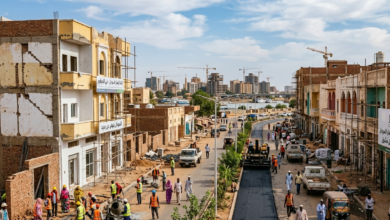
Among the most prominent positive indicators accompanying the military progress is the beginning of waves of voluntary return of citizens to their areas, especially in cities that witnessed relative improvement in the security situation. This return cannot be separated from the growing sense of the state’s ability to maintain security, and it represents a psychological and morale element of utmost importance in the battle to restore stability.
Civilians, as the party most affected by the war, constitute a real scale for measuring the success of any military or political path. The return of citizens, even gradually, reflects a decline in the state of fear and the beginning of restored confidence in state institutions.
Military Leadership Statements
In this context, statements by the Sudanese military leadership came to confirm that what is happening is not merely transient rounds of fighting, but a battle of existence and sovereignty. The leadership emphasized moving forward toward achieving complete victory and definitively eliminating the rebellion, without accepting half-solutions that reproduce the crisis.
These statements carry multiple messages: domestically to boost morale, and externally to confirm that any political or negotiation initiative must proceed from a new field reality that recognizes the legitimacy of the state and its institutions.
Sudan on the Table of Quartet Initiatives
This field transformation coincided with escalating regional and international interest in the Sudanese file, as quartet initiatives and others emerged as tracks seeking to contain the repercussions of the conflict. However, these initiatives now face a real challenge represented by the necessity to adapt to changes on the ground, and not merely present political formulas disconnected from military reality.
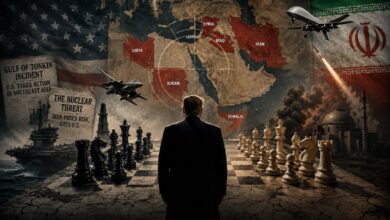
Sudan today is not an empty arena, but a state waging a battle to rebuild its sovereignty, which requires international actors to adopt a more realistic approach that takes into account state unity, fears of regional fragmentation, and the implications of continued war on regional security.
Conclusion
In light of these facts, Sudan appears to stand at a decisive crossroads. Either field victories will be invested in building a balanced political path that restores the state to its natural position, or undisciplined external pressures and interventions will lead to prolonging the conflict.
However, current indicators—military progress, civilian return, and decisive leadership discourse—suggest that Sudan is seeking to impose a new equation, titled: restoring the state first, then engaging in any political path from a position of strength, not from a position of necessity.