
Columns
- Columns

Jibril Ibrahim: Missed Chances!
Osman Mirghani Minister of Finance, Dr. Jibril Ibrahim has returned to Khartoum after a long political diaspora through the Juba Peace Agreement (JPA) of October 3, 2020, and the agreed-upon power-share in which he was assigned the most important executive position in the government cabinet e.g. Minister of Finance. The Minister of finance is supposed to be the Deputy Prime Minister even if it is not stipulated in the agreement. After October 25th, 2021 coup…
- Columns

Food Security: Pipe Dreams
Muawad Mustafa Rashid The Minister of Finance affirmed while addressing the Arab Food Security Initiative scientific forum which took place in Al-Shariga Hall at the University of Khartoum last week, that there is a shortage in providing accurate information about the soil and the quantities of water and that is due to the failure of utilizing the natural resources of the country to the maximum. What our honorable Minister said is not new and is…
- Columns

The Sudanese Army and the Embassies
Mohamed Saad Kamel The Advisor of the Army’s Chief-in-Command, Brig. (Dr.) Al-Tahir Abu Hajar has said that the army and other regular forces quitting from the political scene doesn’t mean giving the political forces the opportunity for any irresponsible statements on the army. Abu-Haja added in his press statement that the assurance of the army’s leaders to avail the way for dialogue doesn’t mean crossing the redlines by some politicians and activists. It is recognized…
- Uncategorized

Sudan’s Revolution and the Digital Revolution (1)
Dr. Elshafie Khidir Saeid Industrial revolutions are defined as new scientific and technological breakthroughs and innovative ways of seeing and dealing with the world around us, which lead to a profound change in the economic and social dimensions in favor of improving human life, in addition to developing philosophical concepts and generalizations. It is well known that the scientific revolution in the first half of the nineteenth century, through the discoveries in the natural sciences…
- Columns
Turmoil of the Nine Mistakes
Omer B. Abu Haraz Nine mistakes led to the downfall of the gallant revolution of December 2028. Before listing the nine grave mistakes let us go back in the recent history since 1964. Two popular uprisings ousted two military dictatorships. Both uprisings were led from the beginning to the end by two civil society bodies. In 1964 the Organizations Front led the streets against the autocratic military regime of General Abboud. Political parties were on…
- Columns
Will They Return to the Same Houses?
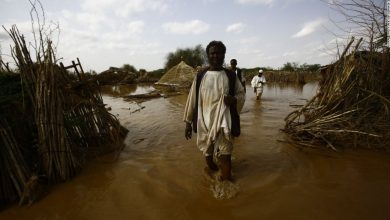
Osman Mirghani The areas which were destroyed by the recent floods are many in almost all the states. Despite the apparent concern of the government authorities towards the disaster, all the current efforts will stop by the end of the rainy season. All of us will forget the disaster except the villagers whose houses were all at a ruin. Those villagers will start thinking about how to rebuild their houses or look for new locations.…
- Columns
The Significance of the US Ambassador’s Arrival in Khartoum
Muawad Mustafa Rashid According to a media notice issued by the Public Diplomacy Section of the Embassy of the United States of America in Khartoum, Ambassador John Godfrey, the first US Ambassador to Sudan in nearly 25 years, arrived in Khartoum. The notice added “As a senior representative of the US Government, Ambassador Godfrey will work to strengthen relations between the American and Sudanese people and to support their aspirations to freedom, justice, and a…
- Columns
Mobile School
Al-Sammani Awadallah The renaissance of any nation could not be achieved unless there is a comprehensive educational process, good intention, high vigor, and a feeling of national responsibility. As an example, Japan is tremendously growing in terms of technology and industry despite the fact that there are no natural resources in that country. The Japanese government set a strategy to revive education. Its education is not only to remove the reading and writing illiteracy, but…
- Columns
The Last Flood
Mohamed Saad Kamel The recent flood disaster claimed – since last June – the lives of dozens and the injuries of thousands. According to official statistics, thousands of houses were destroyed partially or completely along the destruction of a big number of public facilities and stores. The National Council of Civil Defence in Sudan issued a statement affirming that the number of floods victims raised to 83 and 36 injured since last June. The statement…
- Columns
Political Will: The Vision and the Tool
Dr. Elshafie Khidir Saeid The Sudanese political arena is almost fully saturated with many initiatives that claim they can appropriately address the current crisis in the country. But, when one looks at the reactions to these initiatives and takes note of the atmosphere in which they were launched, she/ or he may say, with confidence, that none of these initiatives can succeed. The reason why they cannot reach success can be attributed to many factors…