
Sudanese government
- Columns
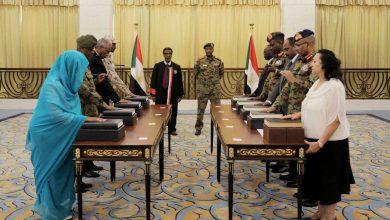
Civilian and Military Partners are Equally Responsible
Omer B. Abu Haraz At the onset of the success of the December 2018 revolution in ousting an autocratic Islamic regime that stayed in iron-fist 30 years rule, two partners, shouldered the responsibility of transforming the governance of Sudan to a full democratic civilian sustainable system. The military partner immediately formed a military council to take care of rule till the formation of a civilian government. After painstaking negotiations between the civilian incubator, Forces of…
- News
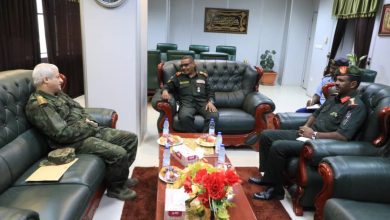
Deputy Chief of Staff for Training Meets Palestinian Military Attache
Staff Writer Lieutenant-General Abdullah Al-Bashir Ahmed Al-Sadiq, Deputy Chief of Staff for Training, met in his office in Khartoum this morning, Tuesday, September 7, 2021 AD, with the Military Attaché at the Embassy of the State of Palestine in Sudan, Brigadier General Ahmed Mohammed Rashid Al-Shami. The meeting discussed ways to enhance training cooperation between the Sudanese Armed Forces and the Palestinian National Security Forces. His Excellency affirmed readiness to provide all assistance and offer…
- Columns
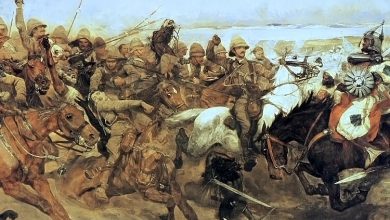
Rise and Fall of the Three Revolutions
Omer B. Abu Haraz In the article of last week, the sequence of events in the governance of Sudan since 1885 to date was narrated, mentioning that since the independence of Sudan in 1956 (65 years) democratic civilian rule was in 13 years only of which 4 years were the transitional hybrid rule of civilians and military – including the ongoing transitional period. The other 52 years were autocratic military rules after three full-fledged military…
- Columns

Towards Bringing an End to Illiteracy
Muawad Mustafa Rashid A few years ago, the Ministry of General Education revealed the existence of more than 9 thousand and a half illiterate citizens in Sudan. At that time the Ministry announced the launching of an initiative towards literacy with a cost of more than one billion and 653 thousand Sudanese pounds. On their part, the adults’ education officers demanded issuing a Presidential decree on mandatory literacy. It was a good step that the…
- Breaking News
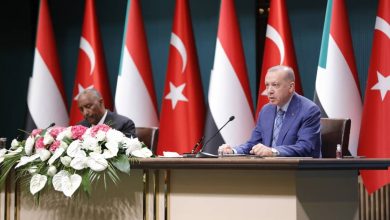
The President of the Sovereignty Council and the Turkish President Affirm the Strength of the two Countries Relations and Pledge to Develop them to Broader Horizons
Staff Writer The Chairman of the Transitional Sovereign Council, Lieutenant-General Abdel Fattah Al-Burhan, and Turkish President Recep Tayyip Erdogan held a joint press conference after the talks that took place between the two sides this evening at the Presidential Palace in Ankara. The Chairman of the Transitional Sovereignty Council, Lieutenant-General Abdel Fattah Al-Burhan, praised the Turkish positions in support of Sudan during the transitional period and its support for the change brought about by the…
- Columns
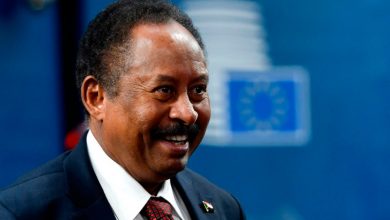
Hamdok Is a Savior, Not a Failed PM
Omer B. Abu Haraz I beg to differ with many who described Dr. Hamdok as a weak and failed Prime Minister. Some admitted that he succeeded in the external affair and failed inside. I think his success inside is masked by the inherited disastrous economic conditions. The most important stimulus to people to go to the streets was the unbearable hardships in getting basic commodities at affordable prices, scarcity of fuel, medicine, bread, and cooking…
- Columns

People Create the Dictatorship
Osman Mirghani The Ministry of Foreign Affairs has announced the names of the candidates who passed its written and verbal exams for the posts of first secretaries and advisors in the Sudanese diplomatic corps. But Immediately after the announcement, the social media outlets were dominated by bouts about the methodology used by the Foreign Ministry in its nominating those candidates. The Ministry in turn formed a committee to review the accusations to satisfy the public…
- Columns
Confederal Unity Is Inevitable
Omer B. Abu Haraz All of the military insurgencies in South Sudan were due to deep mistrust of the Southern politicians on Northern politicians. The following chronicle of events that took place from 1955 to 2011 bolsters the argument that the three insurgencies were all about mistrust. In 1955 military garrison revolted against the Northern officers and troops after being incited by elements of the colonization intelligence against the Northerners who were tough with southerners…
- Reports
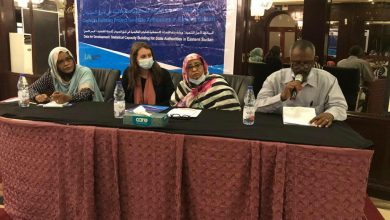
EU builds the capacity of State authorities in Eastern Sudan to enhance data-driven development
Staff Writer In Sudan, the European Union (EU) is supporting Government authorities in Eastern Sudan to create an evidence-based, innovative, and sustainable development and protection solution for refugees and host communities and hence provide alternatives to irregular primary and secondary migration. To that end, Landell Mills, the international development consultancy implementing the EU-funded “Capacity Building Project for State Authorities in Eastern Sudan”, organised a five-day workshop in Khartoum from 4th – 8th July 2021. The…
- Columns

Proposals for Hamdok’s Initiative (2)
Dr. Elshafie Khidir Saeid We continue presenting our proposals supporting the Sudanese Prime Minister’s initiative. I think it is expected that some of these proposals are direct political ones, while some others are dealing with operational, executive, and administrative issues. But in all cases, and at the end of the day, all the proposals are part and parcels of politics! The first proposal, in the previous article, was about how the government should abide by…